
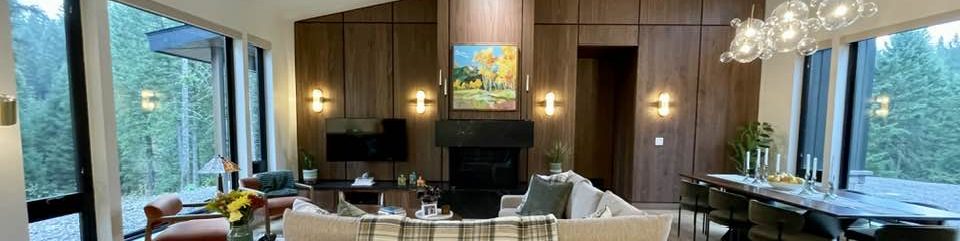
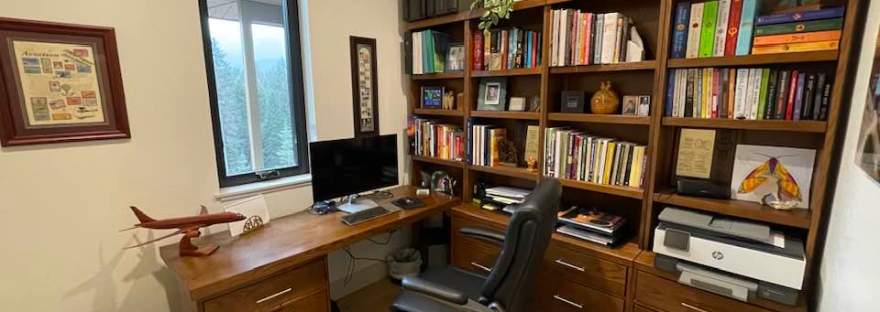
Whether you have a dedicated home office or just want a small space for paying bills and being creative, you will want to consider several elements when creating your perfect spot. These elements are function, location, filing, storage, and decor. In today’s post, I will help you set up your workspace and navigate through paperwork, electronics, basic office supplies, books, reference materials, and decor. Finally, I’ve updated this post with additional information and to share the dedicated office space from our new home in NW Montana.

Function
When planning your office, you will want to think about your specific needs. Will you need extensive computer equipment, an area for meetings, file cabinets, extensive shelf space, lighting, or bulletin boards? You will also need to consider the outlet locations and finally, most folks prefer to face the entrance when seated at their desk. Wherever you place your desk, I recommend leaving 36″ clearance behind the chair to move comfortably. When planning lighting for your space, you have many options, including ceiling lights, table lamps, and wall sconces, wired or plugin mounted on the wall above the desk. Make sure light is not above a computer screen, which can make it difficult to see.

Location
Not everyone has enough space for a dedicated office, but that’s okay, because you can divide one room into distinct areas with a little spatial planning. As you think about setting up your workspace, consider setting up a space in a closet, guest room, kitchen nook, or basement. Where in your space does it make sense to place your desk or work area? Pick an area that feels like a destination: a space at the end of a hallway or a small room on the quiet side of the house. Remember to consider lighting, outlets, noise, and other distractions.
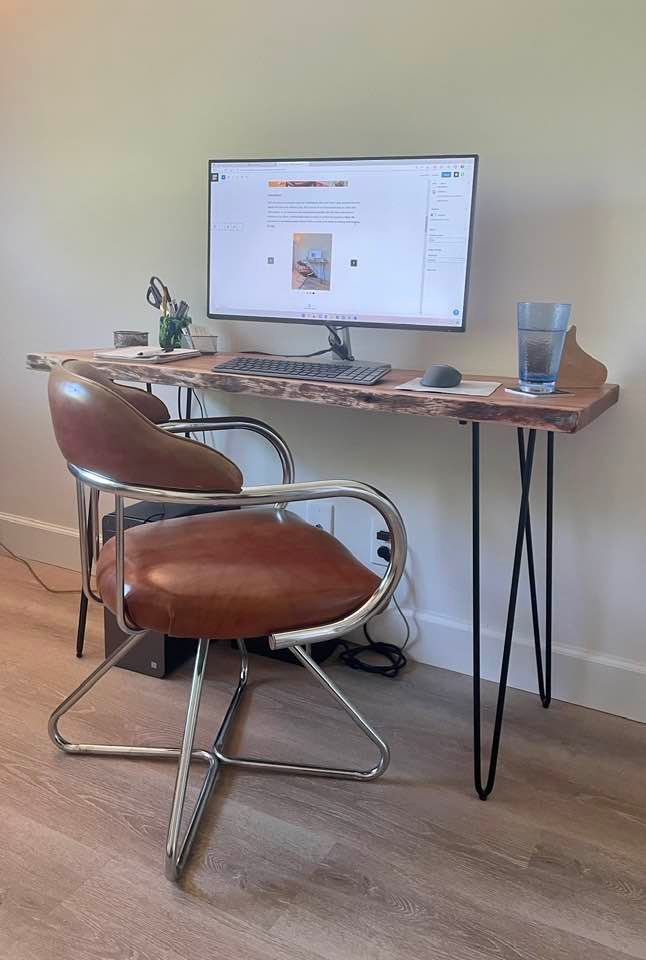
In our last home, we used one of three bedrooms as an office/den, which provided a place to work and a comfortable seating area to relax. I found a small, live edge desk with hair pin legs from HomeGoods that looks great and didn’t cost a fortune. The vast majority of the time, we will use this space as an office, but it may need to accommodate an overnight guest on occasion. We bought a gently used Natuzzi leather couch at True Treasures, which will make a comfortable place to sleep for one in a pinch.
Filing & Storage
I love the natural element of wood, especially in an office. The wood grain in the shelves, chair and desk work beautifully in the light filled office pictured below. In the picture below you see lots of negative space around the objects on shelves, which helps those items take center stage. Hopefully, the wall facing the window has matching closed storage that meets the needs of the homeowners. I recommend keeping 70-80% of your stuff in closed storage, such as file cabinets, drawers, closets, etc.

In our office in South Florida, Jim designed and installed a Home Depot Closet system that works for our needs. About 80% of this closet is used to hide clutter and things we use occasionally.
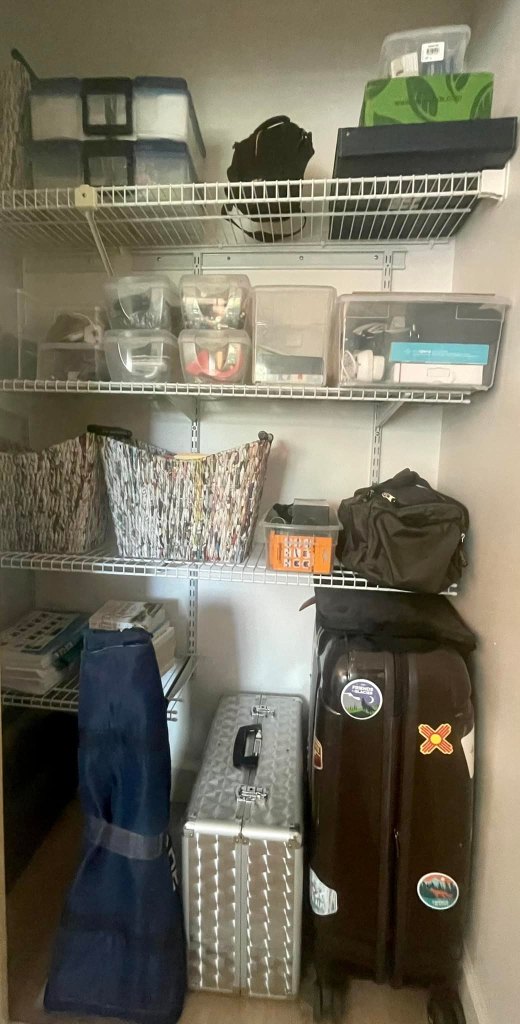
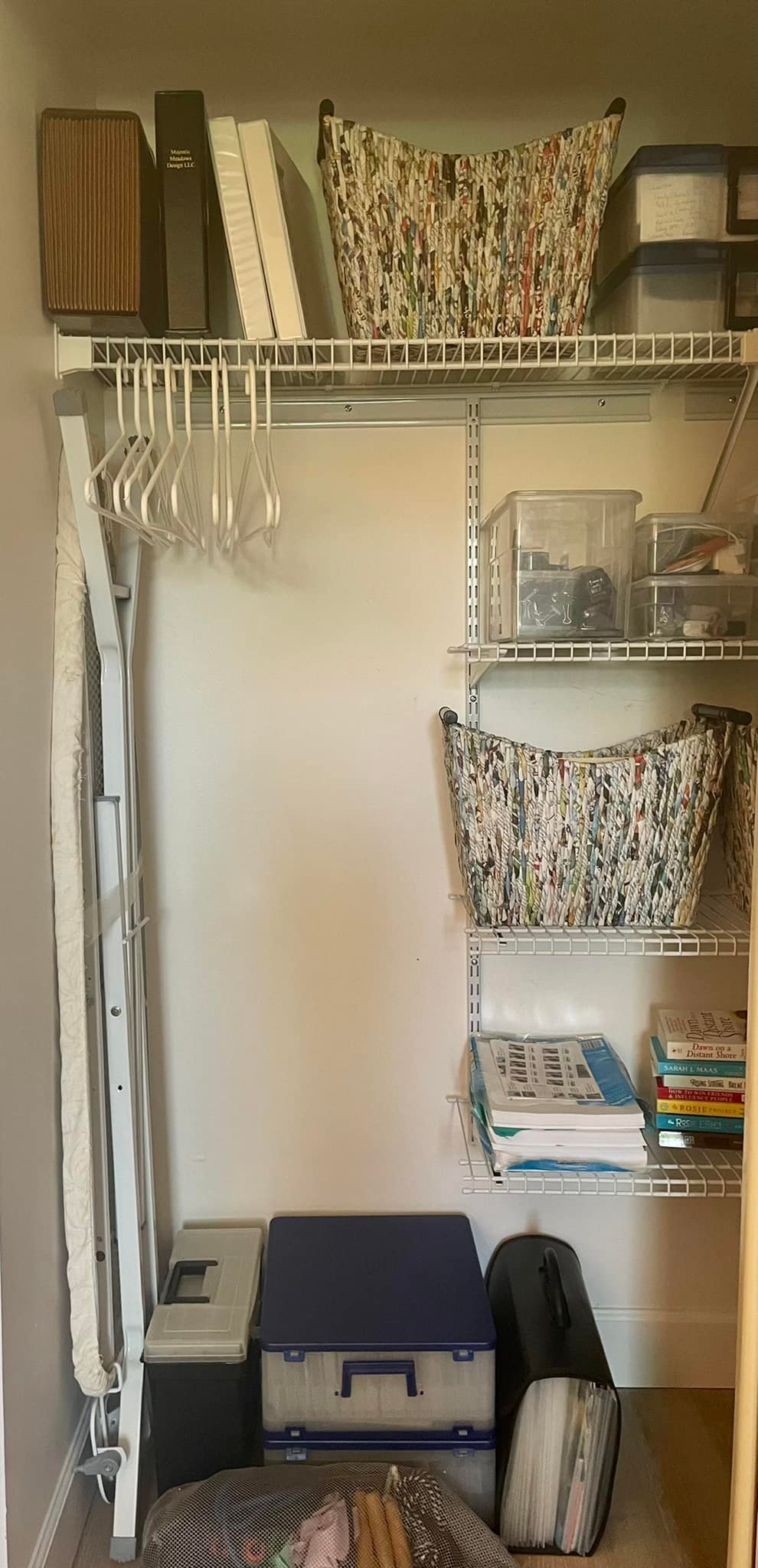
Pro Tip: Are you ready to organize your office? Start by gathering all the items that belong in the office into a bin. You will need to sort, throw out or file everything that you brought into the office space, but remember it doesn’t have to be done all at once. Follow the Rule of One principle by owning fewer, better things. Here are the items we kept in closed storage in our office:
- Minimize the amount of paper by downloading and digitizing instead of printing
- Pay bills online
- Financial, Will, and Living Will Documents (Originals with attorney or Safe Deposit Box)
- Office supplies
- Cords and Electronics
- Photos
- Business papers
- Educational materials
- Stationary
- House and appliance manuals
- Books to read
- Luggage
- Fishing supplies
- Hobby items
Additional Storage Tips:
- Shelving is a necessity, whether you bring in freestanding bookshelves or build something custom. Custom costs more but can add value to your home.
- Consider trays to store things that you need easy access to regularly.
- Hide electrical equipment like plugs or printers. Pull-out shelves inside cabinetry will make changing an ink cartridge easier. When storing electrical equipment, consider heat build-up and ways you’ll need to keep ventilation flowing.
- Really think about what you need and how you use it will make the space more efficient.
Decor
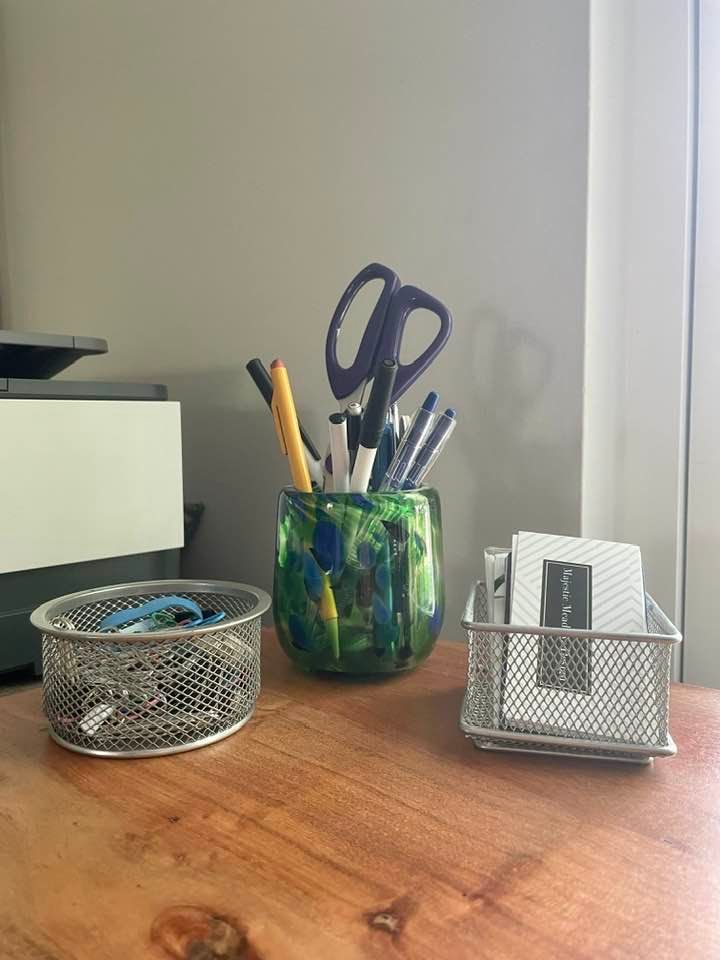
Placing your favorite pieces into your space is how you will bring personality into your office. We used many of our existing pieces, including Jim’s aerospace stamp art and my colorful, hand-blown glass cup to hold pens. Consider adding your favorite colors in paint, art, pillows, and rugs. When choosing a color, consider using muted hues over bright, pure colors. Adding a cork board surrounded by a picture frame will give you a spot to contain your inspirational photos and clippings.
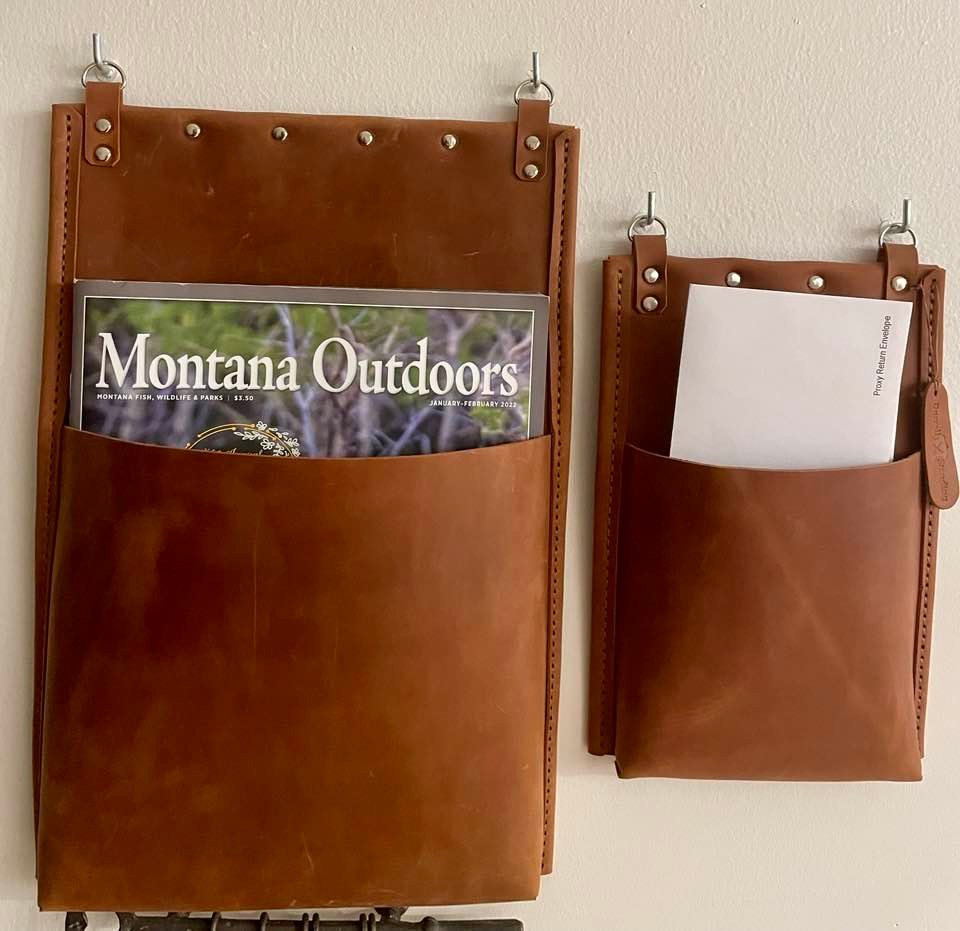
Adding your favorite books, family photos, a plant, scented candle, and an inbox will make the space inviting and pleasant. Since the desk is small, we preferred a wall mounted inbox for action items like bills, career, personal projects, or kids’ stuff. The inbox is only for items that need your attention, everything else needs to be put away, thrown away, or digitized. Keeping your space organized and uncluttered ensures your office will always look great.
If you need a bit more help, take a look at Shira Gill’s book, Minimalista which provides a step-by-step guide to a more organized home, wardrobe, and life.

The office and den space worked great for us during this period in our life. Plus, it was a warm and inviting space where we enjoyed spending time. Here are items to consider:
- Personalize your space with monogrammed touches.
- Find one strong, graphic element like bold artwork or a rug.
- Add an interesting desk lamp, but don’t forget other lighting, such as floor lamps, wall-mounted sconces, gallery lights on cabinetry and task lighting on shelving systems.

NW Montana Office
Many folks are working from home these days, including Jim. Having a comfortable place to be productive at home is essential. In addition to being inspiring, you may also need to think about what folks see in the background during your video calls. What do the book titles on the shelf say about you? Is the lighting flattering? You want a space you’ll love, but it is natural to consider what others will think as well. In his book, Foundations, Nate Berkus offers this advice, “worry less about what people see and more about what you look at all day. Style the bookcase, hang things you love, create a space that feels in sync with who you are and what you do.”
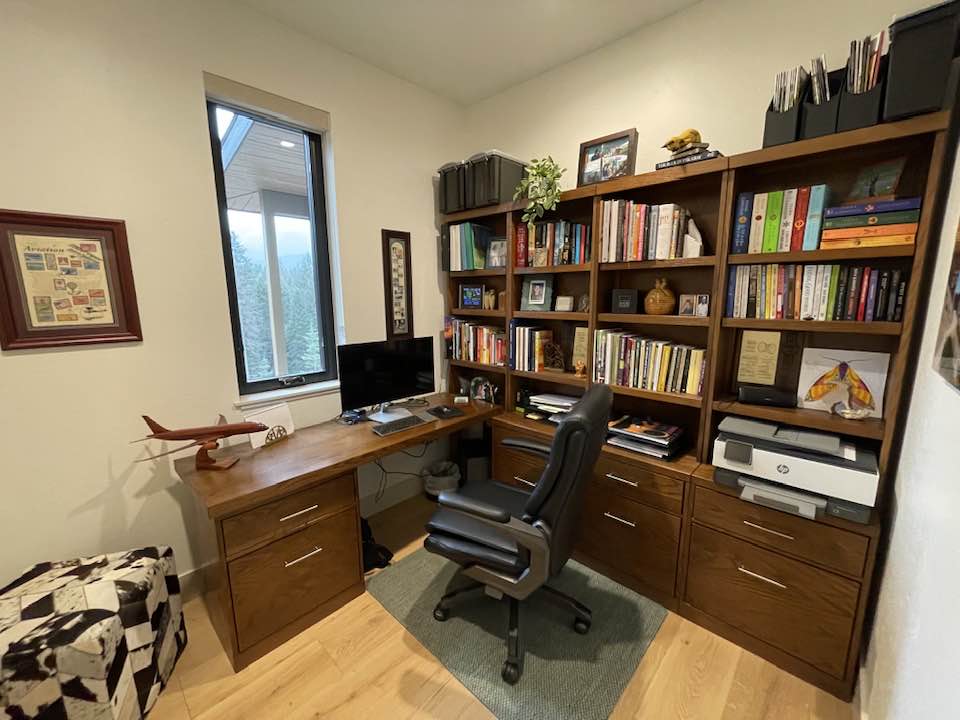
I know a lot of folks use Audible or borrow library books, but we have a lot of books, as you can see in our office space shown below. I’m less worried about perfectly styling these shelves, than having room for our book collection, which includes fiction, gardening, travel and interior design books. These are books we reference regularly, or we love and want to share with friends.
Here are some things to consider for your office space:
- Ensure you have an appropriate surface to work on and a comfortable chair.
- If possible, position your desk to face a window.
- Include things that inspire curiosity and conversation.
- If you need a larger surface area, consider repurposing a dining room table, which will provide more space and add some character.
- Use beautiful items for utilitarian purposes, like a blown glass cup for pens or silver bowl for paper clips.
- If you have room, add a comfy chair or small sofa.
- We used leather magazine holders for magazines we want to look at again. In addition, we picked up small portable file boxes. One for our travel brochures, including trail maps and one for household manuals for appliances, HVAC, fireplace, etc. Finally, I have one for my Interior Design Course materials from the New York School of Interior Design. If you’re interested, here is the link: https://www.nysid.edu/online-learning
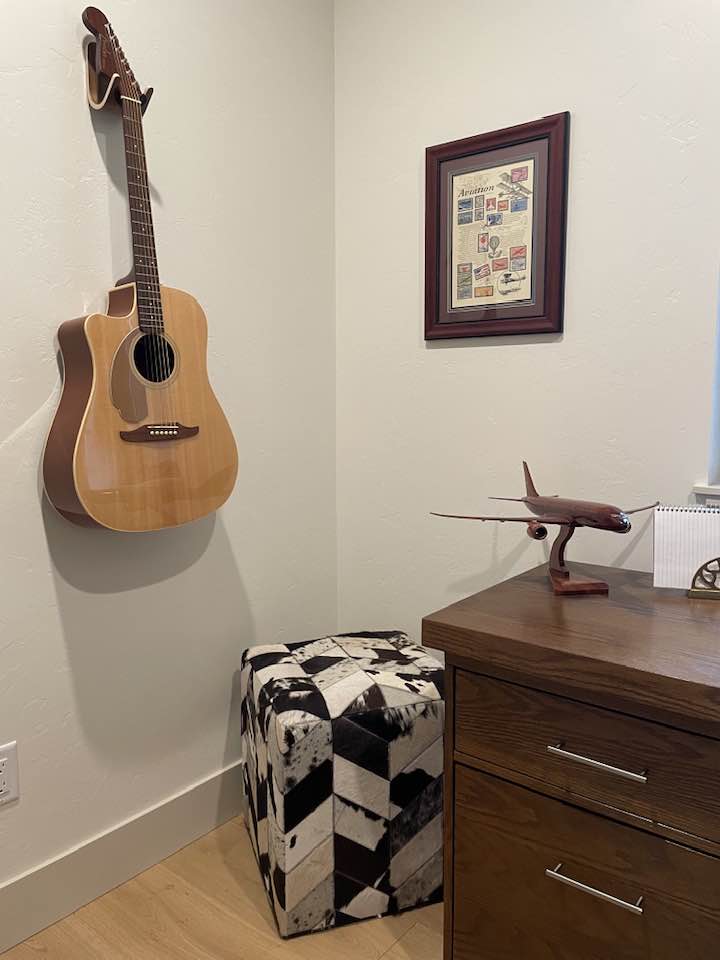
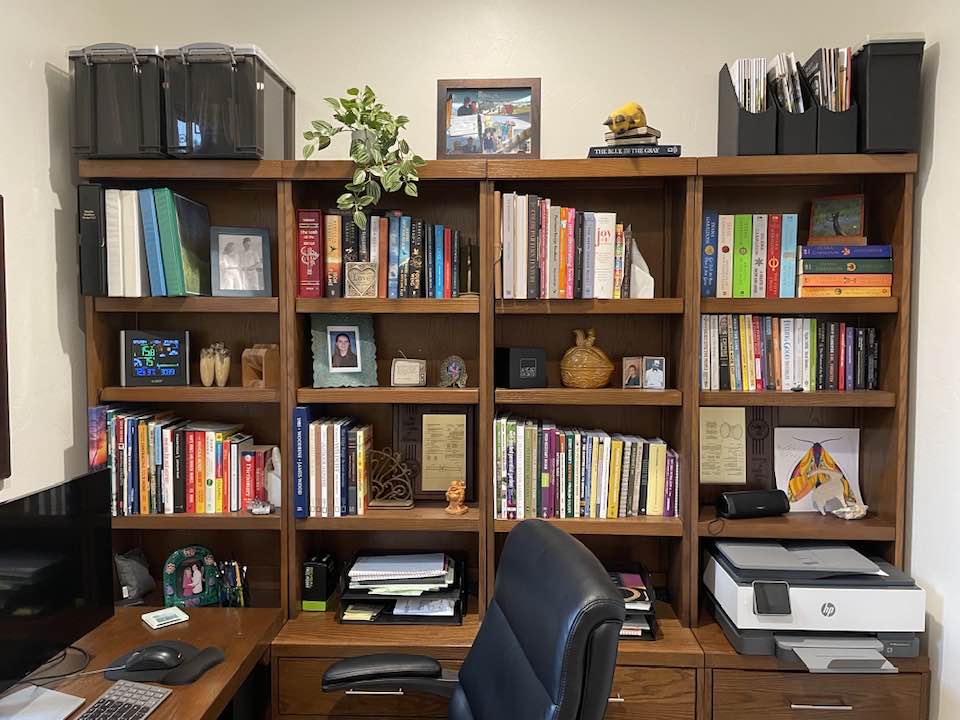
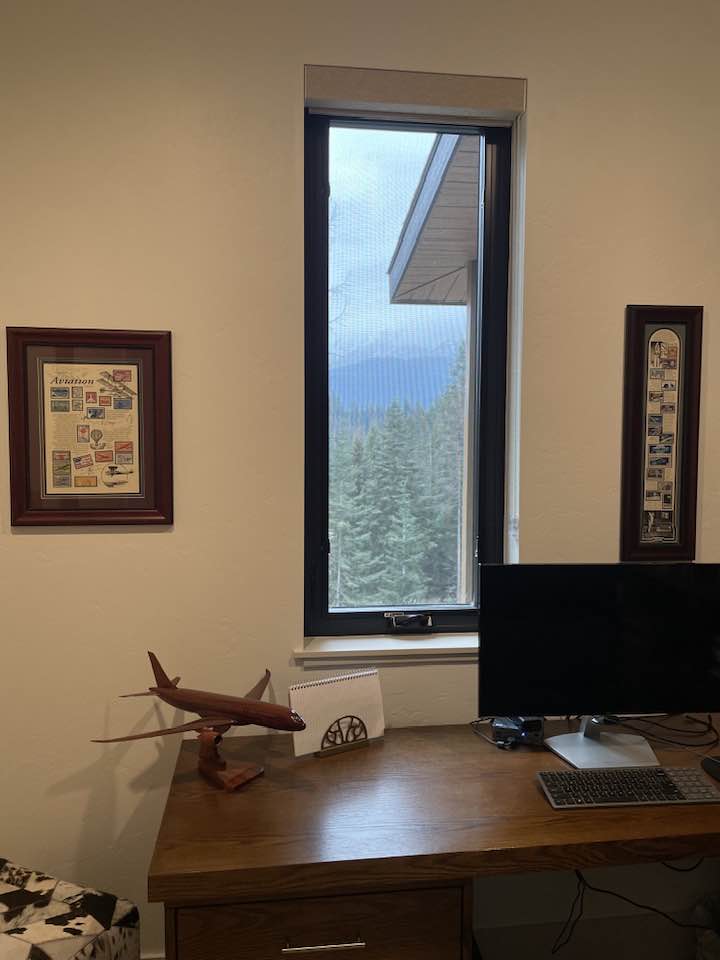
Consider sight lights when designing your office space. Think about what you’ll want to look at all day. Let your answers guide the furniture placement. Try sitting in a few different spots until you find what feels right, then create a floorplan around that spot. Here are some options:
- Centering the desk will make the space feel formal and classic.
- Placing the desk at an angle or askew by a window is unexpected.
- The desk in our office faces the window and has mountain views.
You’ll find more interior design articles on my homepage. In addition, I’ll share more tips and tricks for your home and garden in the future. Jim and I have had a few winter adventures, which I’ll also share in an upcoming post. Subscribe below to ensure you never miss an update!

 Design, Garden, & Travel by Majestic Meadows
Leave a comment