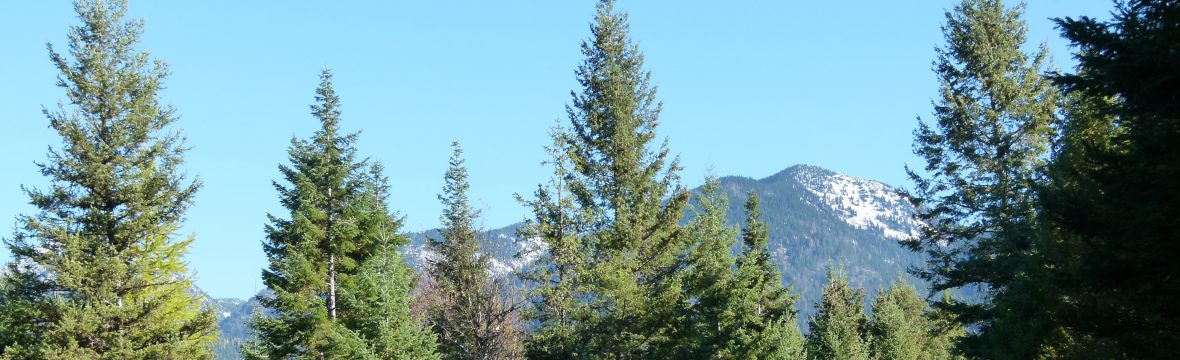
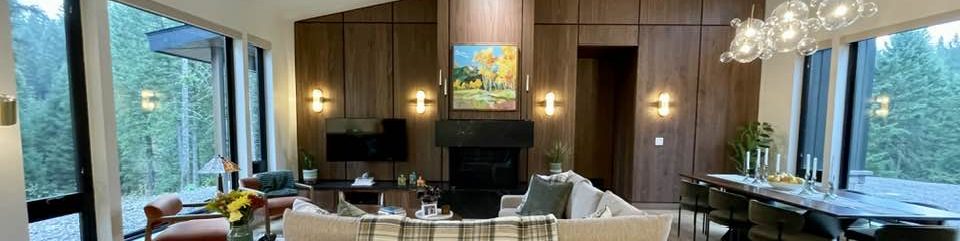
As many of you know, in 2018 we purchased a little over 12 acres featuring Swan Mountain views in Northwest Montana. We are finally ready to start meeting with potential build partners. We’ve spent the last several months identifying and speaking with local trades, including our realtor, architect/draftsman, interior designer, surveyor, and residential builders. Everyone has been generous with their time and offered helpful advice. In today’s post, I’ll share a bit about choosing a build site, selecting a build partner, plus an overview of the design and planning phase of a new build.
Site Selection
Ideally, you’ll want to consult with your realtor, builder, and architect before buying property. In our case, we had a trusted realtor who helped us make the best decision for our needs. Our property needed to have privacy, mountain views and a location on the eastern side of Flathead Valley. We preferred the eastern side because it gets more precipitation and it’s on the same side of the valley as Glacier National Park, Flathead National Forest, and the Bob Marshall Wilderness area. Finally, having an HOA and utilities located on the property was another top priority.
The Complete Guide to Contracting Your Home, a book by Lester & McGuerty provides some great advice for choosing your lot, as well as a step-by-step guide for managing your home construction. No property will be perfect. For example, our property has 21 out of the 26 strengths listed below. In addition, it has 5 weaknesses, all of which are perfectly manageable and will not impact our build or future value. Here are strengths and weaknesses to consider for your site:
Strengths:
- Lot slopes to allow for basement (if desired)
- Lot has rear and side privacy
- If on a sewer line, check with a plumber or city engineer to locate the elevation of the nearest drain line. Your lowest drain pipe should be slightly higher than the elevation of that drain line.
- City water hook-up
- On a cul-de-sac or other low traffic area
- Well-shaped square, rectangle or otherwise highly usable
- Trees and woods. Hardwoods and some larger trees
- Good firm soil base to create a solid foundation
- No large subterranean rocks that require blasting
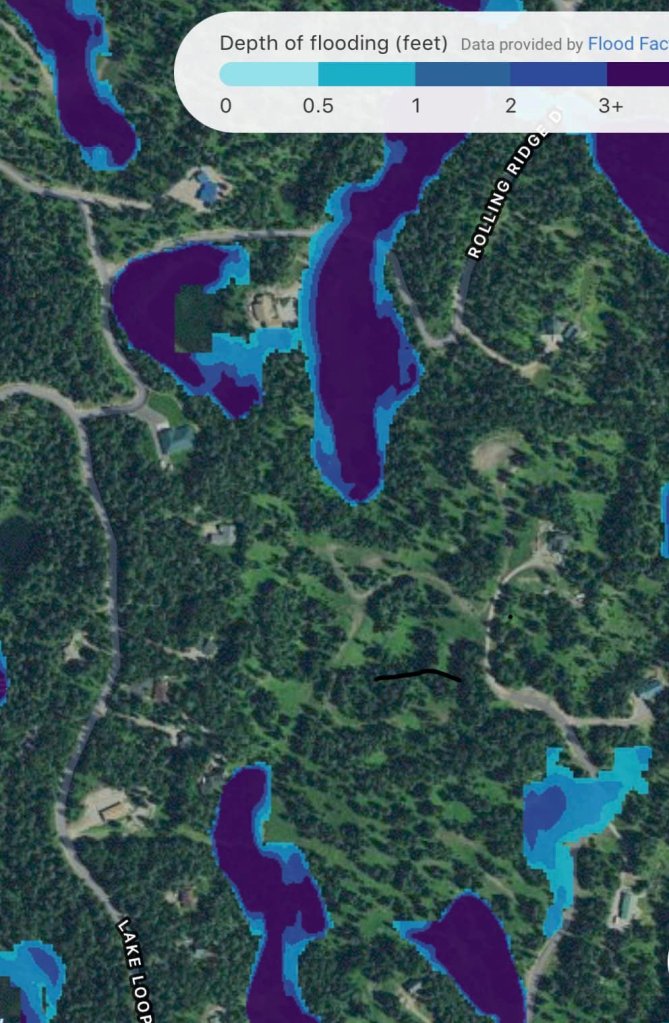
- Not in a flood plain
- Safe, quiet atmosphere
- Attractive surroundings, such as comparable or finer homes and attractive landscaping
- Level or gradual slope up from road
- Good drainage
- Lot located in a stable, respected neighborhood
- Just outside city limits may result in lower taxes and fees
- Easy access to major roadways and highways
- Convenient to good schools, shopping centers, parks, etc.
- Situated in an area of active growth
- Provides attractive view from home site
- Fully usable. No ditches, ruts or irregular surfaces
- Seller will finance partially or in full
- In area zoned exclusively for single family dwellings
- Underground utilities, i.e., electric, phone, cable, and internet
- Natural features in areas that will remain undisturbed
- Amenities, such as, swim, tennis, golf, etc.
- Private back yard area. If there are no trees to block the neighbor, make sure you have room to plant trees.
Weaknesses:
- If the lot is not on public sewer, you must install a septic tank and pass percolation test.
- No city water means you’ll need to dig a well. Check local well depths and well yields, which vary by location. A well yield of at least six gallons per minute is usually needed for home use, though 10 gallons per minute is more desirable.
- On or near a major thoroughfare with speed limits above 35 mph.
- Odd-shaped (too-narrow or too shallow). Either will cause limited front or side yards.
- No trees or barren.
- Rocky. May have large rocks to excavate or dynamite.
- Sandy soil. May require special foundation work. May not support a large foundation. Excavation difficult.
- In flood plain. Normally involves expensive flood insurance and difficult resale.
- Near airport, railroad tracks, landfill, exposed electric power facilities, swamps, cliffs or other hazardous areas. Near large power easements, commercial properties or radio towers.
- Slopes down from road and/or steep yard. Hard to mow. Difficult access by car when iced over. Water drains towards home. May require excessive or unusual excavation and/or fill dirt.
- Flat yard. Less than 2% slope may be difficult to drain.
- Water collects in spots. May require expensive drainage, landscaping and/or fill dirt. May result in a wet/damp basement.
- Lot located in or near unstable/declining neighborhood.
- Just inside the city limits. May have to pay more local taxes.
- Relatively inaccessible by major roadways.
- Isolated from desirable facilities such as shopping center, parks, etc.
- Lot provides unattractive views, either from prospective home site or from road.
- Shallow lots leaving a small area for the backyard
- Evidence of dumping or burying of garbage that may leave depressions.
- In or near a Super Site Fund, which could still have bad chemicals or other negative attributes.
- Creek, gully or deep valley running near center of lot.
- Area zoned near commercial, duplex, quadruplex or other high-density, multi-family housing.
- Area populated with less expensive homes.
- Utilities above ground or not yet established. Unsightly electrical wires.
Build Partners
We are meeting with six contractors, including Design & Build firms that offer in house architectural and interior design services. We reached out to our realtor, who provided a few trusted contractor names. In addition, we contacted the Flathead Building Association, who then sent our information to their members. The interested builders then reached out to us about our new build. We’ve been visiting the area for over 20 years, but we haven’t had an opportunity to make friends in the area. I have made some friends on social media, one of which has offered to check the reputation of our top six builders.
Since we are in South Florida, I started interviewing builders over the phone. In addition to the builders, I also reached out to a local interior designer and architect. The price per square foot build estimates have been more than expected, ranging from $350-500. I’m sure the increased costs are directly related to the pandemic and the unprecedented growth in NW Montana due to remote work and the TV show, Yellowstone. A few builders didn’t return calls and one said our budget was too low, as they had been building homes at more than $600 per square foot.
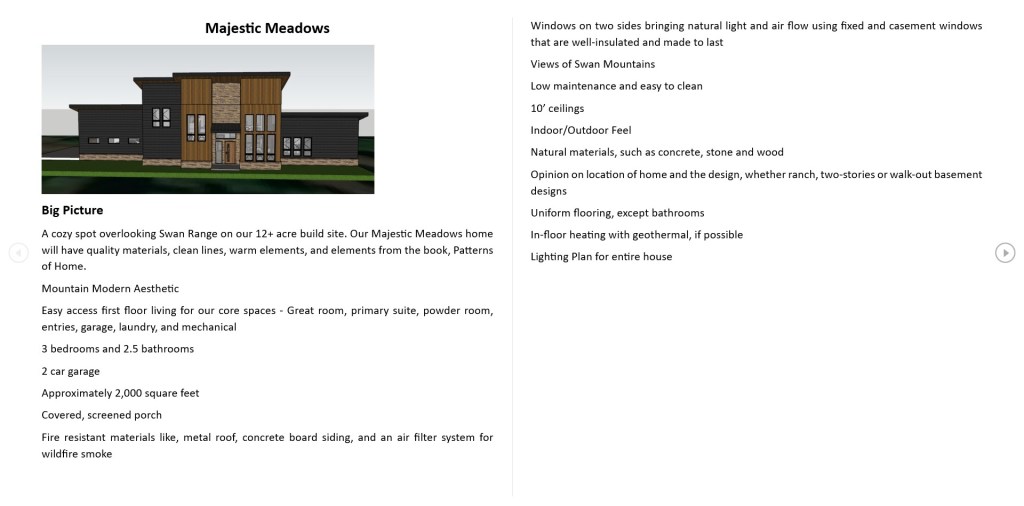
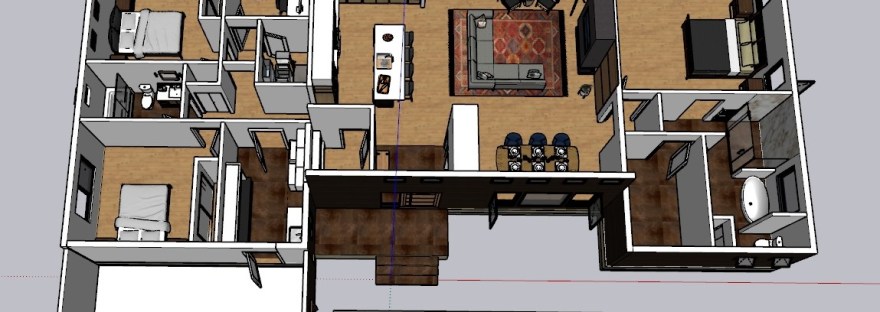
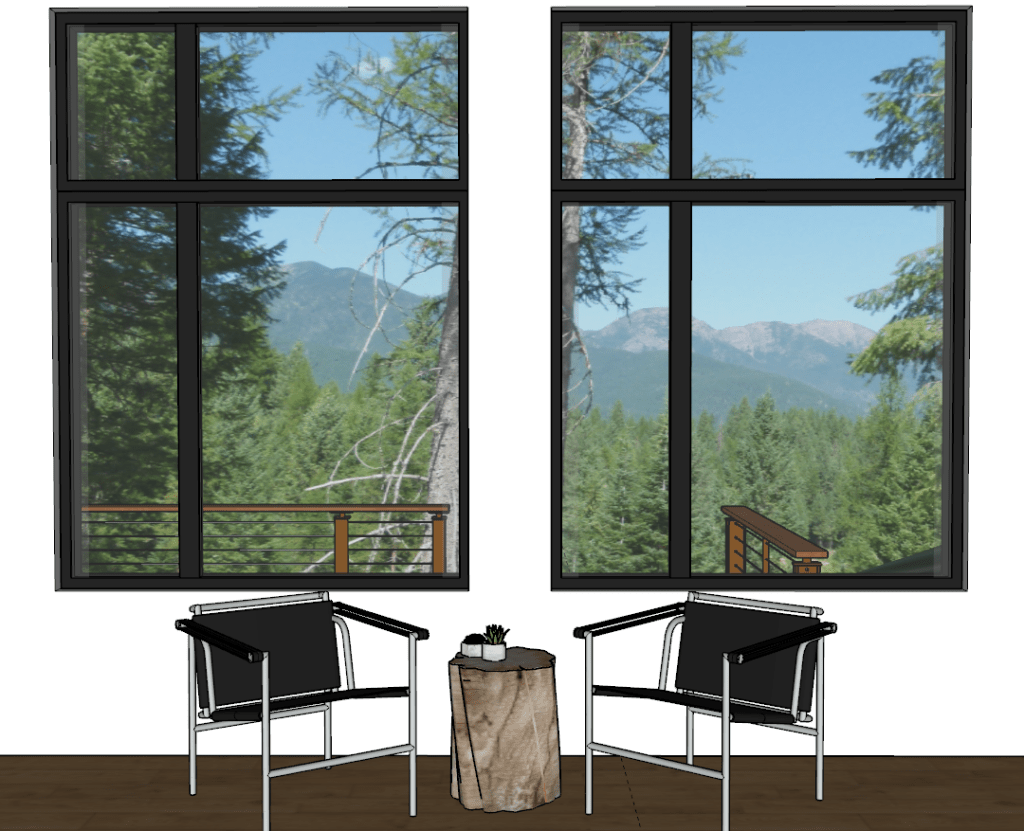
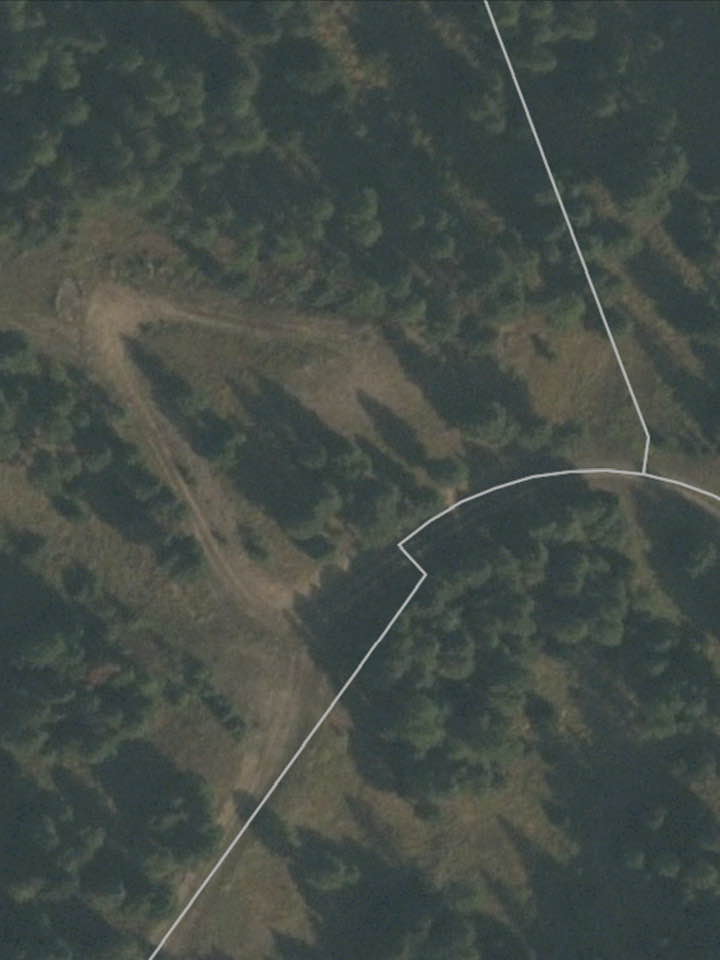
After the initial call, I sent them more information about our new build including our Build Goals document, a list of builder questions, site information and location. The Build Goal document provided both visual, SketchUp renderings and written expectations including, top priorities, such as quality build materials. Our Build Goal document starts with a big picture overview, then provides detailed information about floor plan, exterior, and living spaces. We’ve been working on our house design for six years, which helped fine tune our style and floor plan. Every single builder expressed appreciation for the comprehensive information provided. In addition, I also sent them site information, including a prior septic perk test approval, Google Earth images of our land and proposed build site.
Having this information helped the builders be prepared for the second call with both me and my hubby, Jim. These calls were longer and gave both the builders and us a chance to ask questions. Many of the builders offered some great advice, including ways to save money. We are grateful for the time and advice they’ve shared and look forward to meeting them in person. In addition to meeting face-to-face, we will also be visiting one of their recent home builds. This gives them a chance to show off their work. We will also be reaching out to one or two of their past clients.
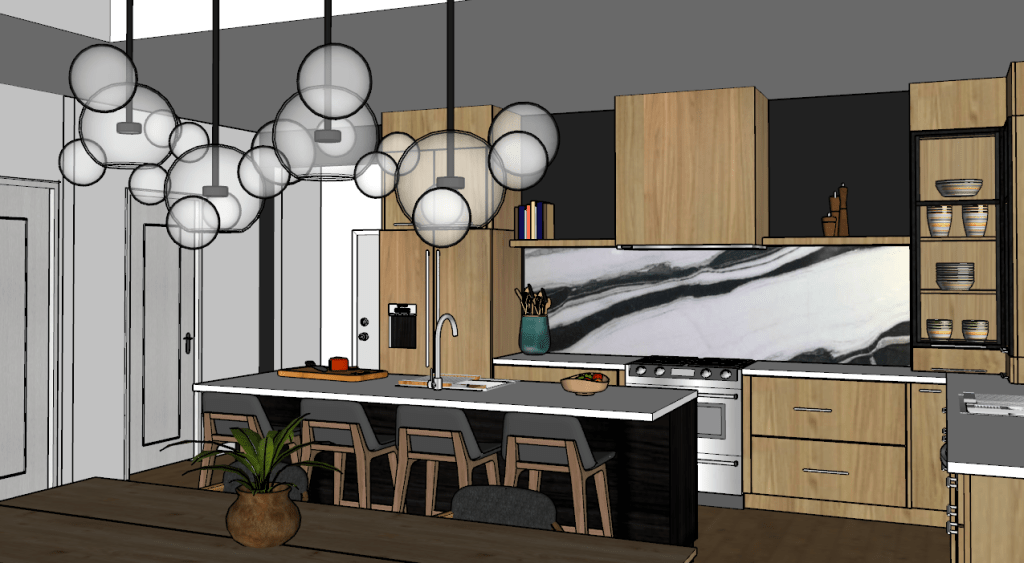
Design and Planning
This is the most critical stage of any project. The decisions you make here will affect everything that happens later: how long it takes to complete your project, the money you save, the level of workmanship, and the goals you want to reach. Concepts such as lot and plan selection, green building, financial and legal issues, dealing with members of the construction industry, and other topics are important to gain a proper perspective on the project. Some decisions will be difficult or impossible to correct later:
- Where will your dream house be located, in town or the countryside?
- How is it situated in terms of the sun?
- What is the size?
- What style of design?
- Cost vs. function
- What about room to grow?

Changes during planning are easy to correct with an eraser. Mistakes made during actual construction require a sledgehammer, can cost thousands, and cause stress for everyone. Make your mistakes early and learn from them. By the time you dig the first shovel of dirt, you should have all contingencies covered. Taking your time during this phase will save time and money later.
In my next post, I’ll update you on our choice of builder and talk more about the Design and Planning phase of our project. Please share this post and let me know if you have any questions. If you’d like to learn more about interior and exterior design, as well as adventure travel, I have 70+ posts on my site covering these topics.
Subscribe below and never miss a post!

 Design, Garden, & Travel by Majestic Meadows
Leave a comment