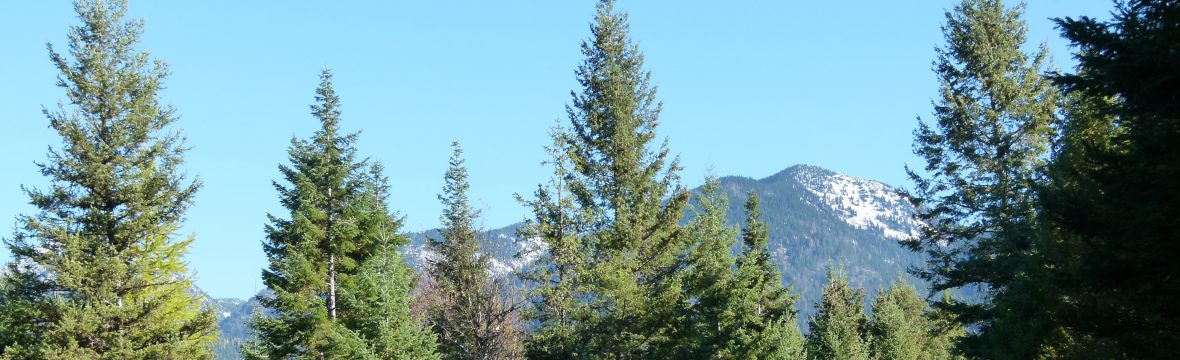
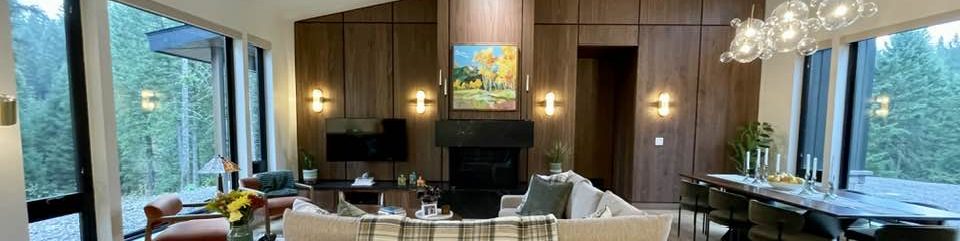

Every day, since we’ve moved to NW Montana from Jupiter, Florida we’ve enjoyed a sense of awe about living in this wild, beautiful place. As many of you know, we’ve been dreaming about living here for 20 years, and thanks to some hard work, smart savings and lucky real estate timing, we are thrilled to finally be here. The new house is everything we planned and building it has been an awesome experience. We’ve spent the last two month getting the house together, only taking a few short breaks for walks or a quick trip to a local park. But now that the house has come together, we have more time to spend outside. In today’s post, I’ll share details of our trek to Apgar Lookout.
If you’re interested in seeing more about the house, check out my blog posts below:
Apgar Lookout
Trail Details
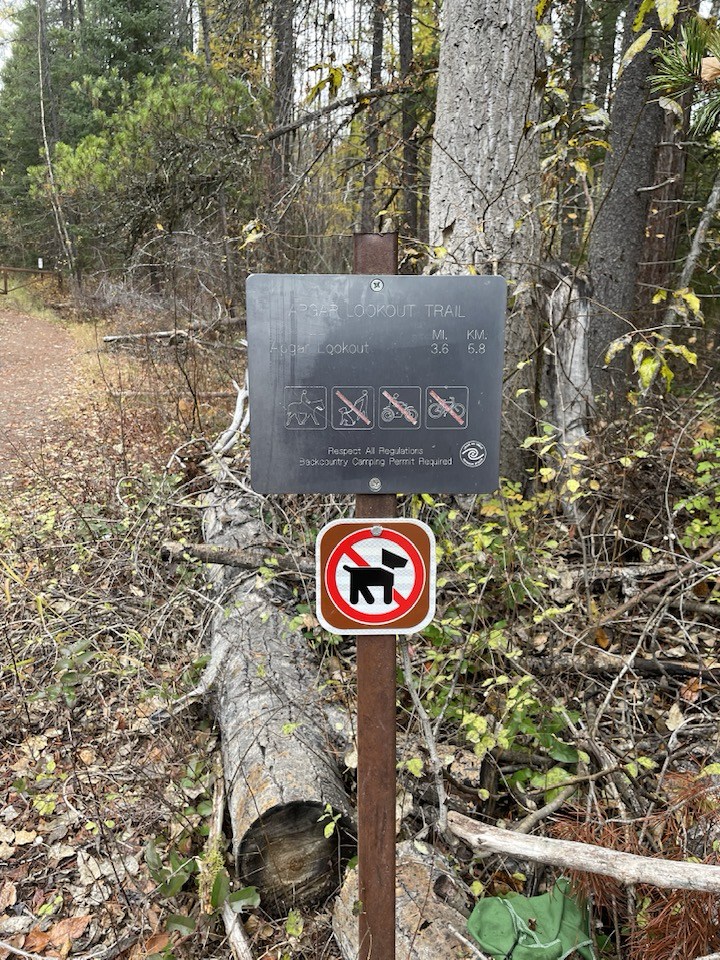
This trail to the lookout is located on the west side of Glacier National Park. It is 7.1-miles round trip and gains 1,900 feet in elevation. To find the trailhead, go half a mile past the West Entrance and turn left on the road for Apgar Lookout. Continue over the bridge and up the dirt road to the trailhead sign. It’s farther than you think, so keep driving until you come to the trailhead parking lot.
Unfortunately, the current government shutdown means that many of the great people that keep our national parks and forests operational and safe are furloughed and not getting paid right now. Although the park is open, you’ll want to be extra careful, as rescue operations and other services could be delayed due to the shutdown. One thing you don’t want to do is enter the park without paying, so be sure to buy an annual pass before you go or stop at the entrance to pay at the unmanned kiosk/box. If you love these wild places make sure you support them financially and politically.
Leave No Trace
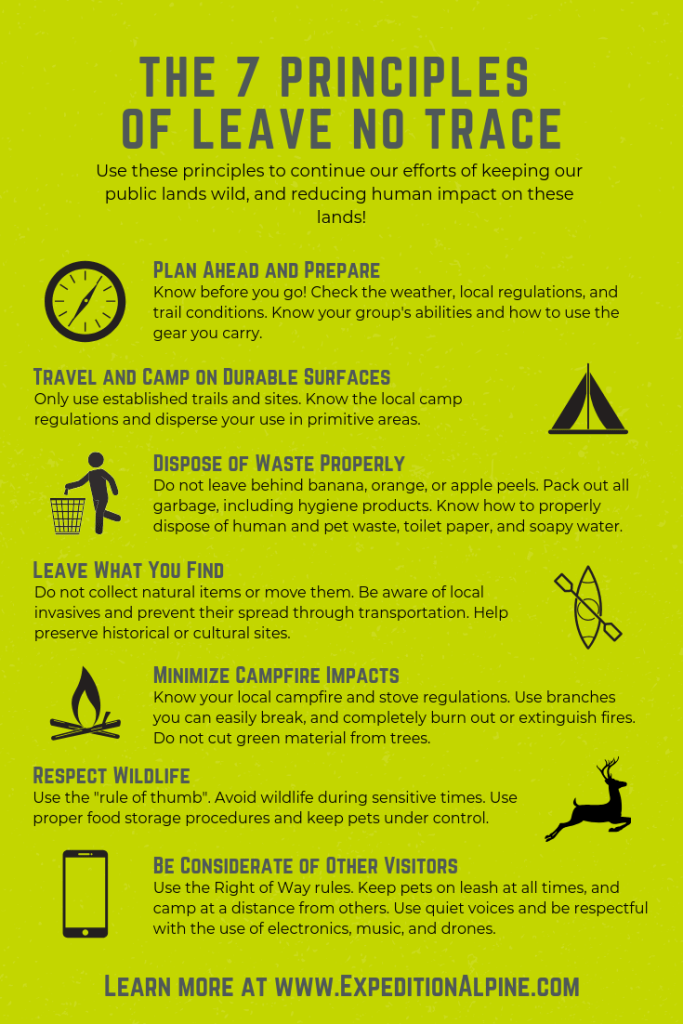
The Seven Principles of Leave No Trace provide easily understood practices to ensure your time outdoors has a minimum impact on the environment. Use these principles anywhere – from remote wilderness areas to local parks and even in your backyard. I’ll cover the basics here, but to learn more go to the link attached below.
- Plan ahead and prepare – On a hike like Apgar, we bring two liters of water each, snacks and lunch. You’ll also want to make sure you check the local weather report and avoid going if the weather predicts rain, snow or thunderstorms. Finally, be sure to pack a small first aid kit, emergency blanket and we also bring those tightly packed rain ponchos.
- Travel and camp on durable surfaces – Unless you have a backcountry permit or a campground reservation you won’t be camping in the park. However, staying on the trail when walking, taking pictures or enjoying a break will ensure that the plant life will not be damaged. Millions of people visit every year, so if even just a small percentage go off trail it will cause damage that would take a long time recover.
- Dispose of waste properly – Yep, that means you pack it in and back out again. I mean everything, so if you need to tinkle or poo, you need to take the tissues and poo back out with you. Don’t leave it there for someone else to pick it up. That’s not cool. To make it easy, just bring a doggie bag or disposable Ziploc.
- Leave what you find – Don’t stack rocks or pick flowers. Moving rocks can disturb critters that were living underneath and picking flowers means there won’t be flower seeds to bloom next spring.
- Minimize campfire impacts – We use a lightweight burner/stove for cooking. Bring a flashlight or portable lantern for light. Only use established fire rings, pans, or mound fires where fires are permitted.
- Respect wildlife – Observe wildlife from a distance. Do not follow or approach them. Never feed animals, as feeding wildlife damages their health, alters natural behaviors, and exposes them to predators and other dangers.
- Be considerate of others – Hikers going up hill go first, so if you’re heading down step aside when you get close and let the uphill hikers go first. Keep things quiet by avoiding loud noises, like loud talking, shouting or music.
https://www.nps.gov/articles/leave-no-trace-seven-principles.htm
Trail Description
My hubby, Jim and I had a gorgeous fall day to explore Apgar Lookout. We had blue skies and a sunny day when we left the house to drive over to Glacier National Park. As we got closer, we noticed that clouds had formed in the valleys between the mountains. The clouds were blocking the sun and sky, but we had checked the Apgar Lookout web camera, so we knew the sun was out above the cloud cover. We were excited because we’ve never hiking through a cloud inversion. Inversions in the mountains occur when a layer of cooler, denser air is trapped beneath a layer of warmer air, creating a beautiful sight when mountains appear like islands rising above a sea of clouds.
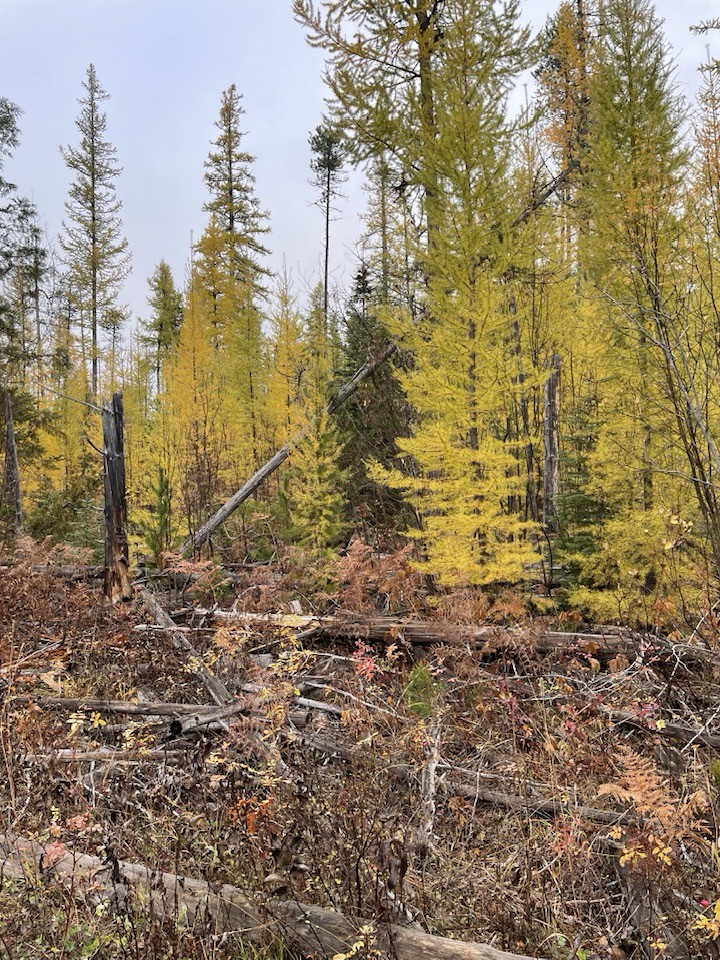
This trail starts in trees, including larches which had beautiful golden color. The trail winds near Rubideau Creek before moving into burned areas as you gain elevation. The trail has three long switchbacks on the sunny, exposed south facing slope of the hillside. The massive Robert Fire of 2003 was so intense that flames reached a height of 500 feet along Howe Ridge (towards the north of Lake McDonald). A five-year drought resulted in one of the worst fire seasons in Glacier National Park history. During the 2003 summer more than 136,000 acres or 13% of the park burned. The pines have returned, including a few fall-colored Aspen trees along the trail.
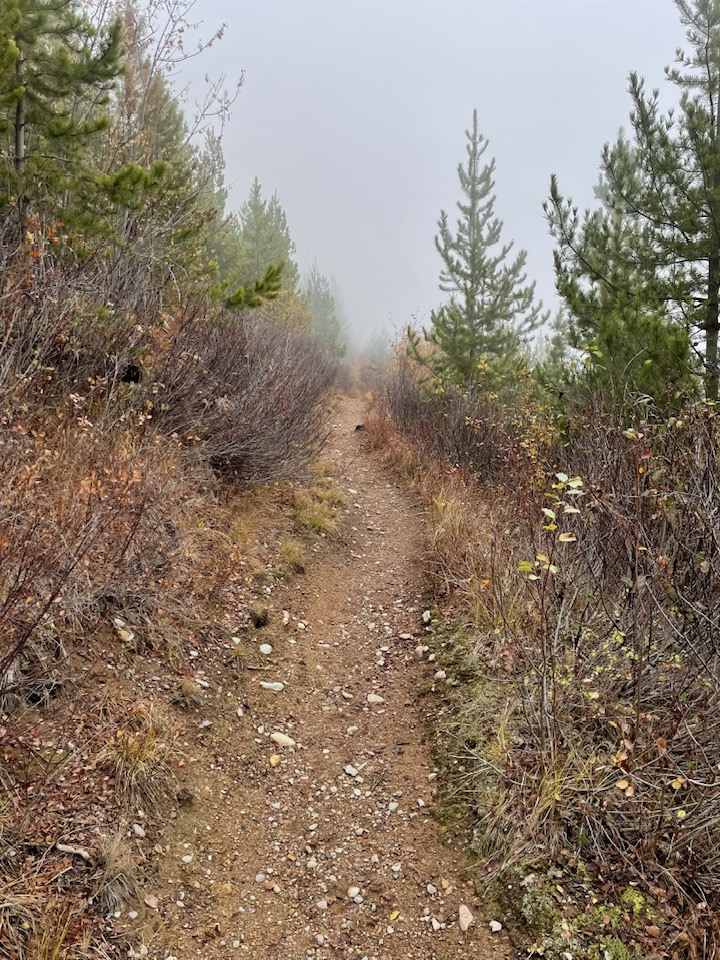
The slope is a steady grade all the way to the summit, so we stopped a few times to enjoy the everchanging landscape. As we got to the second switchback, the mountains started to pop out above the clouds. The clouds came and went, but as we walked, we could tell the sun was starting to burn off the cloud cover. As you gain elevation the views just keep getting better and better.
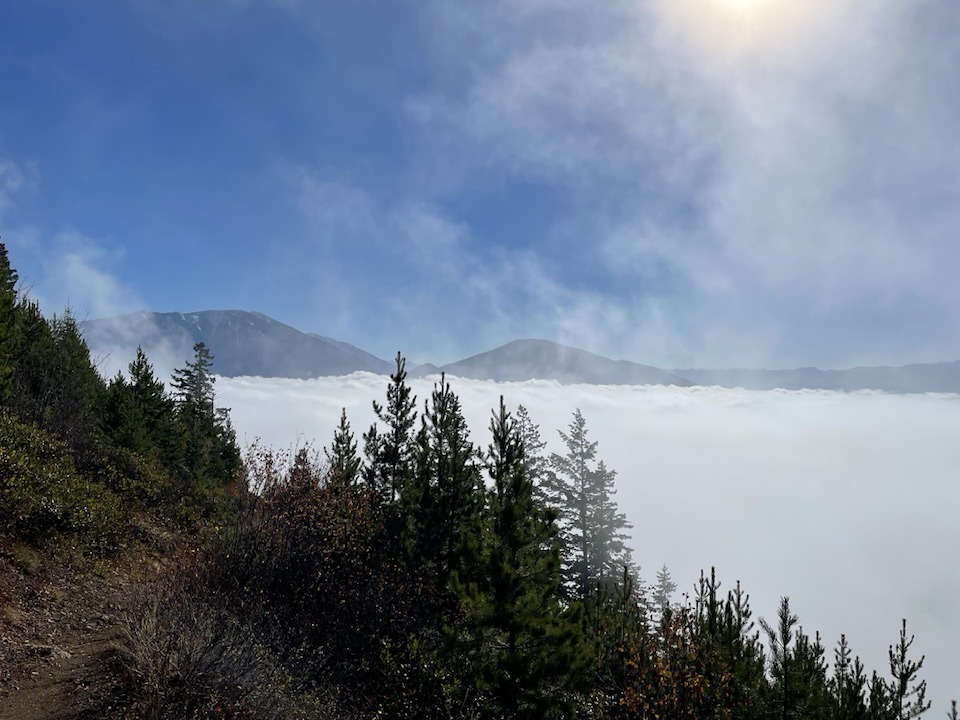
During this section the views extend towards the south/west, facing away from the interior of Glacier National Park. Towards the end of the trail, it begins to wrap around Apgar Mountain. You’ll enjoy incredible views of the West Glacier area and the Middle Fork of the Flathead River looking to the southeast. As you climb higher you can see over Hungry Horse and Columbia Falls to the mountains beyond. Around the last switchback, you’ll face directly west towards the heart of Glacier National Park.
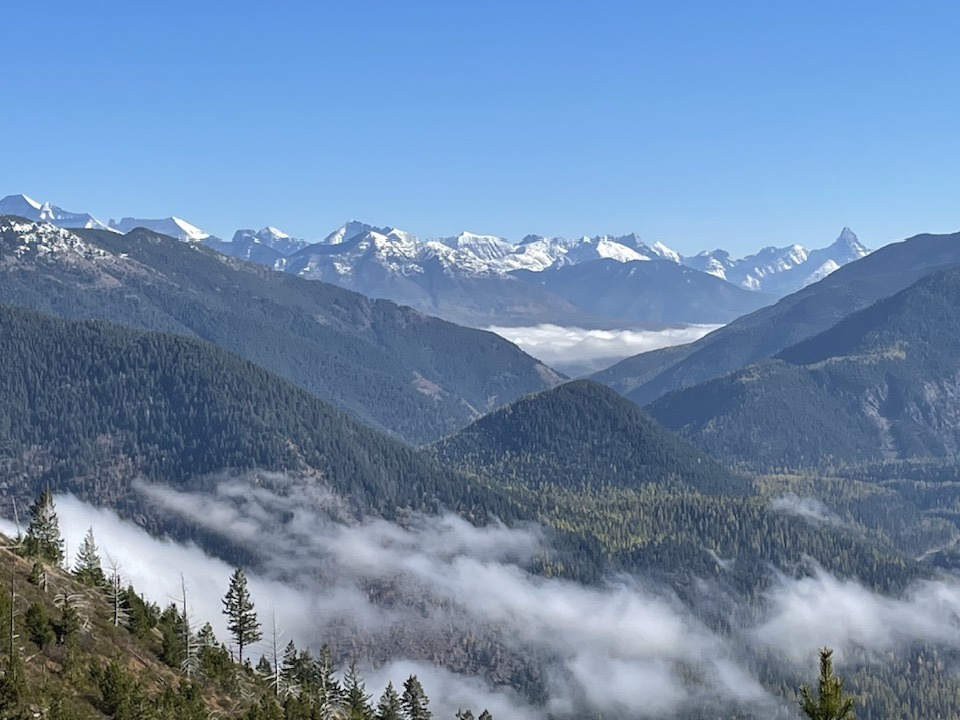
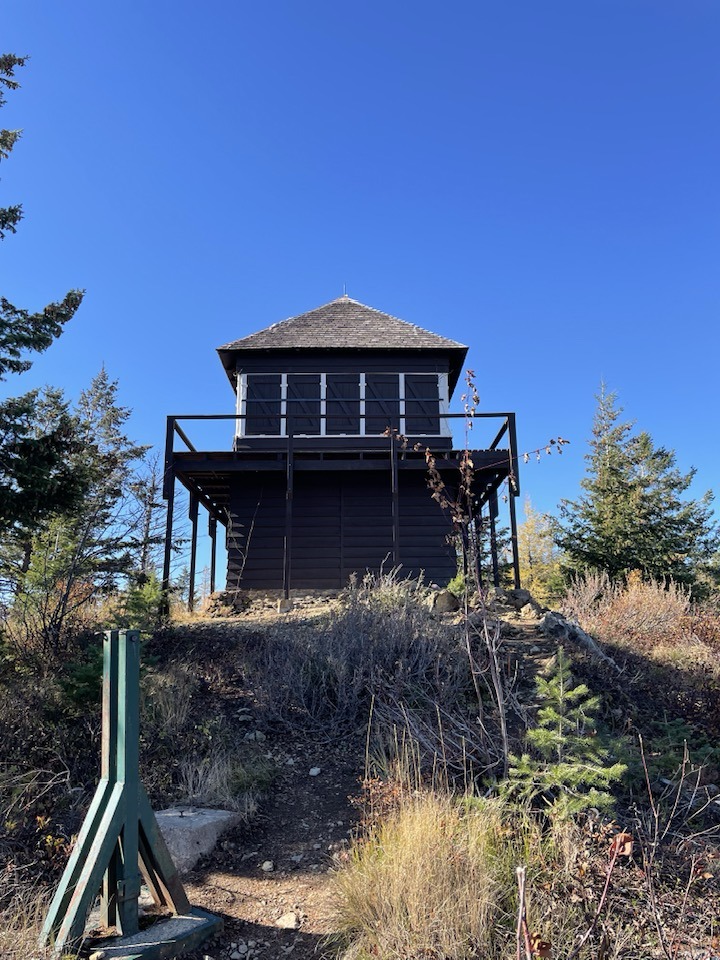
You’ll walk through a few trees and get a glimpse of the lookout. Take some time to walk past the lookout to enjoy the views of Lake McDonald and the surrounding mountains. The cloud inversion was still there, which made for some spectacular photographs. The snow-capped peaks emerging from the clouds below was truly stunning.
The lookout is just southeast from the true peak of Apgar Mountain. From its deck you have a unique view of Lake McDonald, Howe Ridge, Stanton Mountain, Mount Vaught, Mount Cannon, and Mount Brown (which boasts its own lookout). Walk to the south-facing deck and catch sight of numerous mountain peaks in Glacier’s remote southern region. Mount Saint Nicholas (9,376 feet) is perhaps the most prominent peak in this view, with the trademark slopes of a glacial horn.

Although no longer in use, the fire tower is considered an historical structure and is listed on the National Register of Historic Places. Also at the site is a TV transmitter tower that’s currently being used by a Kalispell television station with a special use permit to operate within Glacier National Park. The village, mountain, fire tower and trail are all named after Milo Apgar, who was among the first permanent families to settle on Lake McDonald in the early 1890s. Mr. Apgar built homes and cabins for tourists in this area, which would later become Apgar Village.

After snapping a few pictures and enjoying the view, we sat down on the deck of the lookout to enjoy our lunch. Jim brought his small propane burner, so we enjoyed some hot soup, naan bread and cookies. It’s nice to have a warm, nourishing meal after trekking up the mountain. On a summer day, we normally pack sandwiches, fruit and a sweet treat for lunch.
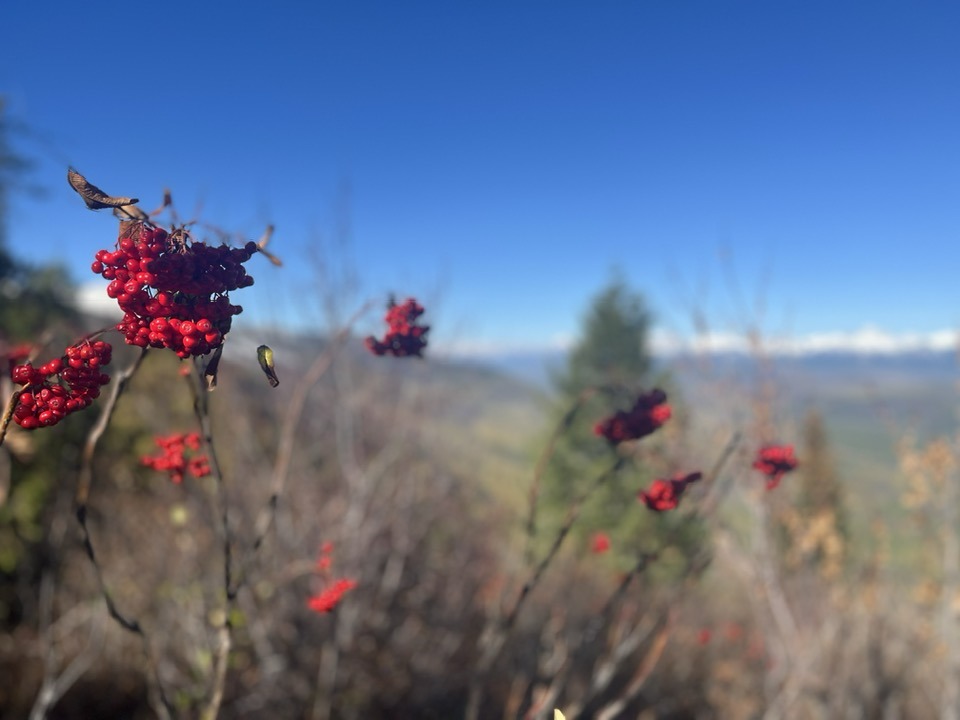
We saw a total of four hikers coming down on our way up, but by the time we got to the Lookout we had the spot all to ourselves. That’s one of the many benefits of living here, we can enjoy the park without all the tourists. The Apgar Lookout Trail is also one of the first trails to be snow free in the park, making this an excellent choice for an early season hike.
We are looking forward to exploring more this Fall and Winter, so subscribe below to join us for these adventures.

 Design, Garden, & Travel by Majestic Meadows