
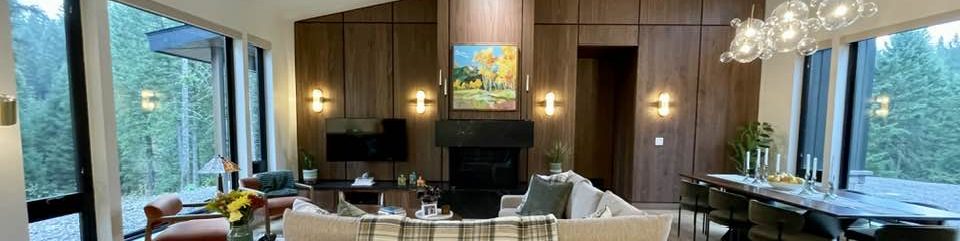

If you’re like me, you’ve perused and saved hundreds or even thousands of Pins on Pinterest. This site is great for getting ideas and identifying styles that attract your interest. Occasionally, you’ll also find some helpful do-it-yourself tips. If you spend much time on the site, you’ve probably noticed how everything starts to look alike. The interior, exterior and garden Pins look good, but don’t you want a home that is uniquely you? In today’s post, you’ll learn how to describe your design style, create a harmonious space that works for your lifestyle and is captivating.

Let’s get real, streaming movies and series is a part of our lifestyle. My hubby, Jim and I sit down in front of the television for an hour or two almost every night. It would be silly to hide the TV and pretend otherwise, but it is not the focal point in the living room. That important element is reserved for our mountain view and the fireplace.
Define Your Taste
You’ll want to do some research to help you define your taste. Even if you’ve done this before, I want you to pick up several good design magazines and pull-out interiors that you like and even a few you dislike. Here are some options: Interior Design, Better Homes and Gardens, Southern Living, Mountain Living, Midwest Design, Home and Design, Real Simple, Traditional Home, Dwell, House Beautiful, Architectural Digest, and Veranda. If you don’t want to buy magazines, visit your local library and snap pictures of the interiors. If you prefer, you can also do this same exercise online at Pinterest and Instagram. Again, save the ones you like and a few you dislike, just like you did with the magazines.

Next, spend some time thinking about and jotting down what you like about these images. Are the colors similar? What about shapes and textures? Are decor pieces polished or do they have a patina? What patterns catch your eye? Do they remind you of a favorite vacation spot or your childhood home? Is there a lot of stuff or is there plenty of negative space letting items breathe? Are the spaces formal or casual?
Next, you’ll want to take stock of what you already have and love. What pieces hold a special memory? Which ones reflect you? Which only serve a purpose? Do any items do all three? Everyone has bought one thing they love for their home. What’s yours? Take the time to identify these objects and then ask yourself: Why do you love it? What details make it special to you?
Jim uses his guitar every night, so it is important to have a quiet spot in the house to play without having to compete with other noises. The crystal flowers were a gift for our anniversary and create colorful prisms when light hits them. Both these objects are meaningful and hold special memories.
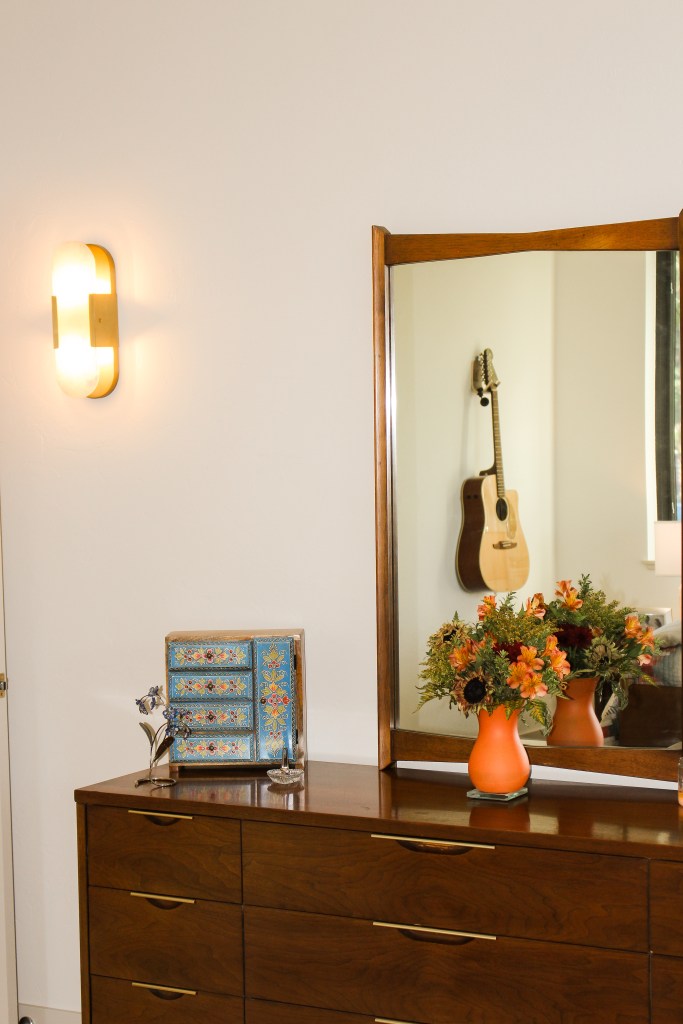
The answers to these questions will help you understand what you like, and how you want these objects to show up in your home. When you venture out to a local vintage shop, furniture store or online, like Etsy you’ll have a good idea of what you need and will love for your home. This part of the journey – learning about yourself, unearthing treasures, making your world bigger – is the best part.
Pro Tip: Take a look in your closet. More than likely, the colors, patterns and fabrics in your closet are great clues for choosing furniture and details for your home. Once you have your description words, you can search these keywords online to help you find items that you’ll love.

To design a successful space, interior designers focus on these three objectives:
- First, design a room that functions in a way that meets your lifestyle – How will the room be used?
- Second, design a room that expresses a mood in which you feel comfortable – Will it be traditional or contemporary, formal or informal, warm or cool, bright or subdued?
- Third, create an environment where all elements fit together in harmony with one another and with the rest of the house – The furniture and decor should be appropriate to the mood and style of your home, as well as your lifestyle.
Lifestyle
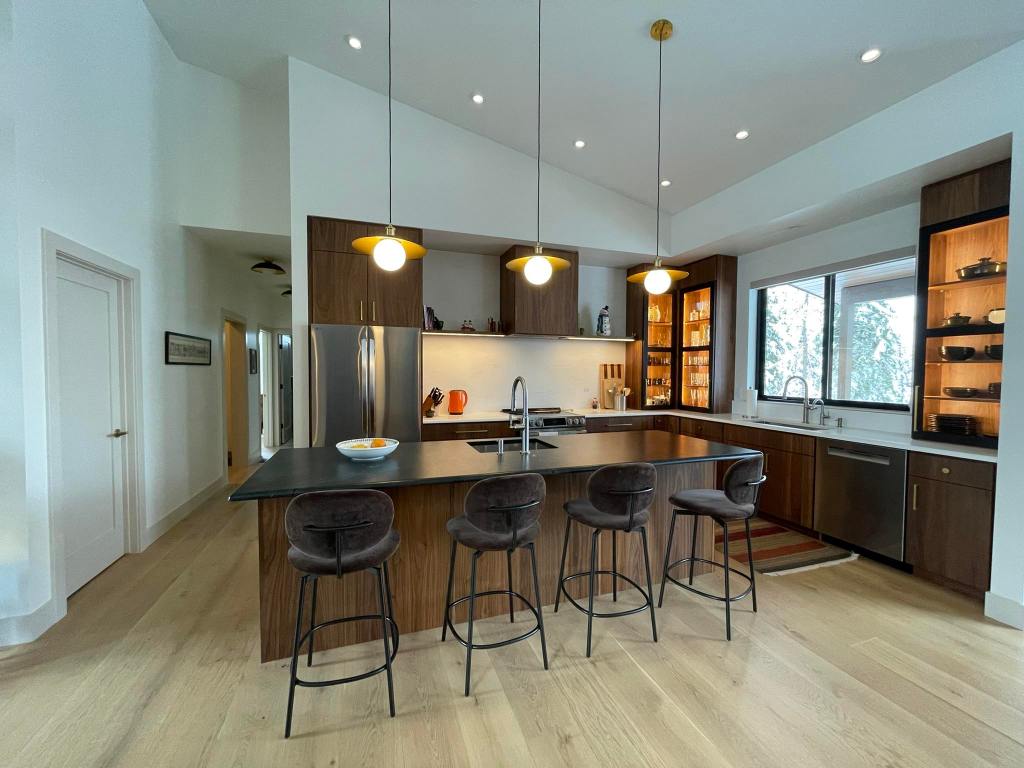
Jim still works, so at the end of the day, we want to spend time together. He is the chef of the family, so I usually sit at the island while he prepares the meal. As the clean-up crew, the second sink, pictured at right allows me to clean while he is cooking without being in the way. We designed a kitchen that functions for our lifestyle, which includes cooking a lot and having room for all the stuff that comes with making meals at home. The oak floors, Greek Villa paint, DeWils walnut cabinets, Alluvial leathered quartzite and neutral Cambria MacBeth quartz provides contrast and balance to the space. We’ve got more storage in the pantry located behind the door on the left.
Learn more about kitchen design in my post below:
To create a space that works for your lifestyle, think about who you aspire to be at home. Do you want to entertain more, but you’re not proud of your kitchen or entertaining space, then updating those spaces should be a priority. If you want to read more, find a quiet corner – preferable near a window – to place a comfortable chair and a lamp. Figure out the things that are going to make you feel like the best version of yourself. Then consider the investments, large or small, you can make in your home to accommodate them. Be honest about how you live in your space. Where do you spend most of your time? Let your answer dictate the way you prioritize the design and budget. Give yourself permission to invest in the areas that make you happiest and change up areas you use less frequently.
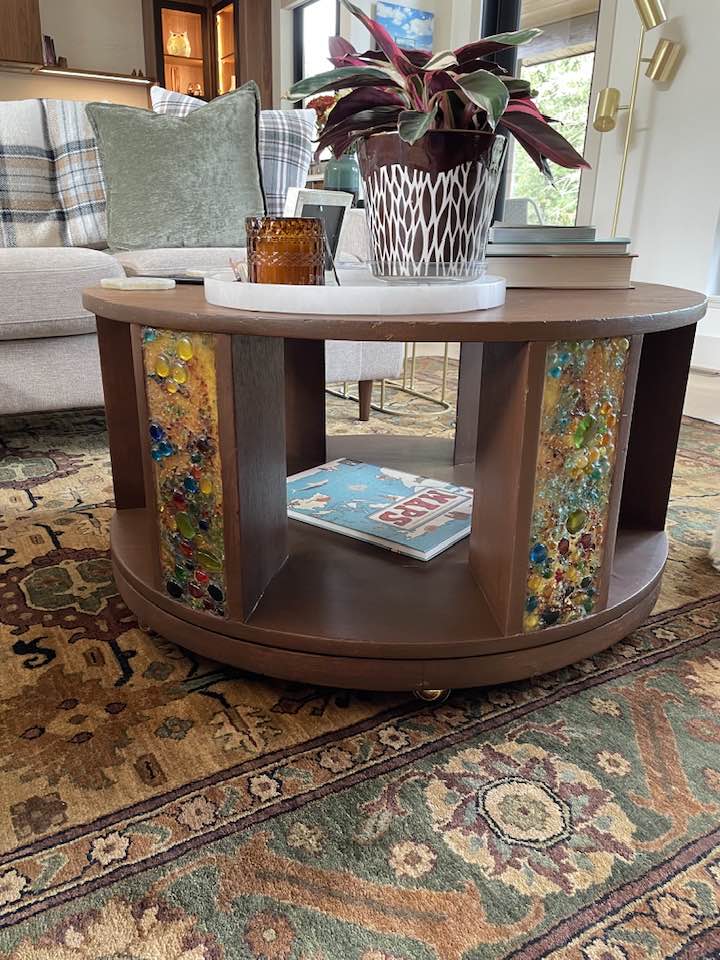
Pro Tip: Adding vintage pieces, like this unique walnut and colorful glass inlayed coffee table makes the space special. Buying all your pieces at the same furniture store will lack personality. Take the time to assemble an authentic mix of objects you love instead of buying everything all at once.
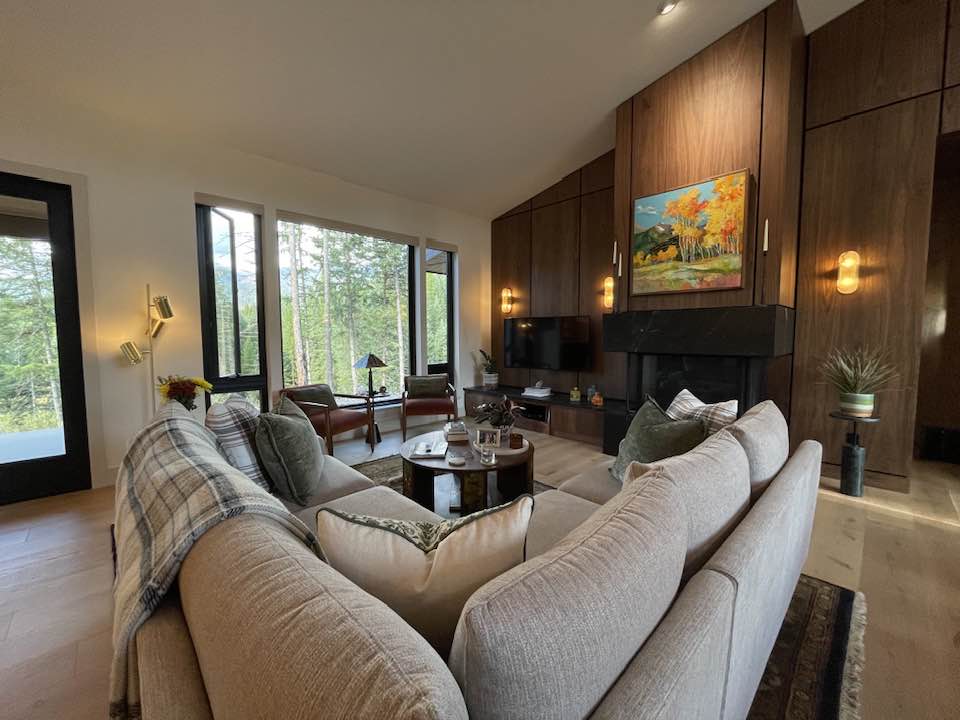
When planning your space, consider how many people are in your family, as well as the total number of people you regularly entertain. In a living or family room, that means its comfortable for having conversations or watching television. Make sure there is a place to set down a drink at every seat. Usually, it’s just the two of us, so the Interior Define Sloan 4-seat sectional works great for our living room. We also have additional seating for guests or reading by the window. In the picture below, you can see our sectional and additional seating, as well as the fireplace and TV. Please note, we have one directional ceiling light for the painting above the fireplace. All other lighting comes from wall sconces, floor and table lamps.
You’ll also want to take into consideration the following activities when designing your space:
- Deskwork/Computer – Room for a computer and a place to hide paperwork.
- Stereo/Musical Instruments – In a large, open plan everyone will hear the music, so consider that when planning. Jim tends to play his guitar in the office.
- Games – You’ll want a table and comfortable chairs for everyone.
- Hobbies – Have a place to store all your stuff when you’re not creating.
- Exercise – I have plenty of room behind the sectional and my weights are hidden away nearby.
Mood
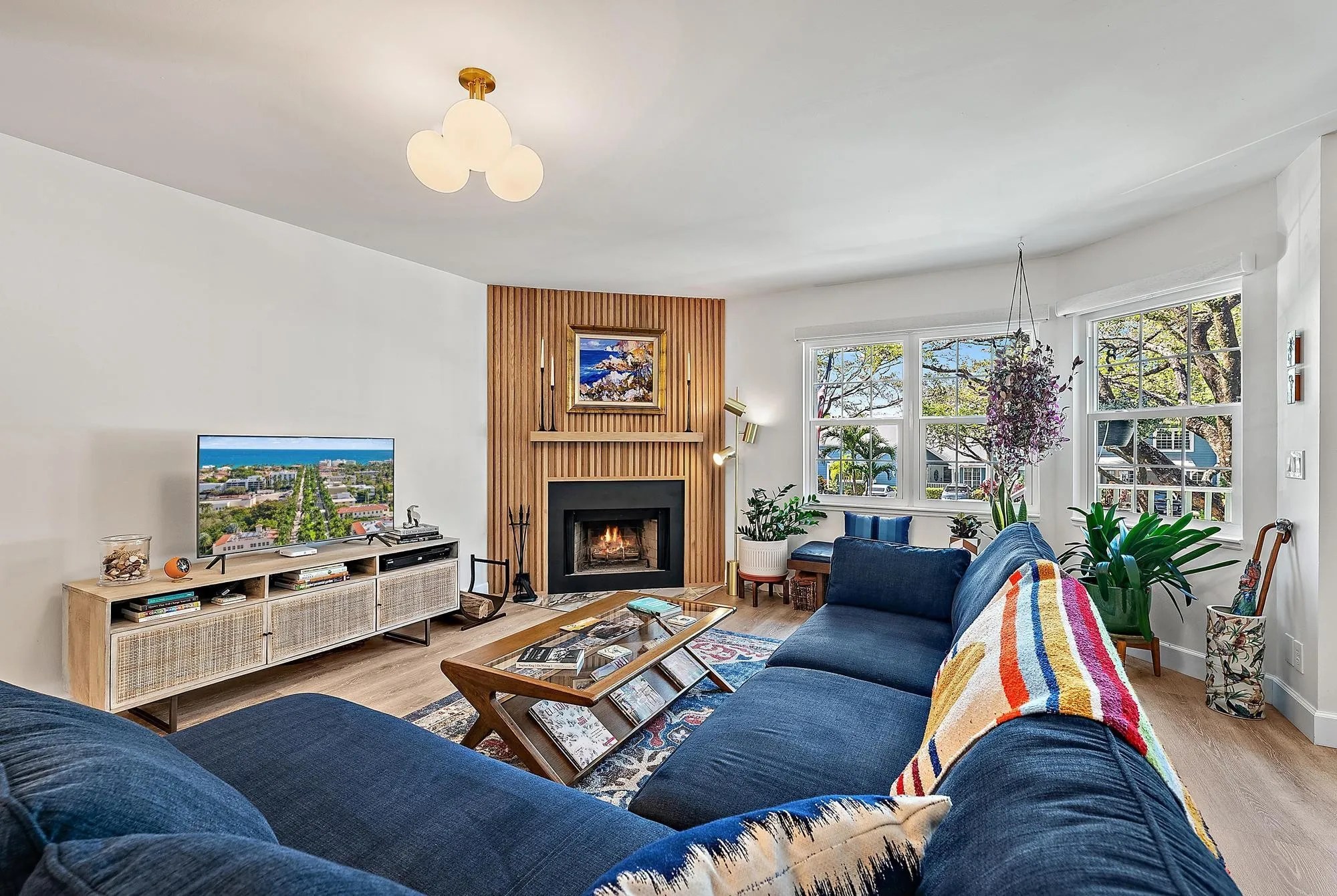
Consider your home and environment when determining the mood of your space. Our last house was a half mile from the beach in sunny South Florida. The interior reflected our personal taste, which is Mid-Century Modern, but it also featured colors and textures suited to the surroundings. I used lots of cool blues punctuated with pops of orange. We also used a beachy LVP flooring, which is easy to clean and can take wet feet and beach sand.

We designed and built our current home using iconic Mid-Century Modern design principles. The interior and exterior combines simplicity, functionality, and harmony with the mountains surrounding it. The home is informal, welcoming and a mix of warm, natural materials. Color was a feature of MCM design and our house has plenty of it. The renowned MCM architect, Richard Neutra believed architecture could promote physiological well-being. We agree, so we designed a home with an open floor plan, lots of glass and an indoor-outdoor connection.
Pro Tip: It’s best to use neutral, solid fabrics in large pieces like the sectional pictured below. Add pattern and color in smaller furniture pieces, pillows and decor.
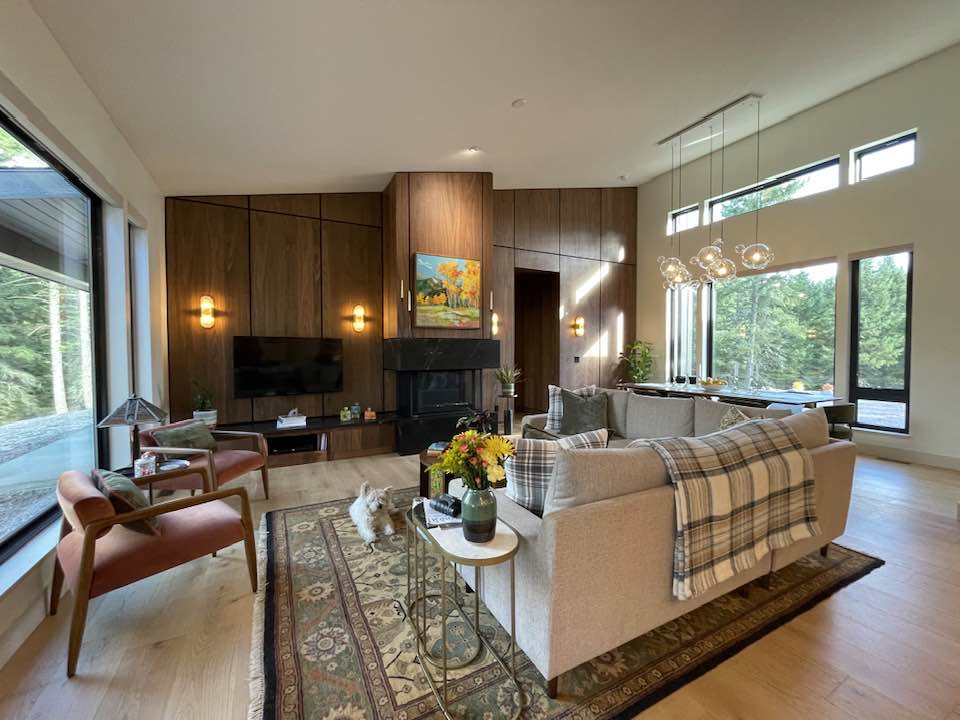
Mid-Century Modern design showcased natural materials, including wood and stone. The light white oak engineered floors contrast beautifully with the darker, bold grained walnut paneling. The warm, light-colored walls (SW Greek Villa) also balance nicely with all the walnut in the great room. The Alluvial leathered quartzite on the fireplace surround and kitchen island adds another natural element to the space. The leathered texture allows you to feel the irregularities providing an organic touch to the design.

Learn more about Mid-Century Modern design in my post below:
Pro Tip: Once you identify your style and mood, you can stick with that style or add other looks. The goal is to create an interior that feels layered, assembled and unique. You can mix up different styles and should combine old and new pieces but make sure they are connected by how much you love them. Nate Berkus’s new interior design book, Foundations (Berkus 2025) shares Four Tenets of Good Design which can help you achieve this sophisticated look:
- Make it Personal
- Embrace History
- Introduce Character
- Develop your Vision
Harmony
To create harmonious spaces try using the inspirational photos you’ve collected to look for similarities. For instance, are you attracted to neutrals and textures? Do handwoven accents resonate with you? Do you love pairs – chairs, lamps, tables, etc.? Do balance and symmetry catch your eye? You can create a harmonious space with objects you love, whether they are new or vintage or different design styles.
To successfully create harmony, I recommend using unifying elements like color palettes, textures, and materials. You’ll also want to balance proportions between pieces and the space itself. Consider anchoring the space with neutral foundations while layering in contrasting accents. Mixing styles is about curated contrast rather than random placement.
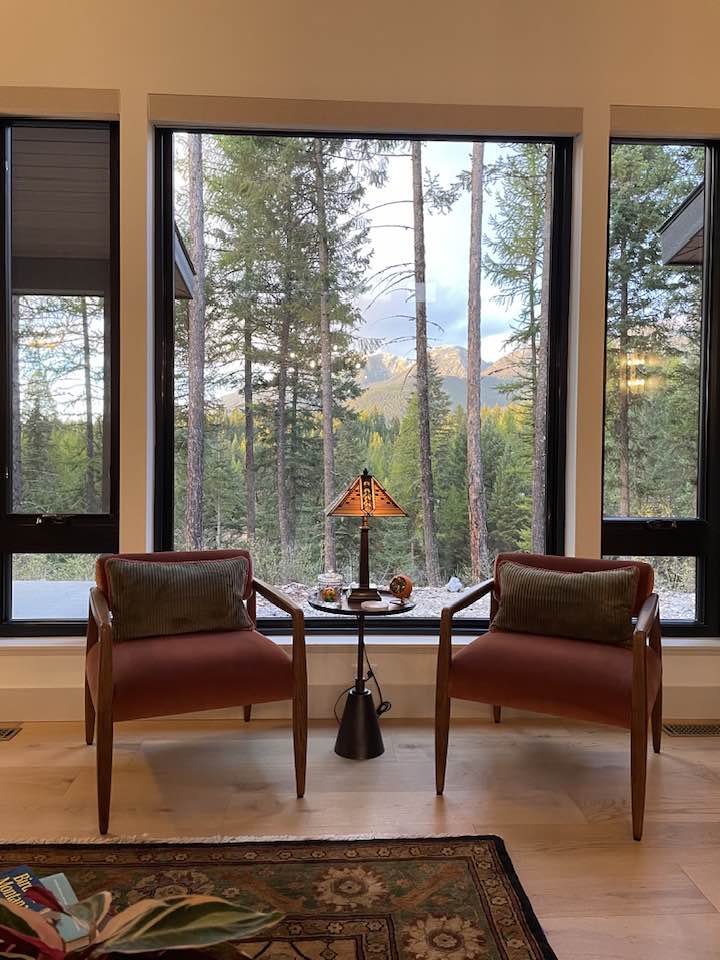
Our rust and green color palette is unique in today’s world of beige interiors. That’s not why I did it though, it’s because I love color. The rust offers warmth and catches your eye. The dark green reminds you of the pine forest just beyond the windows. These colors are also spread throughout the space. You’ll see them in the rug, pillows, accent and dining chairs. Heck, these colors are even in the glass inlays of the walnut coffee table. The performance velvet on the chairs feels luxurious but is stain-resistant and has a high rub-count. I also added additional walnut elements in cabinets, wall paneling, dining table and furniture pieces. As you can see in the above picture, repeating colors, fabric and walnut accents bring harmony to our space.
Harmonizing New and Vintage:
- Unifying Color Palette: Choose a consistent color scheme across both vintage and modern pieces. For example, pairing antique wood with contemporary furniture in complementary tones creates cohesion.
- Balance Proportions: Large, ornate antique furniture should be balanced with sleek, modern items to avoid visual heaviness.
- Neutral Foundations: Start with neutral walls, floors or upholstery, then add bold accents from different eras. This prevents clashing and allows styles to complement each other.
- Textural Harmony: Mix materials thoughtfully—pair rustic wood with polished metal or soft fabrics with harder surfaces to create depth without chaos.
- Repetition of Elements: Repeat shapes, finishes, or motifs across styles. For instance, curved lines in a vintage chair can echo in a modern lamp.
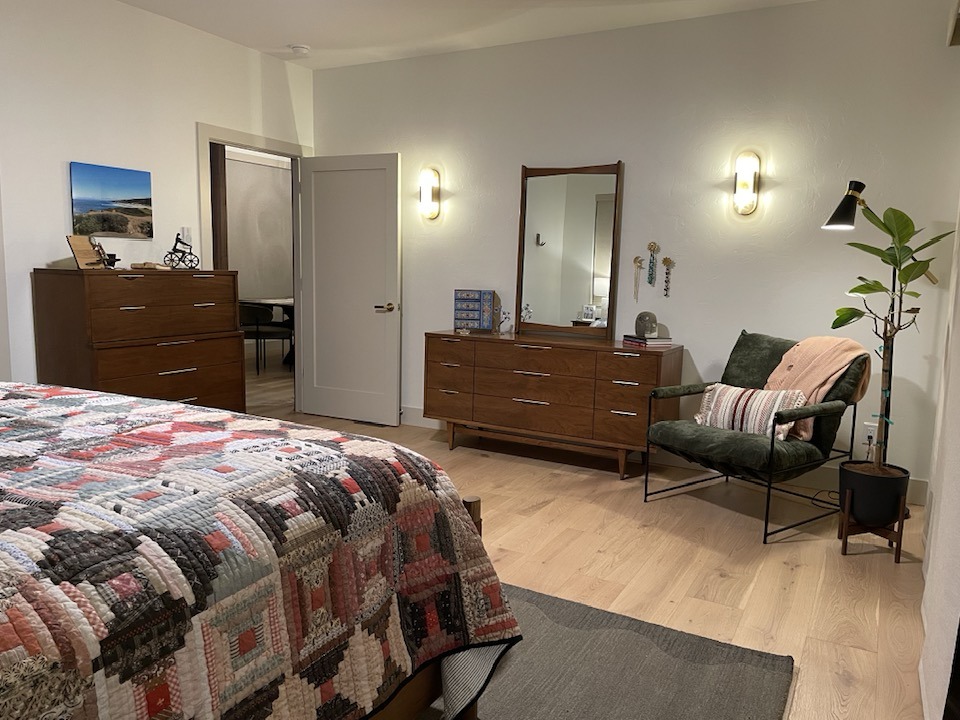
The vintage mid-century modern dressers look stunning next to the contemporary chair in the primary bedroom.
Blending Complimentary Design Styles:
- Identify Core Styles: Decide which styles you want to highlight (e.g., mid-century modern + traditional, or industrial + farmhouse).
- Layer Gradually: Introduce one or two statement pieces from each style rather than overwhelming the space.
- Anchor with Common Threads: Use shared materials (like brass, velvet, or walnut) across different styles to tie them together.
- Avoid Overcrowding: Too many competing focal points can feel chaotic. I recommend letting one style dominate while the other plays a supporting role.
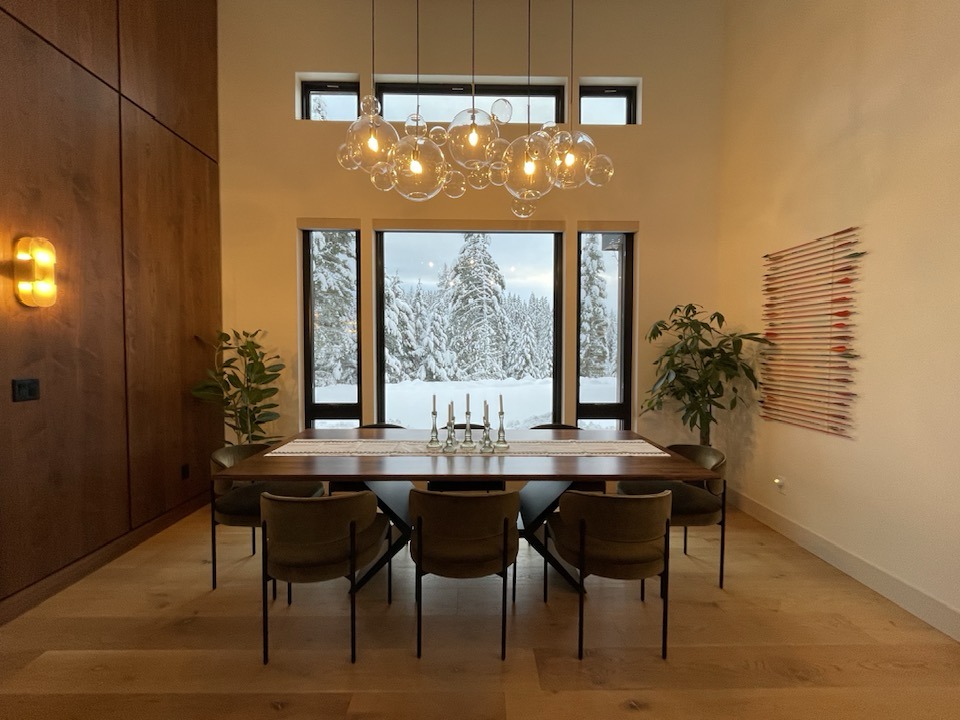
Mid-Century Modern is the star of our home, but we’ve also added contemporary elements like the walnut and black metal Arhaus dining table. The green is repeated in the velvet upholstery on the Hollis dining chairs from Interior Define. The Soap Bubble chandelier and Arrow art adds whimsy and additional color to the dining room. The dining chairs are comfortable and lightweight, so folks can linger around the table or carry them into the living room for additional seating.
Practical Tips:
- Create Vignettes: Group old and new items together in small clusters (e.g., a modern sofa with a vintage side table and contemporary art). This makes the mix intentional.
- Use Transitional Pieces: Items that bridge eras—like a classic rug under a modern coffee table—help smooth stylistic transitions.
- Personalize the Space: Harmony comes from reflecting your personality. Mixing styles should feel curated, not forced.
Things to Avoid:
- Avoid Clashing Colors: Bold hues can overwhelm modern monochromes if not balanced.
- Mind Scale: A delicate antique chair may look lost next to oversized modern sectional unless paired thoughtfully.
- Don’t Over-theme: Harmony is about subtle blending, not turning your home into a showroom of contrasting eras.
Pinterest may spark endless inspiration, but true beauty lies in creating a home that reflects you. By defining your personal design style and shaping interiors that fit your lifestyle, you can move beyond trends to craft spaces that are timeless, harmonious, and uniquely yours. Now is the moment to take those saved ideas and transform them into a design vision that celebrates your individuality—start curating a home that tells your story today.
Be sure to subscribe below for additional tips for designing a home that’s timeless, harmonious, and uniquely yours.
Share some of your descriptive keywords below:

 Design, Garden, & Travel by Majestic Meadows
Leave a comment