
My hubby, Jim and I had a small edible garden in South Florida, where we grew leaf lettuce, tomatoes, snow peas and peppers. We also had a couple of fruit trees, including a Nam Doc Mai mango we still miss to this day. On our 12.5-acre property in NW Montana we have room to put in a bigger vegetable garden and several fruit trees. To extend our growing season, we will also have a greenhouse. We’ve learned a lot about gardening in NW Montana, including the benefits of using native plants. In today’s post I’ll share our edible garden plans and updates in other parts of the garden.
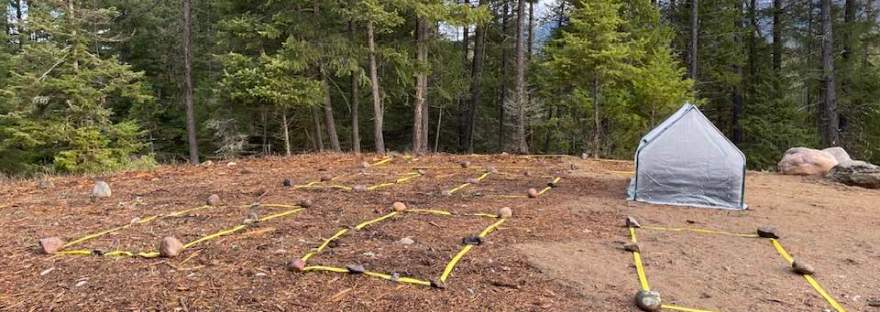
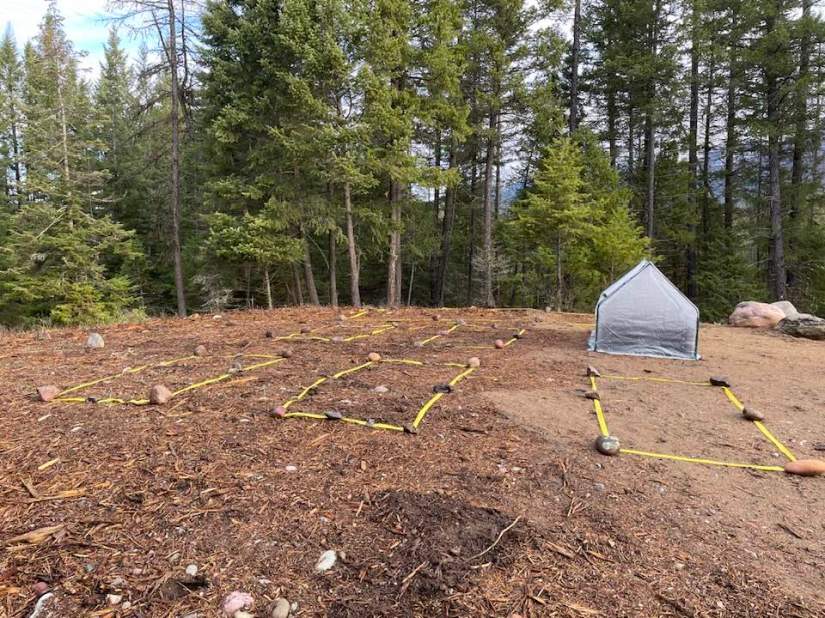
Below you’ll see our current edible garden plan, which includes five raised garden beds, a blueberry patch, four fruit trees, and a greenhouse. This entire area will also have a sturdy electrified fence to keep deer, bear and other critters out.
Land to Hand MT
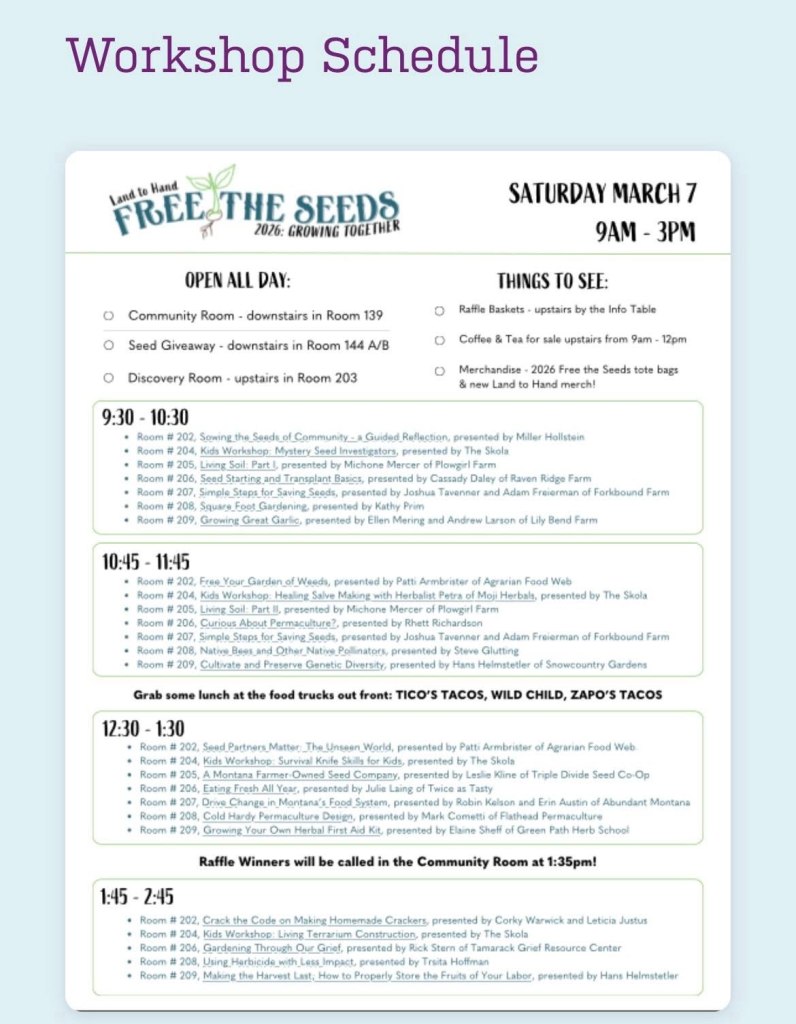
Getting started can be very intimidating, so we were thrilled to attend Land to Hand MT’s Free the Seeds/Growing Together event. Land to Hand MT is a local nonprofit that hosts this event annually. It is a free, educational and family-friendly event about community food systems. The event is full of interactive workshops, activities, seed sharing, and community building. I’ve always said that plant people are the nicest people, and we’ve found that to be true in NW Montana too. We attended the Square Foot Gardening workshop and spent time speaking with various folks in the community room, which featured small local food and flower farmers, Center for Native Plants nursery, local nonprofits and many more.
Square Foot Gardening Workshop
Kathy Prim packed a lot of information about Square Foot Gardening into her hour workshop. After hearing about Kathy’s positive experience, we’ve decided to use this method in our edible garden. Kathy and the book, All New! Square Foot Gardening, 4th Edition, promises no digging, no tilling, no fertilizing, no machinery or heavy tools—less watering, waste, and weeding. The book states it is a “foolproof gardening method that has helped generations of gardeners around the world raise their own organic vegetables in less space, with less effort, and for less money than traditional row gardens.”
The Square Foot Gardening technique is built to take the guesswork out of gardening, so it’s perfect for newbies or intermediate gardeners. The process is simple: set up your garden box, whether on the ground or in raised beds. Then fill it with soil, such as Mel’s Mix™ and add a square—foot grid on top to guarantee proper plant spacing and maximum yields. This type of gardening will allow us to produce more than enough vegetables for our needs.
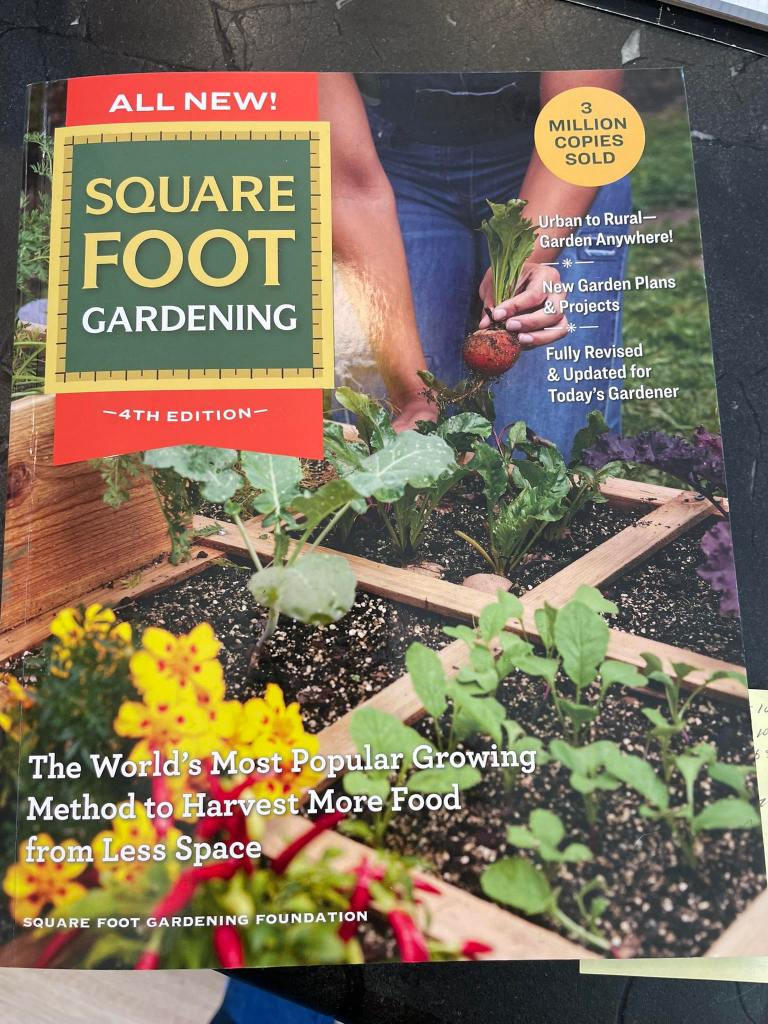
Here are Ten Square Foot Garden Principles:
- Plant in squares: Using one-square-foot grid squares is the most efficient way to plant, and the grid is essential to the SFG Method.
- Plant densely: You can grow a lot of produce in less space than you might think. The size of the plant at maturity guides how many plants you can fit into one square-foot space.
- Be sparing with seeds: Uses simple plant-spacing guidelines and doesn’t ask you to overseed your garden.
- Rotate crops: Crop rotation happens almost without thought in a SFG bed.
- Grow up: Vining plants take up too much space if left to sprawl, so you’ll train them to grow up a trellis.
- Use Mel’s Mix, not garden soil: Mel’s Mix growing medium recipe is a result of years of formulation to achieve optimum plant nutrition, soil friability, and water retention. Mel’s Mix consists of 1/3 screened compost, 1/3 coarse or super coarse vermiculite and 1/3 coconut coir. Coconut coir is a natural fiber from coconut husk. Unlike the damage done to bogs when harvesting peat moss, coco coir is a renewable resource. It also retains moisture, improves soil structure and aeration. It is lightweight, non-toxic, and resistant to diseases and pests.
- Grow shallow: Raised beds that are more than about 6-8 inches deep are unnecessary for growing most garden crops. Some crops, like carrots do need deeper soil and SFG has a simple solution for those too.
- Stop using fertilizer: The Mel’s Mix provides all the nutrients your plants need.
- Convenient Garden: A garden you look at every day is one you’ll pay attention to, so you’ll want a convenient location to check it, water it and make sure it gets plenty of sun (6-8 hours daily).
- Maintain narrow aisles: A 3-foot aisle gives you room to work and gives your plants room to grow over the sides.
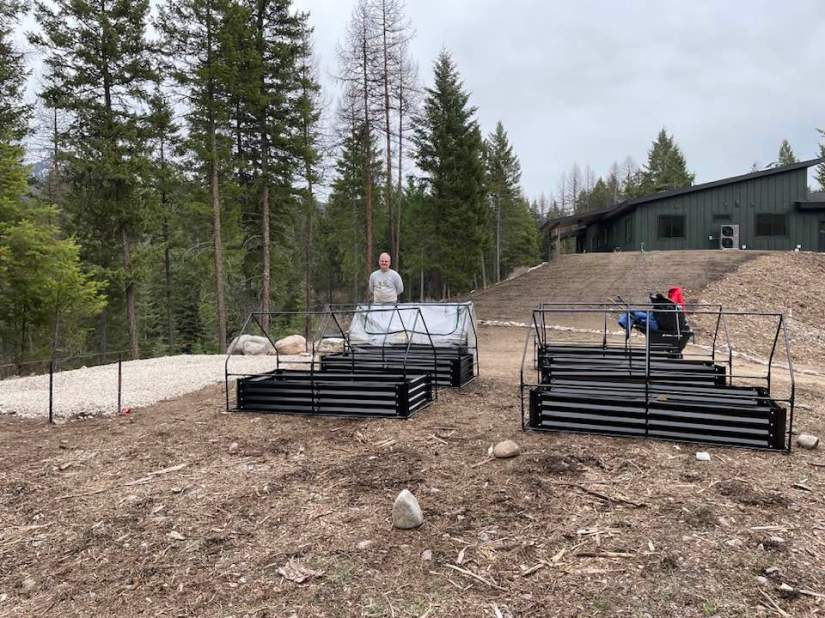
The fruit trees will be planted west of the greenhouse and raised beds shown below:
Montana Climate
The climate in NW Montana is very different than South Florida, including long, cold winters, intense solar radiation on clear days, and wide temperature swings. The shorter growing season means using a greenhouse to start seeds early instead of buying plants that are already growing. To plan your own garden, you will want to know your frost dates. In Montana the last spring frost is the first week in June and the first fall frost is around September 15th. That gives us about 100-120 frost-free days, so we will start our seeds in a greenhouse, but you could also start them indoors on cold frames to stretch your season.
Here are the planting dates from last year:
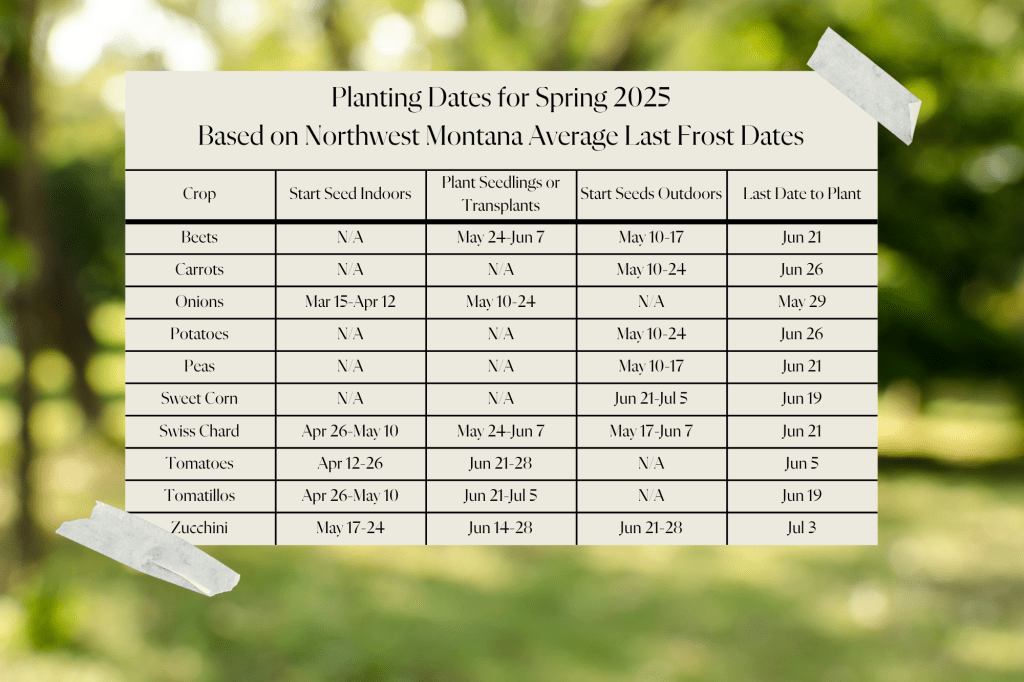
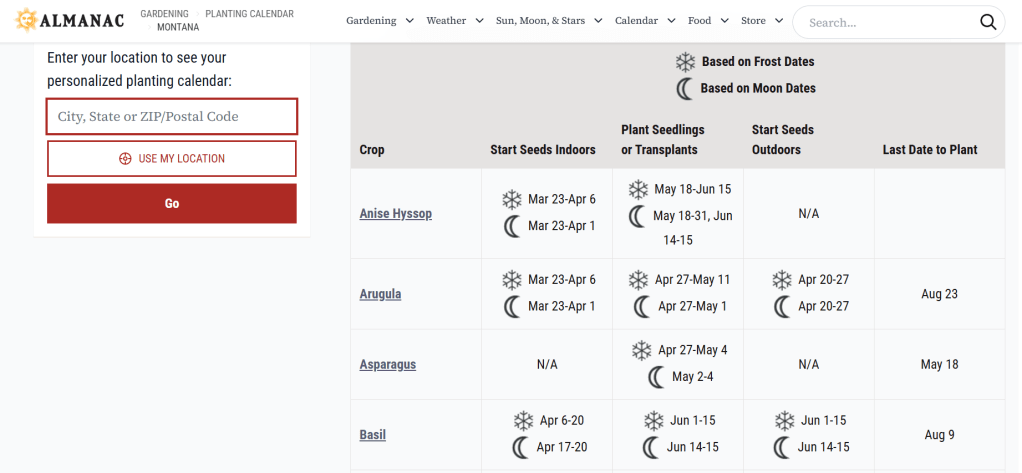
The Old Farmer’s Almanac provides lots of crop information, including starting seed or transplanting dates for your zone. Each crop, including vegetables and herbs has a link that includes growing details such as how quickly they grow, how deep and far apart to sow seeds and recommended crop types. This free resource in a valuable tool to build a successful edible garden!
Find your specific zone by visiting 2026 Planting Calendar by Zip Code | The Old Farmer’s Almanac link: Old Farmer’s Almanac Planting Calendar and Guide 2026 by Zip Code
Greenhouse
A passive solar greenhouse is designed to capture, store, and redistribute solar energy without mechanical heating. We are attracted to this option because it offers a practical, lower-cost path and extended growing seasons in Montana. The key to success is capturing that daytime energy and storing it for release overnight, while minimizing heat loss during extended cold periods. Passive solar greenhouses exploit three characteristics of Montana’s climate:
- Strong winter solar insolation on clear days that can be harnessed.
- Large temperature swings that make thermal storage effective.
- Relatively low humidity in winter which reduces fungal disease pressure if ventilation and humidity control are managed.
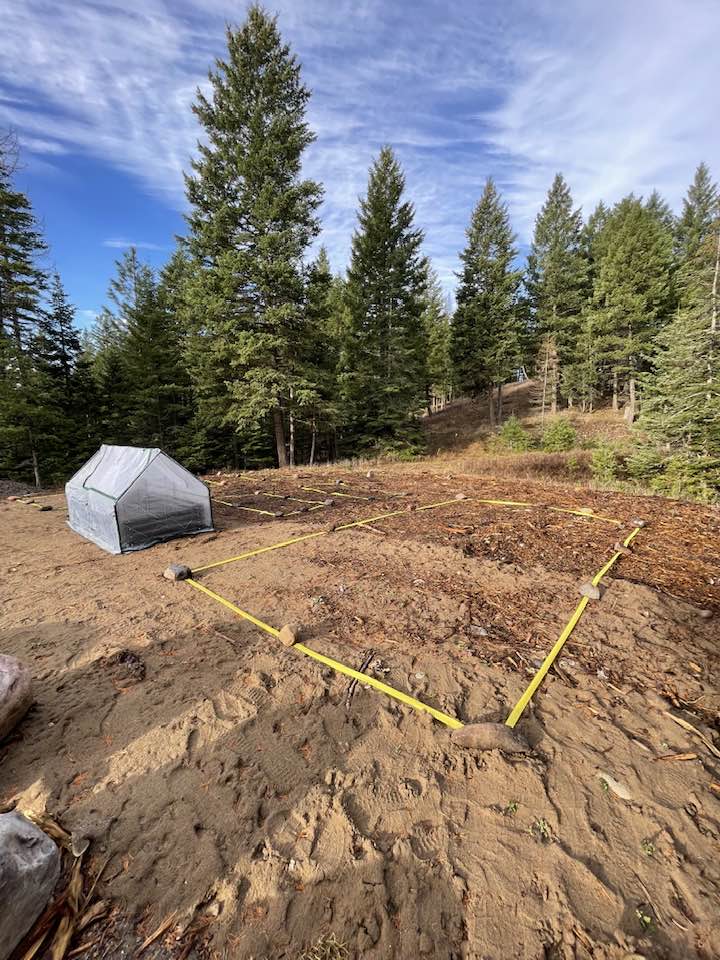
Jim ordered the greenhouse, which we will assemble and place on the north side of the garden, as shown below:
Passive solar design minimizes the need for supplemental heating by combining high-performance glazing on the sun-facing side with heavy thermal mass and high insulation on the cold side. Over time this reduces both operating expenses and carbon emissions compared with conventionally heated greenhouses that run gas or electric heaters.
Stable temperatures and protection from extreme cold reduce plant stress. Combining passive solar heat with proper ventilation and humidity control leads to fewer cold shock events, better germination rates, and higher yields per square foot. Passive solar greenhouses are a highly practical strategy for Montana growers who want to extend their production season, reduce heating costs, and increase resilience. With thoughtful design and attention to local conditions, a passive solar greenhouse can be a cornerstone of a more sustainable, productive, and independent food system in Montana.
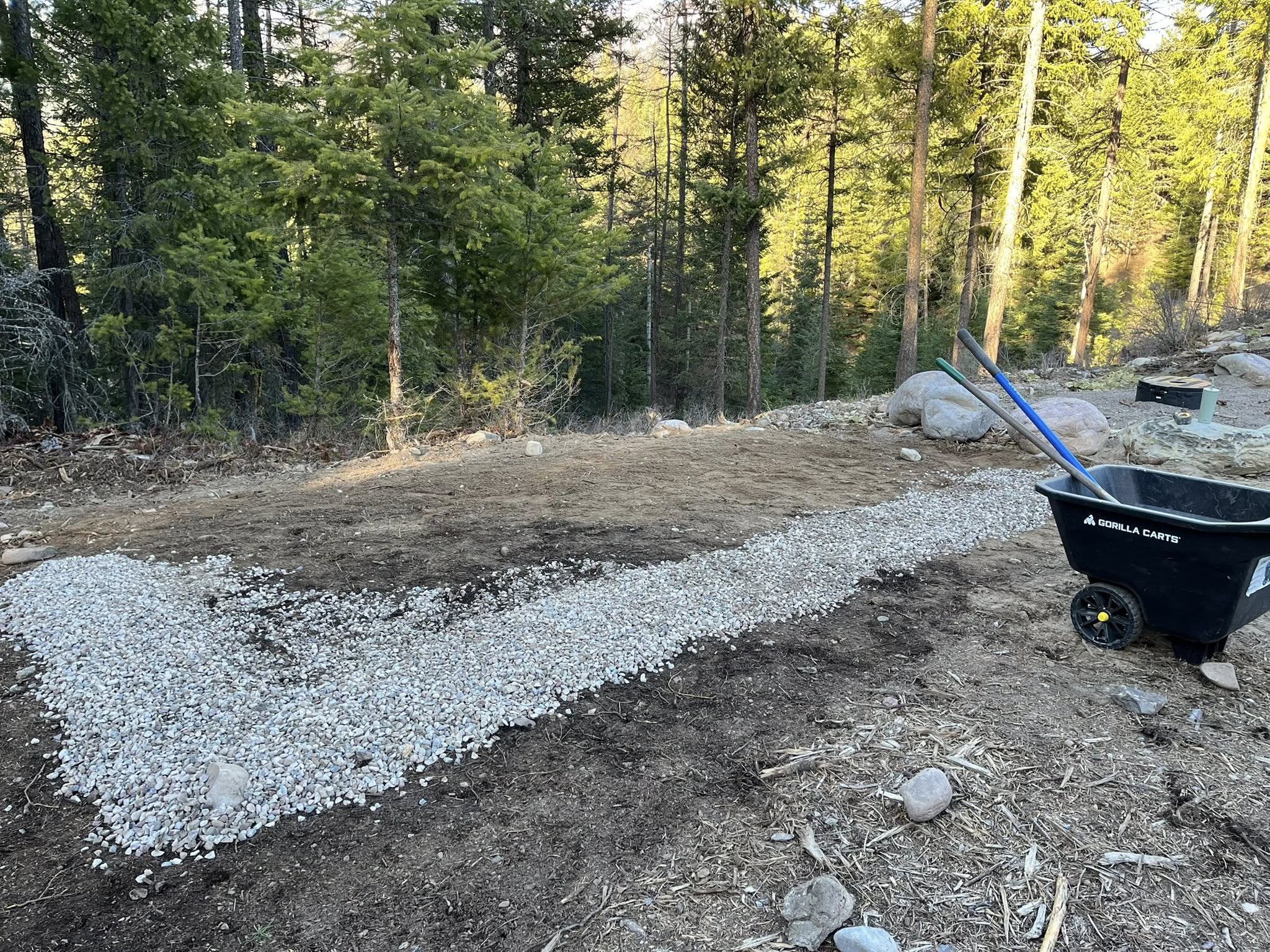
We had to clear the greenhouse site, then we placed gravel there to help level the site:
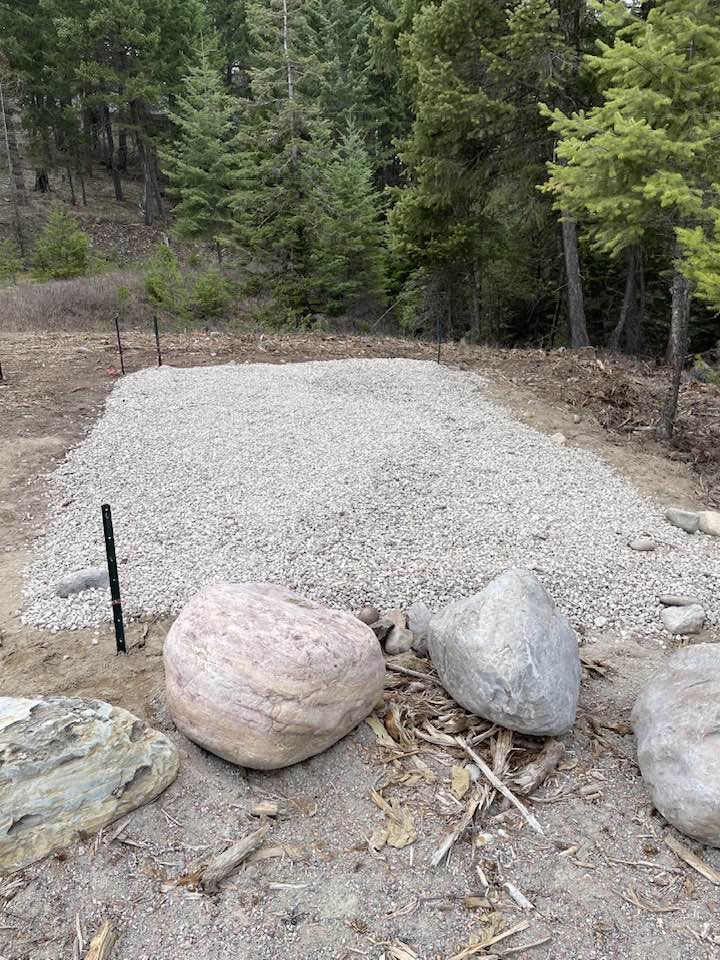
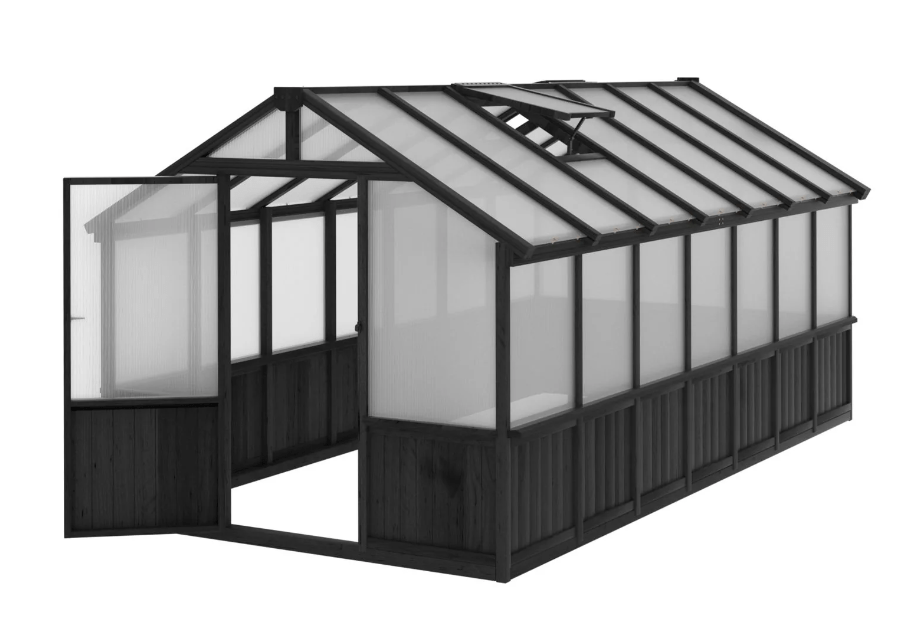
We will be modifying an affordable 8′ by 16′ greenhouse we found online, which is built from cedar and 6mm thick polycarbonate panels. In Montana, durable double-wall polycarbonate or well-sealed double-glazed units are common for passive greenhouses to balance light, insulation, and snow/wind loads. These panels diffuse light and heat, regulate internal temperature differences, and prevent uneven plant growth. The greenhouse will also have adjustable ventilation windows, allowing fresh air to circulate and preventing overheating. The longer side of the greenhouse will face true south to capture as much sunlight as possible. The north side will be modified with insulation to keep the cold out.
Having a greenhouse will allow us to maintain higher night temperatures and protect plants from frost, which will extend the growing season into late fall, and early spring. This should allow us to produce leafy greens, root crops, herbs, and more for a larger portion of the year.
Here is the 8′ x 16′ Veikous Cedar Greenhouse ($1,399) we’ve ordered:
Garden Beds
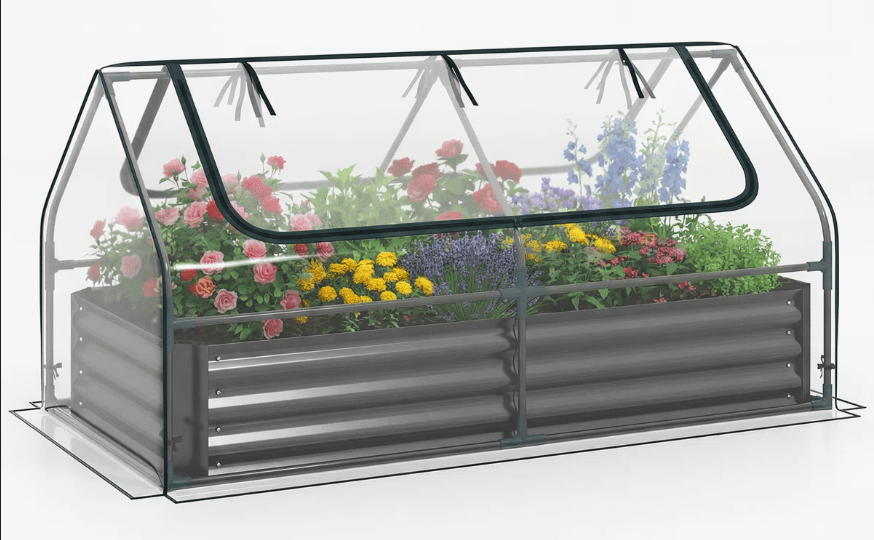
We will have five raised garden beds (3′ x 6′ x 12″ deep). The Pachton raised garden bed by Arlmont & Co. on Wayfair is easy to assemble and affordable ($84). This garden bed includes a built-in “greenhouse.” The PVC greenhouse cover is durable and wear resistant, especially helpful to keep plants protected from cold. It has two 2-tier windows, including an interior mesh screen ensuring good air circulation. We can simply open both zippers, roll them up and tie with straps for easy access to water, check or harvest veggies.
The raised garden bed is made of sturdy, rust resistant galvanized steel. The bottomless design allows for quick drainage. The bed and greenhouse can be used together or separately. Finally, we will double the height of one bed by placing one on top of another for a 24″ deep bed for veggies like carrots that need a deeper bed. The SFG method has you build SFG “top hat” boxes to place above existing beds, but we are going to group deep rooted crops together in this taller bed instead of spreading them out.
The Pachton Raised Garden Bed and Greenhouse Cover:
Fencing
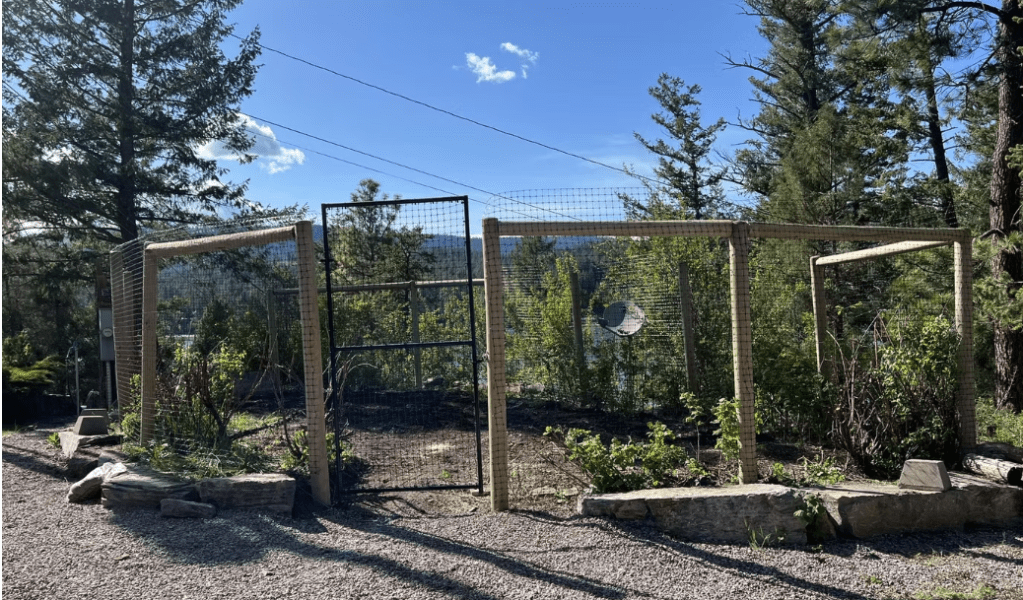
We’ve hired Bigfork Lawn & Fence, locally owned by Brandon Nemec to build about 130 linear feet of fencing around the garden. Brandon recommended “No Climb Horse” fencing, which will stand seven feet tall. This height will keep deer out of the garden. The fence is secured with fully treated farm style driver posts (6″ x 10′) and wooden half round top rails. The top rails are not necessary but make the fencing attractive and give it a “finished” look. The lower half of the fence will have smaller fencing, similar to chicken wire to keep small critters out. We’ll also have a garden gate (6′ x 4′ wide), and the entire fence will be electrified.
Here’s a similar fence Brandon did in the Valley:
Electric Fencing
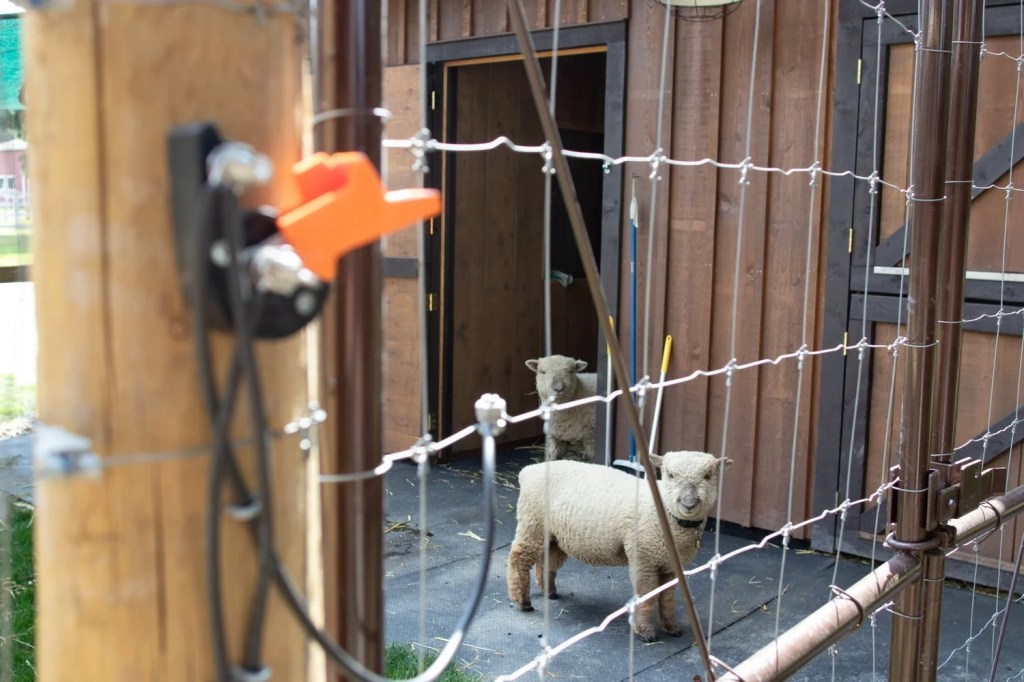
A tall, sturdy fence will help keep critters out, but we’ll need electric fencing to keep bears out. Electric fencing is highly effective for protecting gardens in NW Montana from common pests such as deer, bears, raccoons, and rabbits. Because of the area’s high bear activity, many local programs recommend specifically designed electric fences, often supported by bear-resistant grants. The current will shock the animal enough to scare them off. It is an electric pulse, so neither animal nor human will be seriously hurt from it. A food-conditioned bear will continue to come back, risking unwanted human and bear conflicts, which usually means the bear ends up dead. We want to do everything possible to make sure that does not happen.
Key Considerations for NW Montana Gardens
- Bear Protection: A effective bear-deterrent fence often requires 3 to 5 strands of wire, with the bottom wire no more than 8-12 inches off the ground to catch a bear’s nose, and a total height of at least 45 inches.
- Visibility: In high-wildlife areas, it is important to make the fence visible. Using high-visibility polywire, flagging, or adding PVC pipe sections to the top wire helps prevent animals like deer from running into it.
- Grounding: Proper grounding is crucial, particularly in dry or rocky soil. In many NW Montana locations, a minimum of three 6-10 foot ground rods may be necessary for the fence to work effectively.
- Support: Swan Valley Bear Resources (near Bigfork/Swan Lake) offers a 50% cost-share reimbursement for electric fencing and can provide assistance with design and installation. Swan Valley Bear Resources – Promoting Human-Wildlife Coexistence — Swan Valley Connections
Recommended Fencing Types
- Electric Netting: Portable electric net fencing (e.g., Starkline 35in x 82ft) is easy to set up for smaller, temporary, or seasonal gardens to keep out bears, goats, and other pests. Deer and Elk can get caught in this netting, so we will not be opting for this type of fencing.
- High-Tensile Wire: A 5-8 wire high-tensile electric fence is recommended for long-term, permanent protection against deer, elk, and bear.
Local Suppliers & Resources
- North 40 Outfitters: Stocks solar fence energizers, polywire, and specialized poultry/garden pens.
- Murdoch’s Ranch & Home Supply: Offers T-posts, poly-posts, and electric wire.
- Western Ranch Supply: Provides a variety of electric fencing components.
Installation Tips
- Keep it Hot: Use a strong solar-powered energizer (at least 0.15-0.5 Joules) to maintain high voltage.
- Clear Vegetation: Regularly trim vegetation around the fence to prevent shorting, which is especially important during dry summer conditions.
- Baiting: Consider applying bacon grease or peanut butter on foil flags attached to the wire to encourage bears to touch the fence and learn to avoid it.
Here is a great resource to help you plan your electric fencing: MFWP_Electric+Fencing+Guide_MARCH+2017.pdf
What to Plant?
Vegetables
It sounds simple, but you should plant what you will eat. No sense in growing broccoli if you don’t like it. The SFG book offers step-by-step instructions for growing your own crops. The book includes several garden plans, including what and when to plant, as well as when to harvest. There is also lots of helpful information about choosing your site, building, planning and maintaining your garden beds. The book shares eight sample gardens, which are broken down per raised bed, as shown below. It also provides four sample gardens for succession planting for Spring, Summer, Fall and Winter.
Grocery Store Garden:
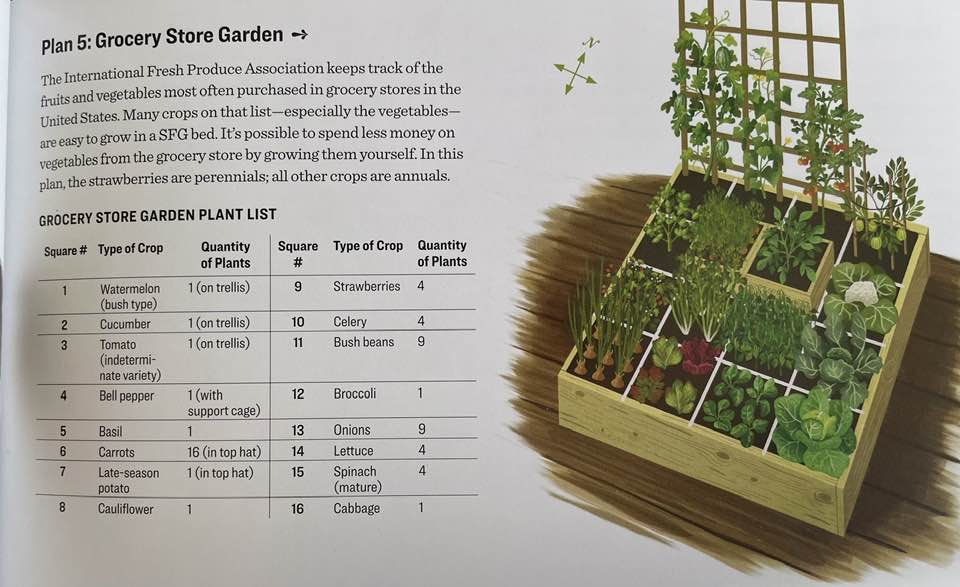
“The International Fresh Produce Association keeps track of the fruits and vegetables most often purchased in U.S. grocery stores. Many crops on that list-especially the vegetables-are easy to grow in a SFG bed. ” –Square Foot Gardening
Succession Planting
If garden planning were a college course, Garden Planning 101 would cover how to plan your SFG for one planting per year. Garden Planning 201 is one level up and includes a process known as succession planting. Succession planning involves planting multiple crops per season in the same space, and it takes a little more understanding of plants and their growth habits. For example, cold-tolerant crops do best in cooler months, so plant crops such as kale, spinach, hardy lettuce varieties, Swiss chard, cilantro, and root vegetables. In milder shoulder seasons add tomatoes, peppers, cucumbers, and eggplants when the day heats up.
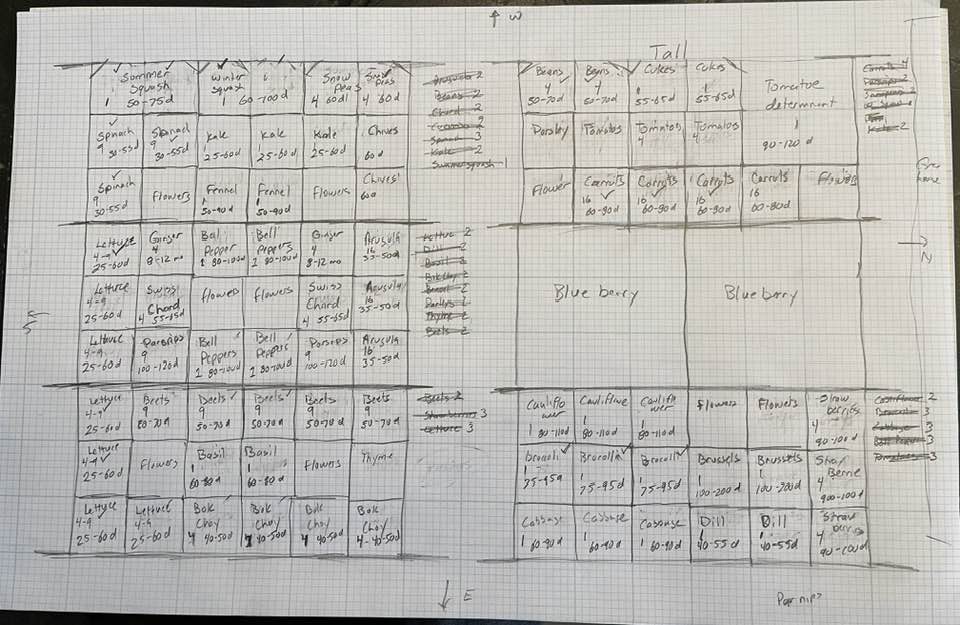
Below is our current planting plan for the edible garden, which includes how many plants per square foot(s) and the number of days to harvest from seed:
Companion Planting
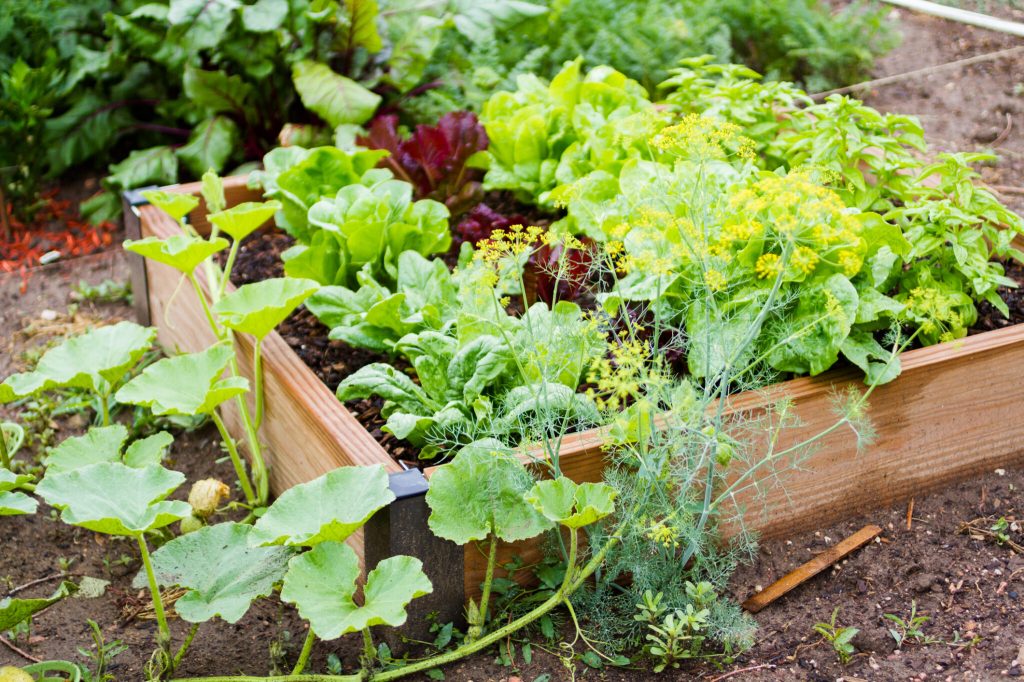
You’ve probably heard of companion planting, which simply means some crops do better or worst planted next to other crops. For example, beets do well when planted with lettuce, onion and sage, but don’t like pole beans. You can plant carrots with bush beans, pole beans, lettuce, onions, peas, and tomato, but they don’t like chives, dill, or parsnip. There are many resources online showing the best companion crops. We concentrated on avoiding planting things together that don’t like each other in our garden plan.
Additional Tips:
- Choose early-maturing and cold-tolerant varieties: Select varieties with short days to maturity (50-80 days). Look for terms like “early,” cold hardy,” or “northern grown” on seed packets. Examples include Lettuce, spinach, radishes, peas, kale, broccoli (cold-tolerant), Early Girl tomatoes, bush beans, and zucchini (fast growers).
- Amend and warm your soil: Use raised beds or mounded rows to improve drainage and warm soil faster in spring. Use black landscape fabric to prewarm soil for crops like tomatoes and peppers.
- Water smartly: Water deeply but less frequently to encourage deep roots. Use soaker hoses or drip lines to reduce evaporation.
Flowers
Our edible garden will be adjacent to our native bunchgrass and wildflower meadows. These plants will look beautiful, but they will also attract pollinators that our veggie garden needs to thrive. Here are two other flowers we’ll plant in the edible garden.
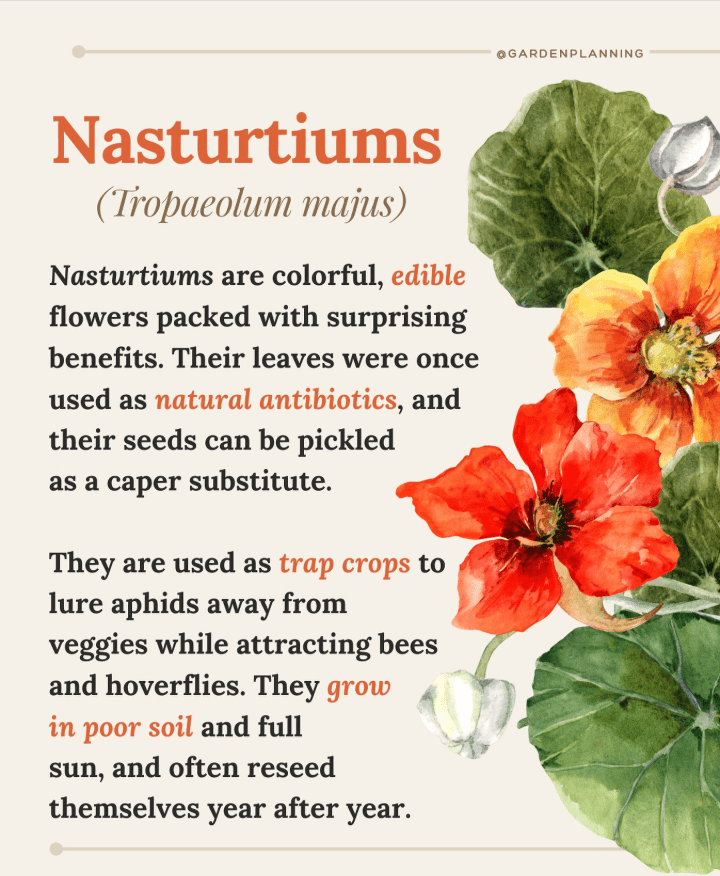
Nasturtiums: The hardworking beauty every garden needs!
Ever wondered which flower can beautify your garden, flavor your salad, and protect your vegetables? Nasturtiums are the ultimate multitaskers that deserve a spot in every garden this spring. These vibrant blooms pack a powerful punch beyond their gorgeous looks:
🥗 Completely edible from flower to seed – add peppery blooms to salads for a pop of color and flavor
🌿 Natural antibiotic properties in their leaves were used in traditional medicine
🥄 Seeds can be pickled as a delicious caper substitute
🐝 Acts as a “trap crop” drawing aphids away from your precious vegetables
🦋 Attracts beneficial pollinators like bees and hoverflies
🌱 Thrives in poor soil conditions where other plants struggle
🌷 Self-seeds readily, returning year after year with zero effort
The best part? They’re practically impossible to kill, making them perfect for gardening beginners or those claimed to have a “black thumb.” Plant them along borders, in containers, or as companion plants for cucumbers, zucchini, and broccoli for natural pest protection.
Marigolds: Pretty and Attracts Pollinators
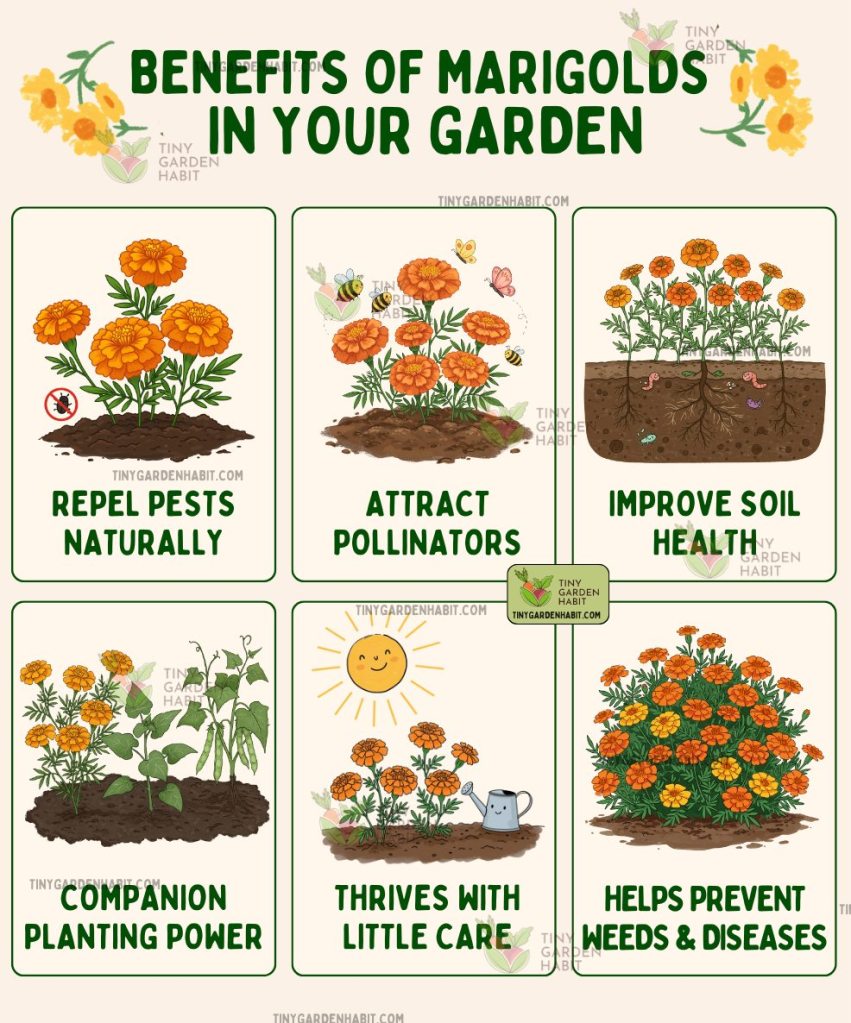
Many gardeners believe marigolds repel pests. Here are two types to consider, African Marigolds (T. Erecta) and French Marigolds (T. Patula), which produce alpha-terthienyl. This substance repels nematodes – which are tiny worms that attack the roots of plants. The French Marigold provides the best protection against nematodes. Tomatoes tend to be prone to nematodes.
These flowers also produce a strong scent which helps repel cabbageworms. This helps protect cabbage, cauliflower, broccoli and brussel sprouts. Be sure to plant a lot though, as it takes many companion plants to protect from the stubborn cabbage worms.
Gardens can’t produce without pollination. Bright flowers are natural attractors for pollinators. Orange and yellow are incredibly inviting colors that will attract bees, butterflies and other helpful bugs. Plant marigolds in containers right next to your vegetables. That way, it doesn’t matter if the soil content needs to be the same, the pollinators will visit your marigolds, and most likely visit your veggies as well!
Fruit
We ordered four fruit trees from a local nursery (Plant Land). Although, we can’t grow cherries, we should be able to grow pears, plums, blueberries, strawberries, and raspberries. Yum! If you’ve got a yard, you should have a fruit tree or two. There is nothing better than fresh picked fruit. Fruit is relatively easy to grow if you select a site with full sun and water it properly. Most fruit trees and many other fruiting shrubs require cross-pollination for fruit production to occur. That means you’ll need a second variety of that fruit for the best yields and flavors.
Here are the fruiting species we will be purchasing this year:
- Plums: Italian Prune produces a lot of fruit that is sweet and firm. Brooks is larger and sweeter than the Italian and ripens about a week earlier.
- Pears: Parker produces medium-sized fruit that is fine grained, tender, and juicy. Summercrisp is a prolific producer of small, crispy fruit that are good for fresh eating.
- Blueberries: Bluecrop produces large, firm, crack resistant fruit with good flavor. Duke produces a lot of berries with a tangy, sweet delicate flavor. These blueberry bushes will be available to purchase in late April.
Other Garden Updates
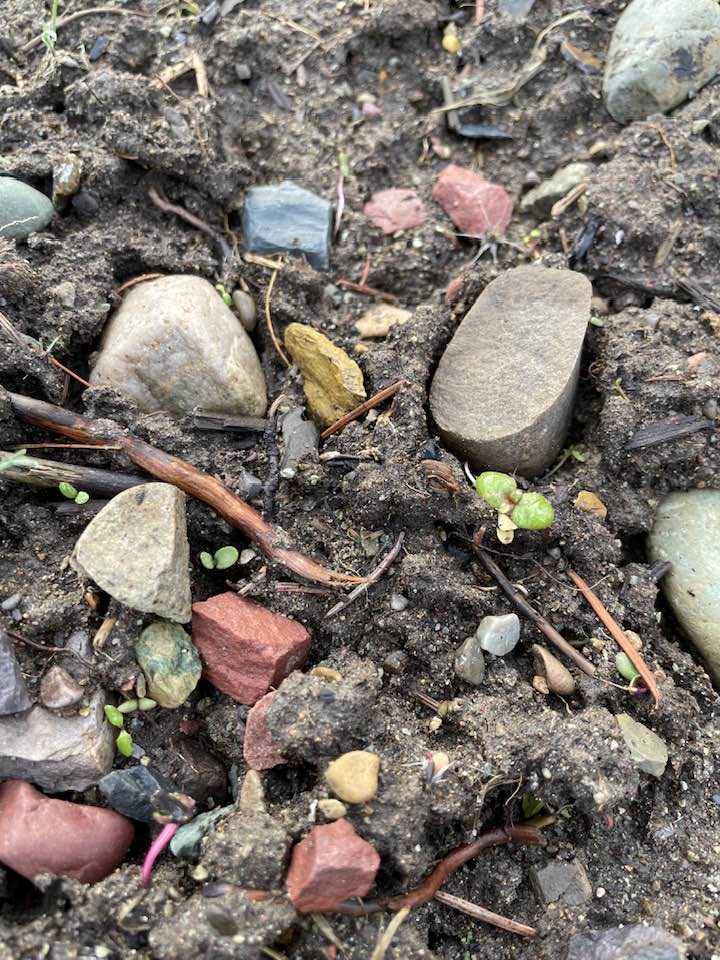
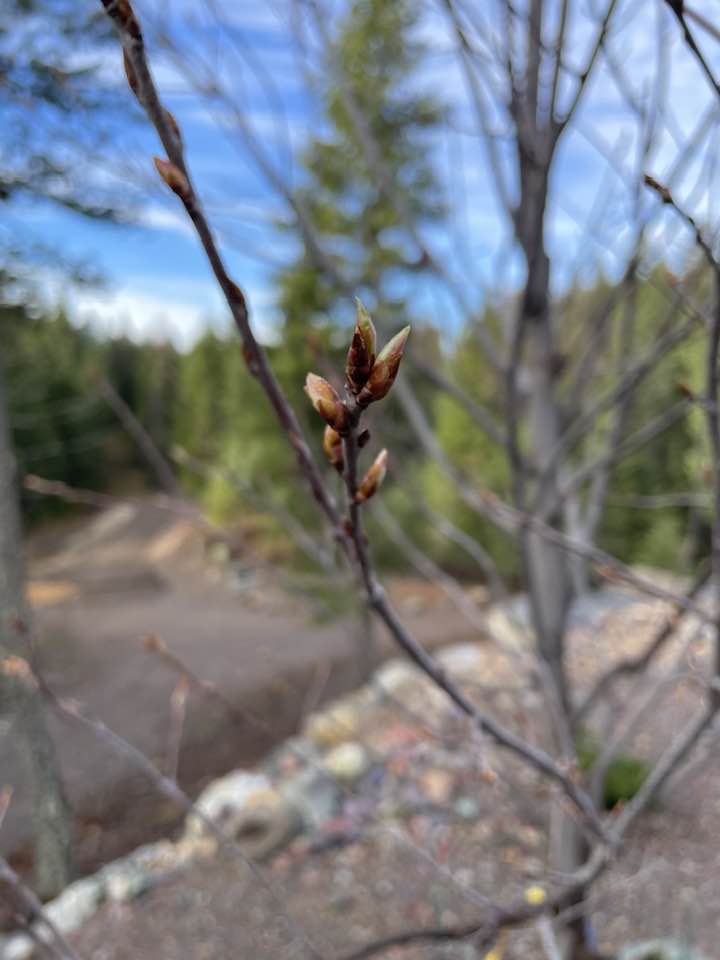
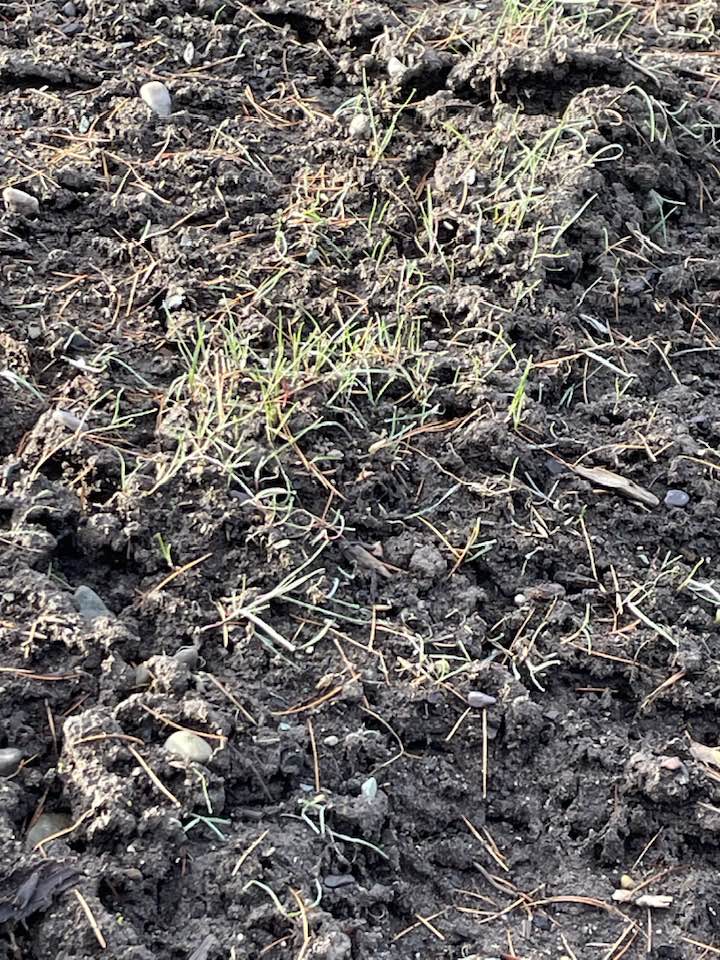
Natives: The native bunchgrass and wildflowers are starting to sprout. We’ve also spotted buds on our Canada Red Chokecherry.
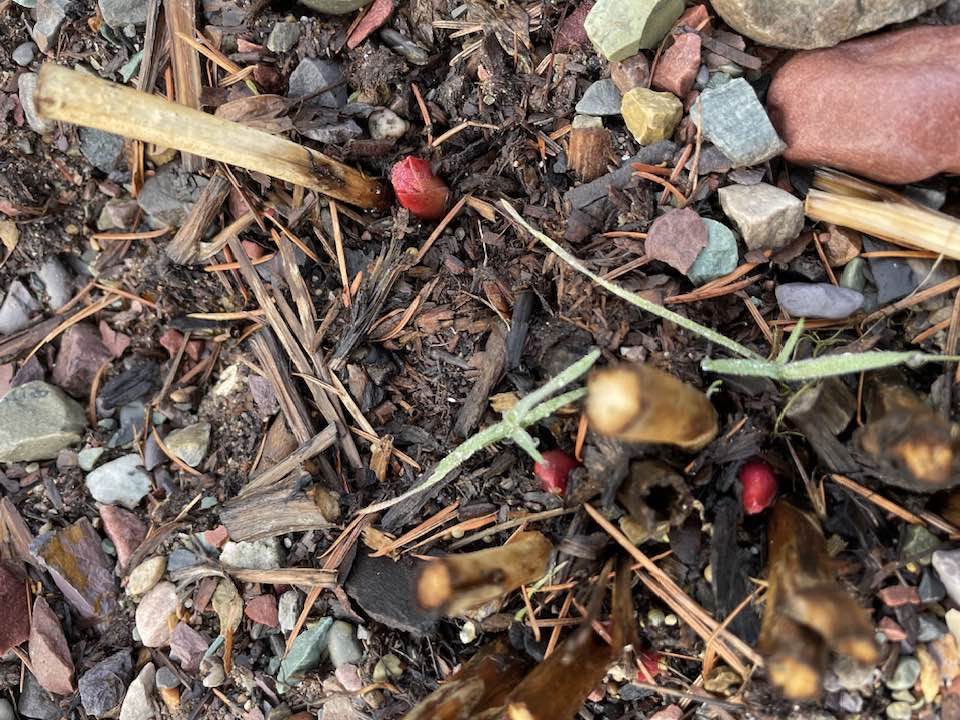
Non-native Perennials: Signs of life are showing in our peonies.
You can find out more about our native plantings and garden plan spaces in the posts below:
Meadowscaping with Natives – Design, Garden, & Travel by Majestic Meadows
Garden Spaces – Design, Garden, & Travel by Majestic Meadows
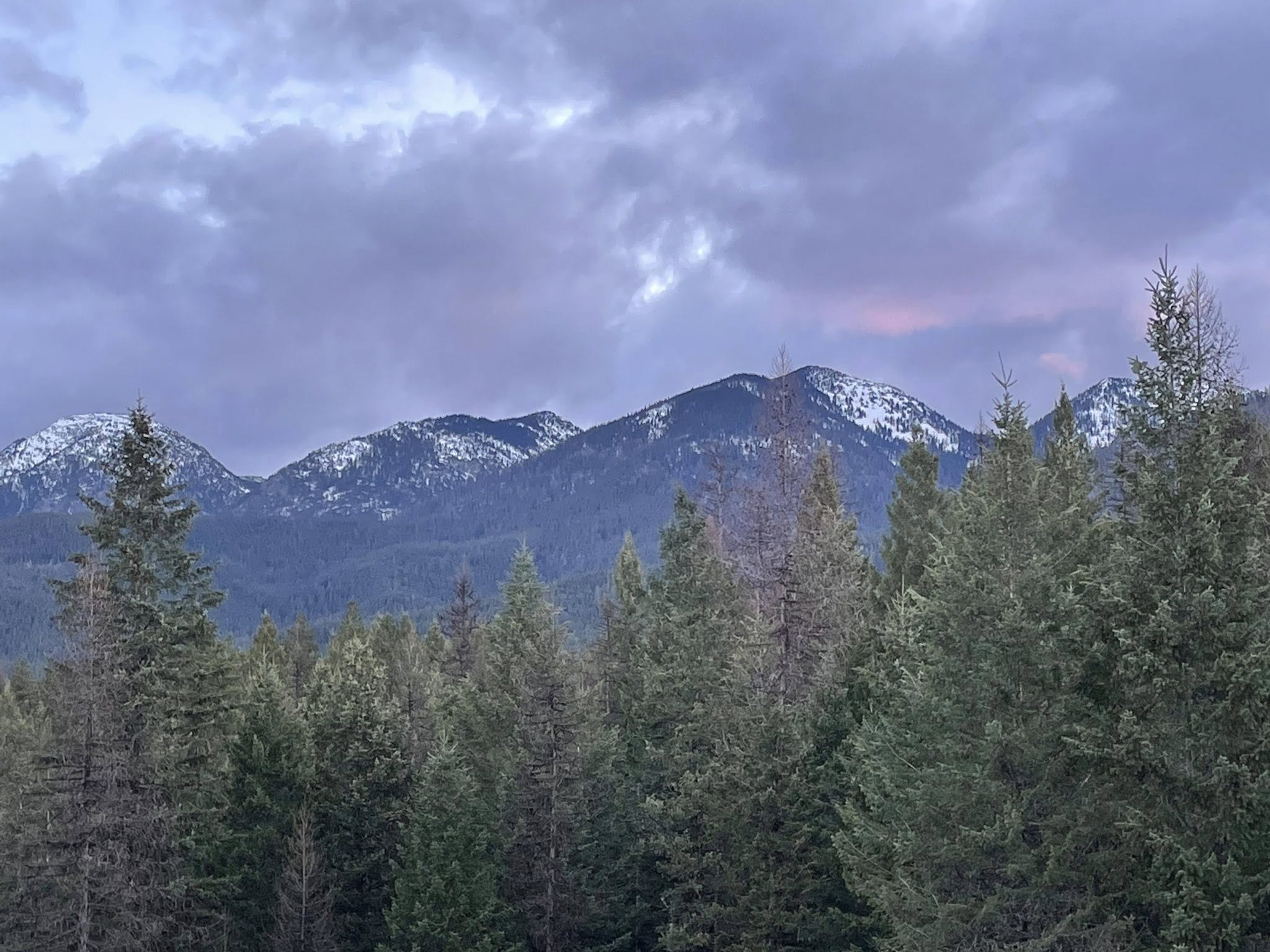
General Updates: We’ve had some nice sunrises this March. Sipping a cup of tea and listening to the birds’ sing while the sky puts on a show is one of life’s greatest pleasures.
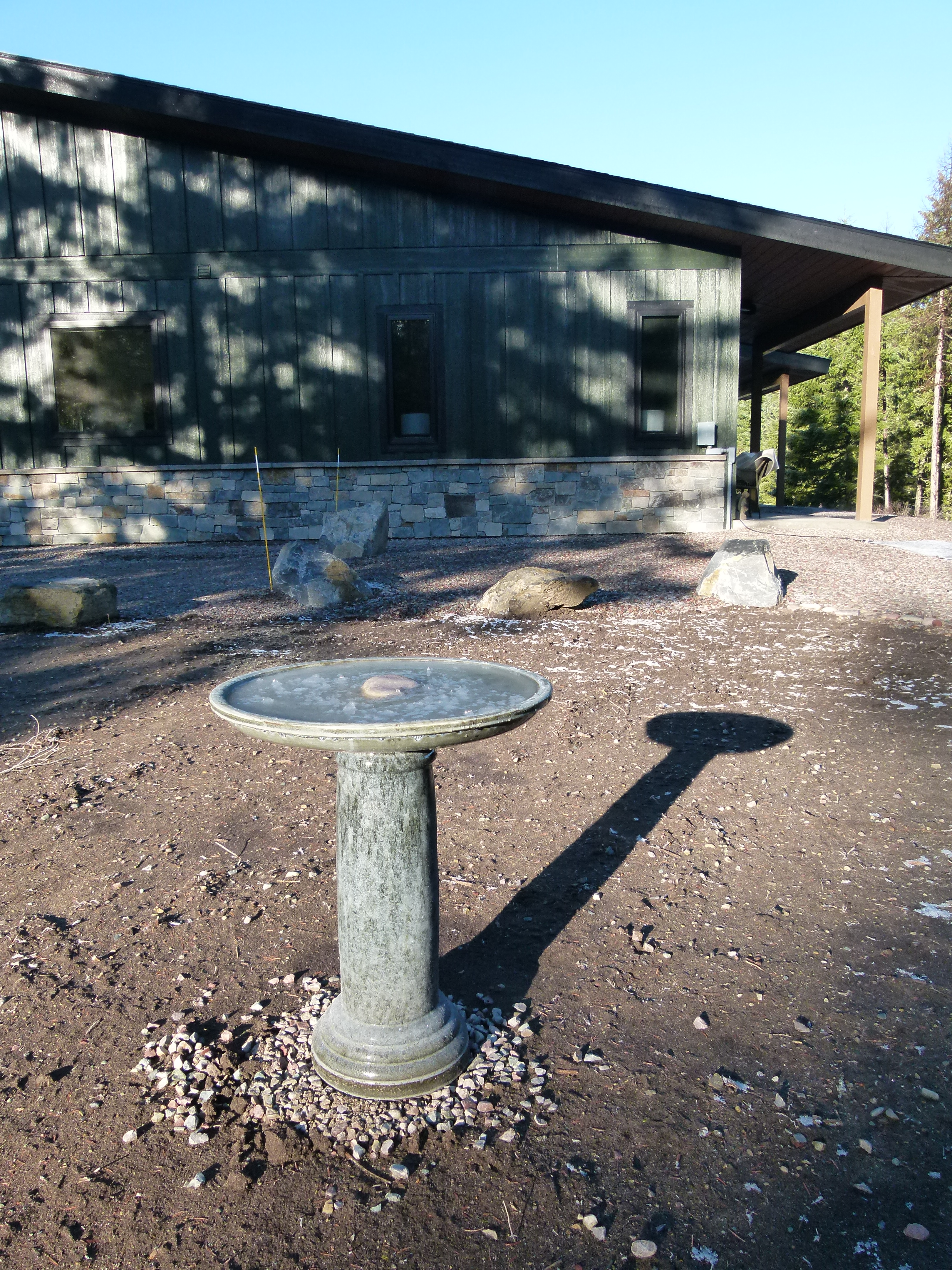
We’ve added the all-important water element with a ceramic birdbath from Wayfair. It is placed in the middle of our native wildflower and bunchgrass bed.
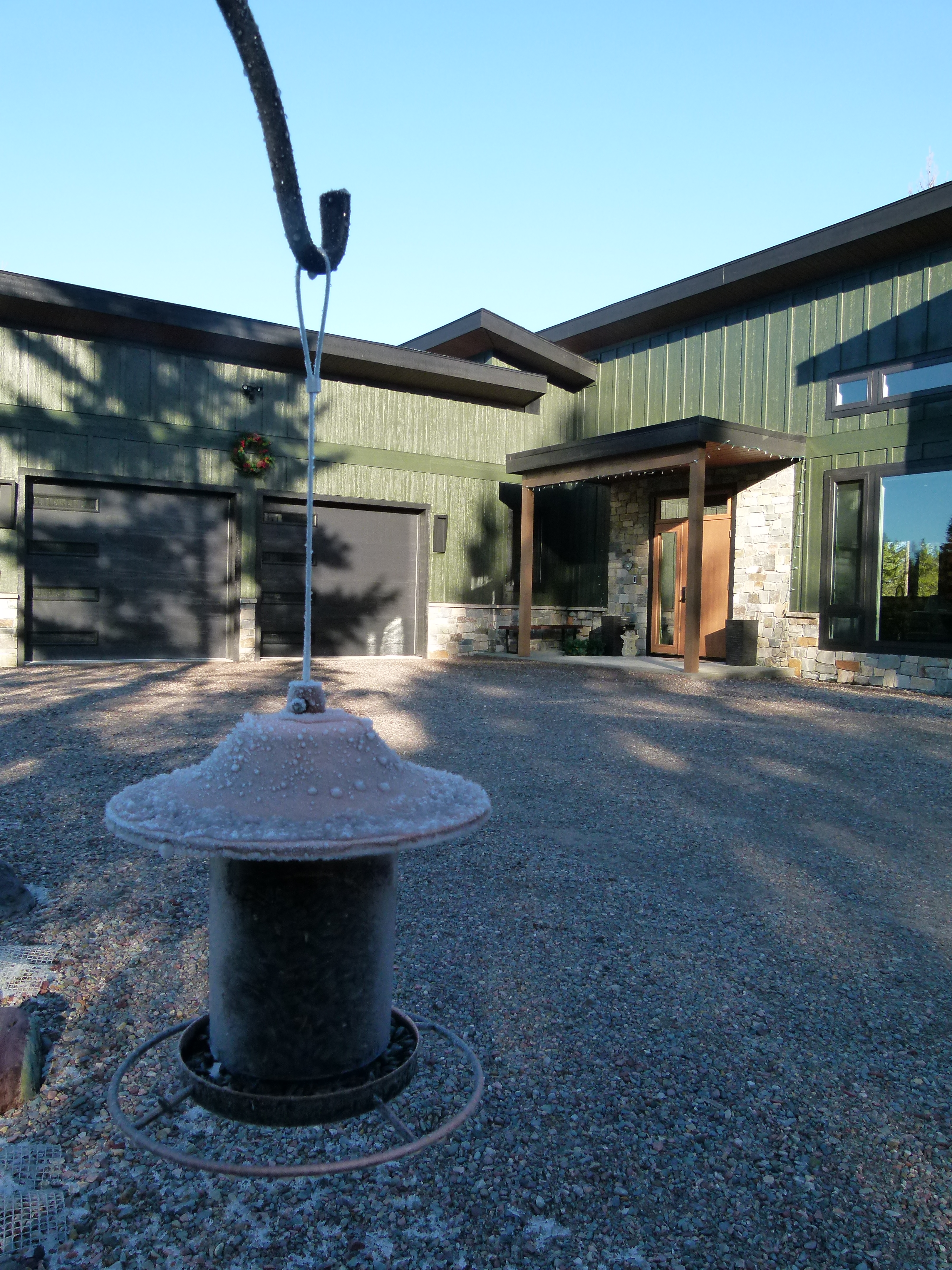
The chickadees and red-breasted nuthatches visit the feeder filled with Black Oil Sunflower seeds every day.
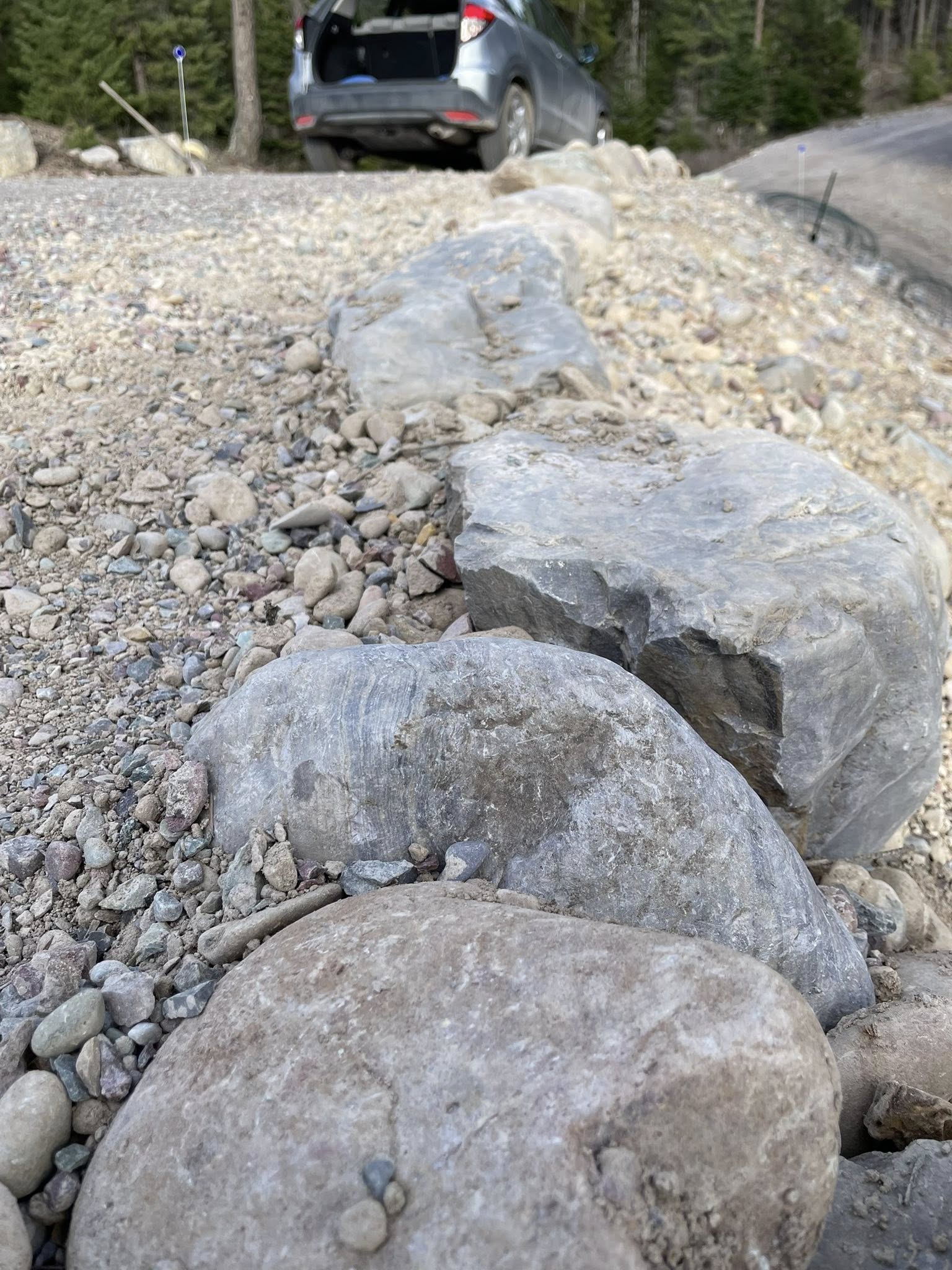
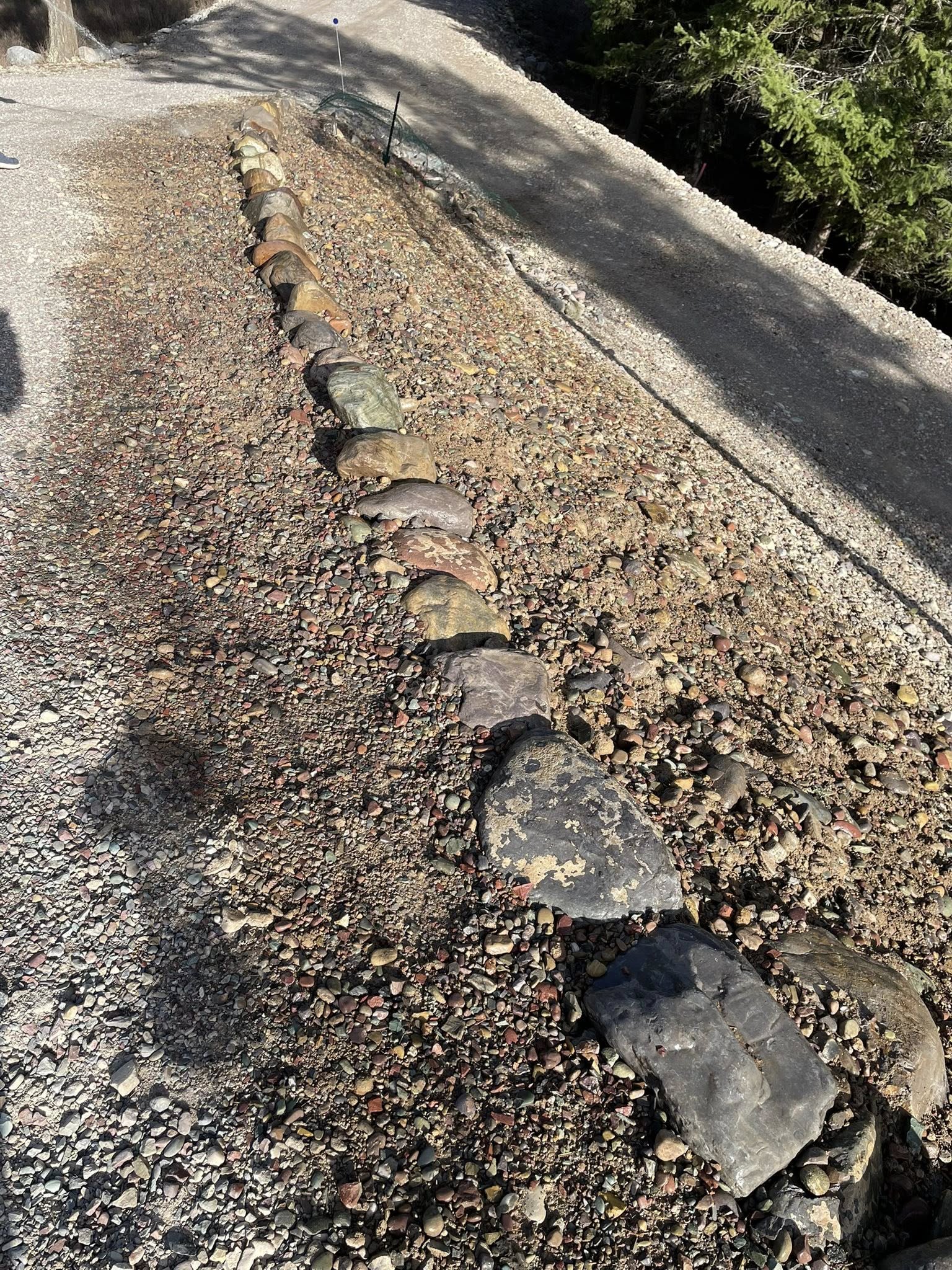
We also added a rock border down the edge of our driveway.
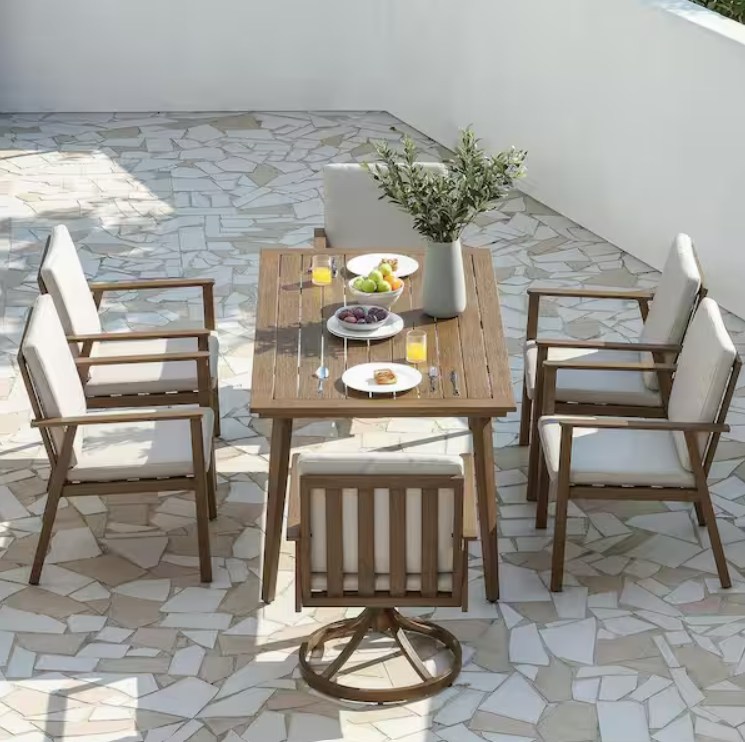
Now that spring is here, we purchased an outdoor dining table and chairs. We chose a dining set over a seating area because we will use it more. The aluminum dining set from Home Depot is lightweight, fire-proof, and has an attractive “teak” finish. The comfortable chairs come with cushions and two of the chairs swivel and rock.
One of the main reasons we moved to NW Montana was to get outside more often and a garden is a great way to accomplish that goal. There are many benefits to growing your own food, including improved nutrition, reducing environmental impact, saving money, and enhancing physical and mental well-being. The ornamental garden will be beautiful, but the edible garden will pull us outdoors to check its growth, look for pest damage and to water it every day.
I’ll be sharing more about our garden, as well as several fun adventures we took this winter, so be sure to subscribe below to never miss an update.

 Design, Garden, & Travel by Majestic Meadows
Leave a comment