
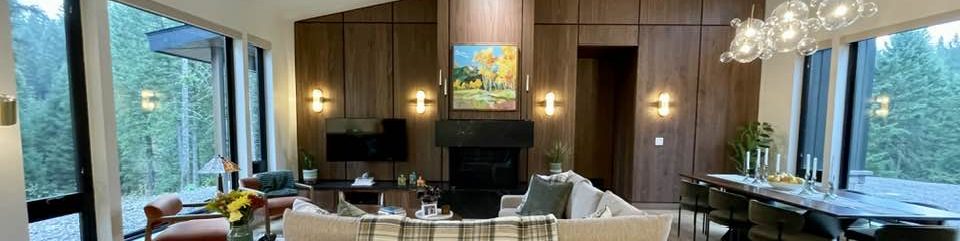
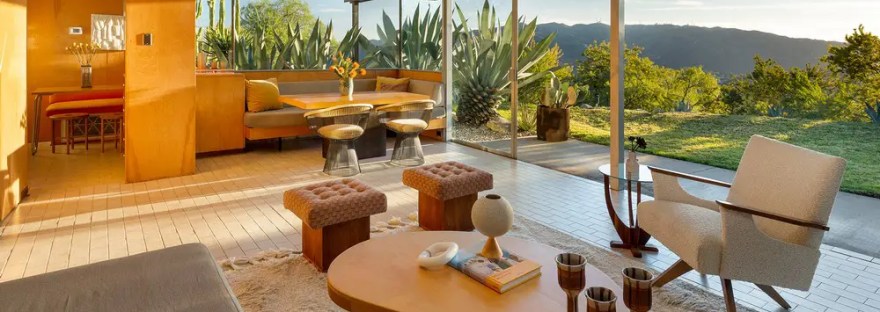
Our new home build is inspired by Mid-Century Modern architecture and design, which flourished in the U.S. from the 1940s through the 1960s. We used MCM design to create a floorplan, as well as an interior and exterior design that combines simplicity, functionality, and harmony with our home’s natural surroundings. In today’s post, I’ll share iconic MCM Architects & Attributes, Indoor-Outdoor Principles, and our very own MCM-inspired home, Majestic Meadows.
Iconic American MCM Architects
To understand MCM architecture and design, it is important to consider the work of the most iconic American architects who defined the movement:
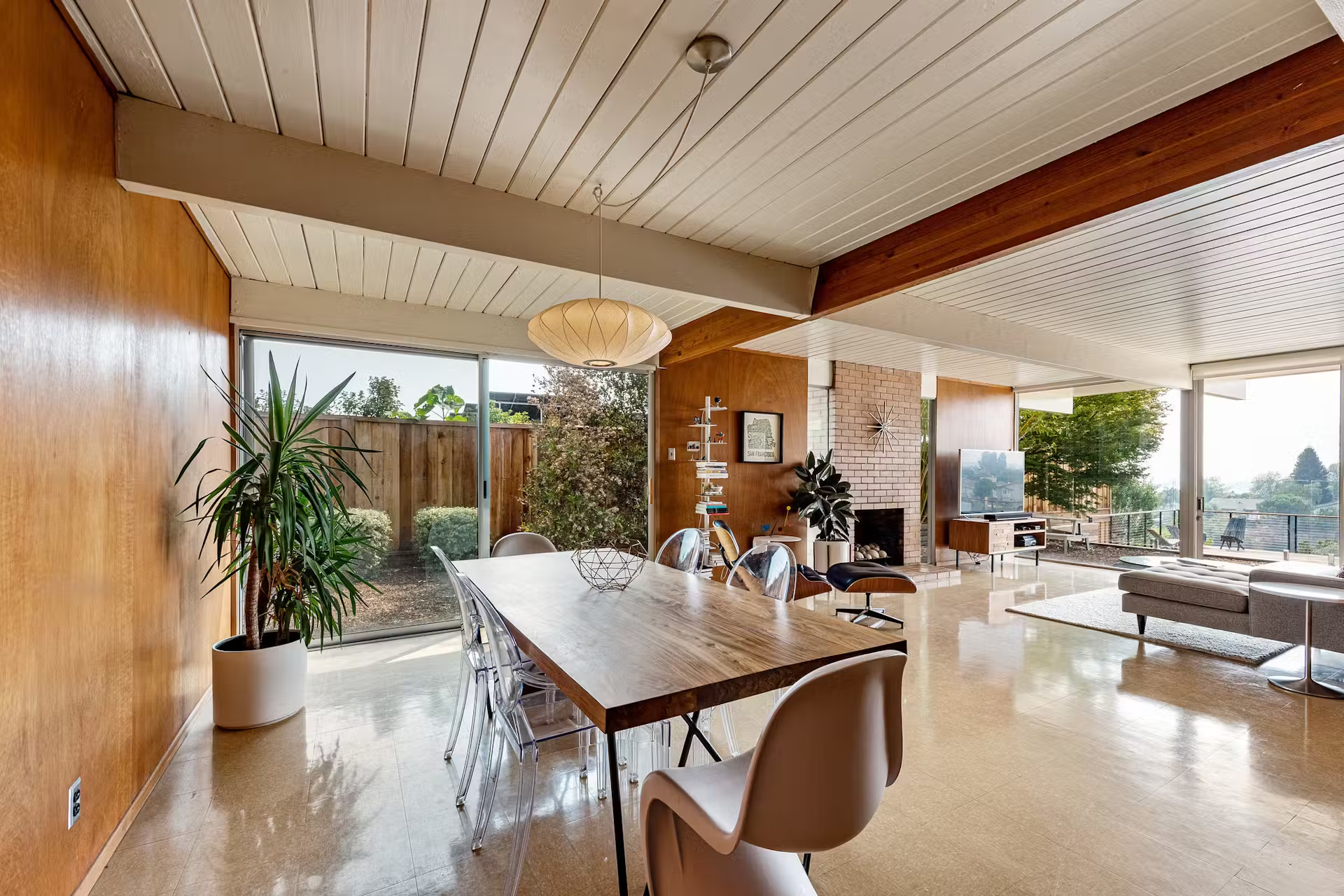
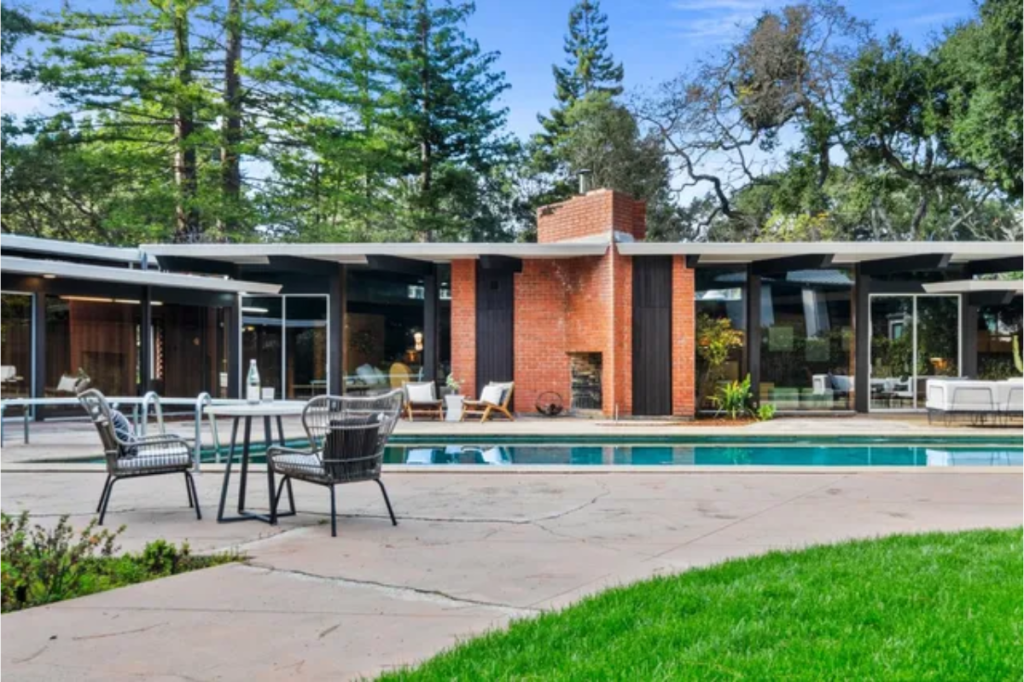
A. Quincy Jones: Partnered with developer Joseph Eichler to design thousands of modern homes across California. I’m not surprised that an artist like Jones would make a gifted architect. You can see a beautiful example of his work in the TV series, Daisy Jones and the Six. Probably one of my all-time favorite MCM architects because Jones focused on affordable, livable housing with modernist ideals.
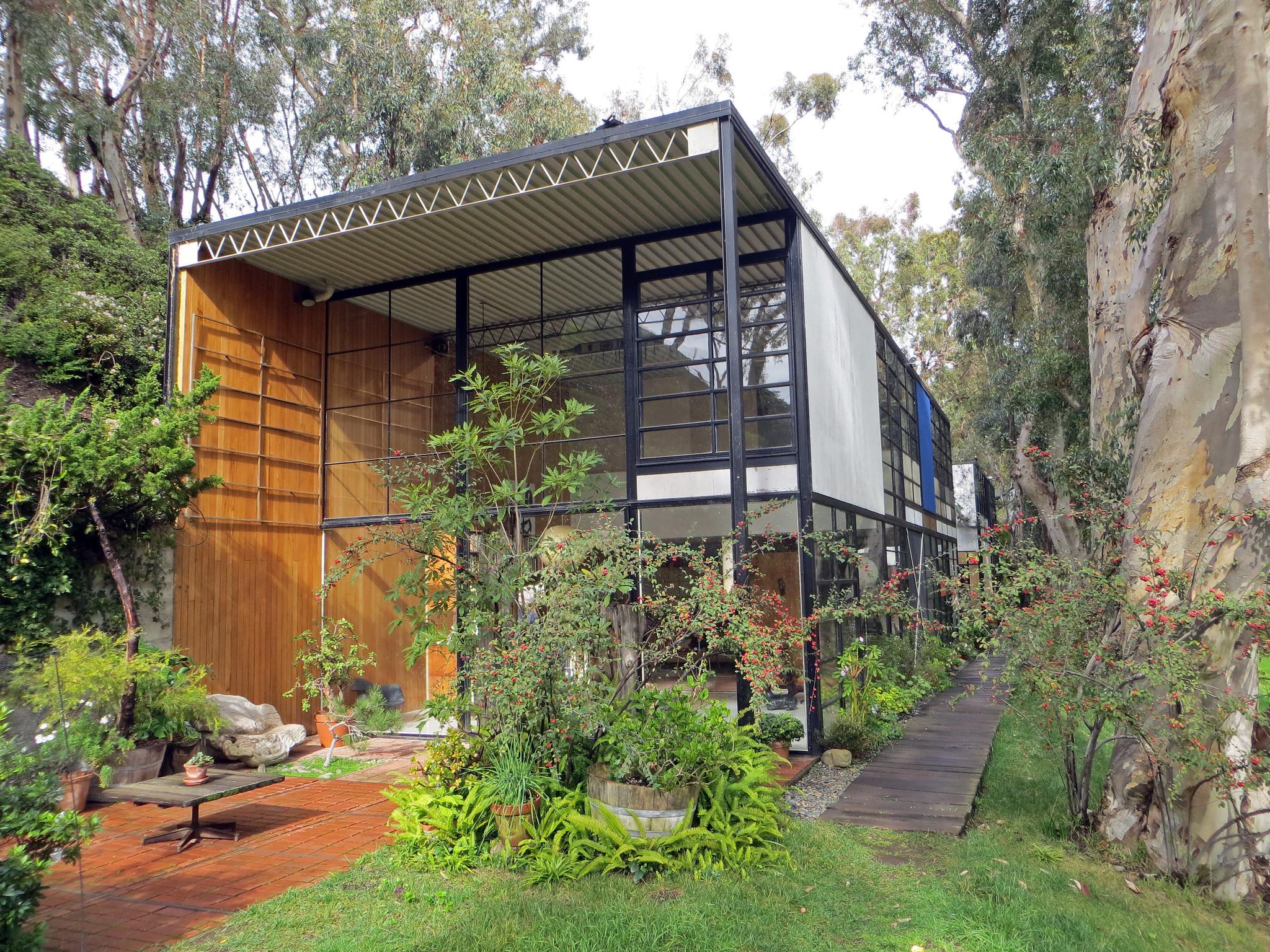
Charles and Ray Eames: These brothers are known for the Eames House in California. They revolutionized design across architecture, furniture, and film. They focused on human-centered design, modularity, and mass production. Their architecture, like the Eames House emphasized simplicity, prefabrication, and integration with nature.
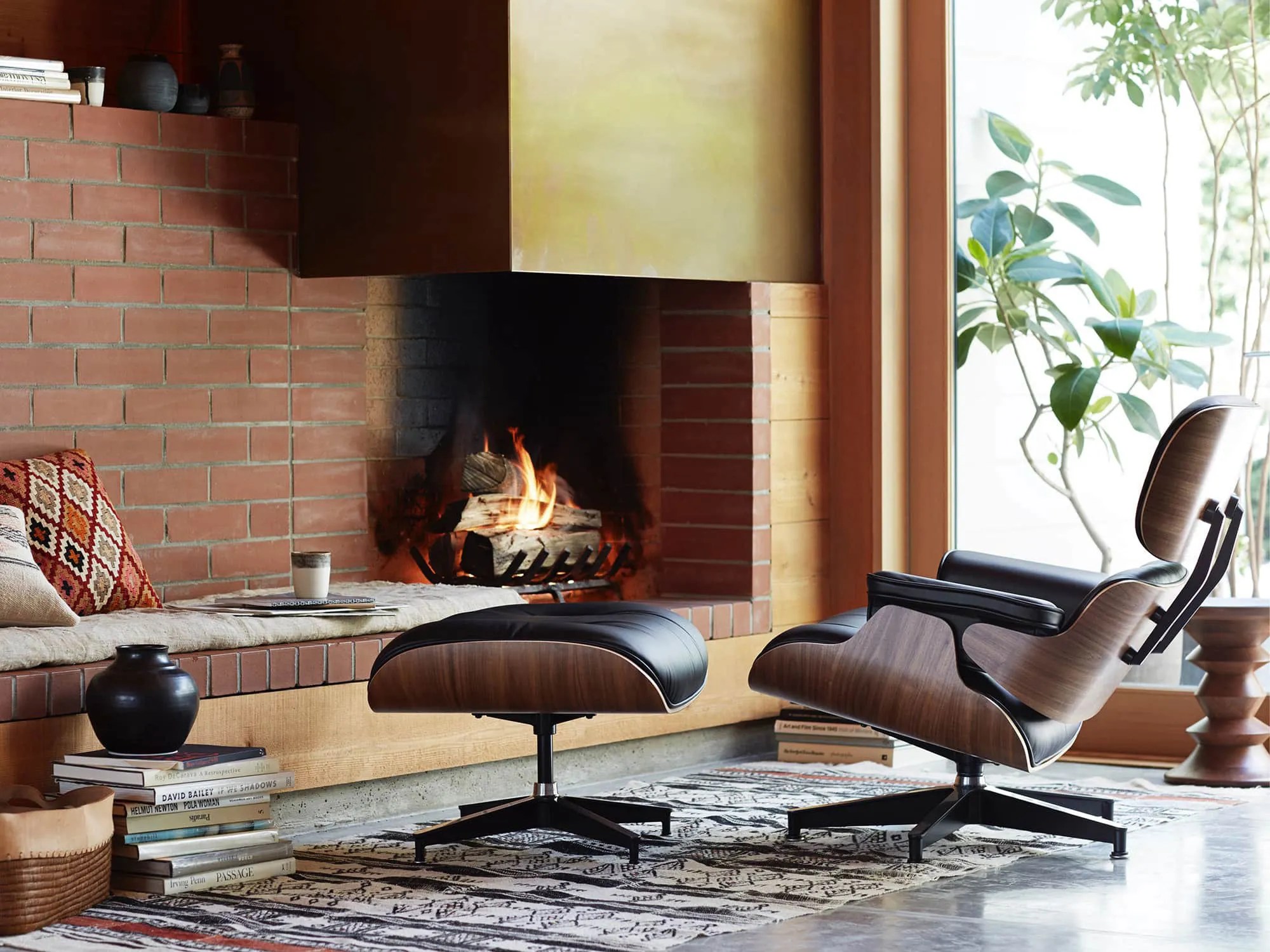
Richard Neutra: A master of indoor-outdoor living, Neutra’s Kaufmann House in Palm Springs and Lovell House in Los Angeles are celebrated examples. Neutra merged European Modernism with California living. His homes featured steel and glass, open plans and indoor-outdoor connections. He believed architecture could promote physiological well-being.
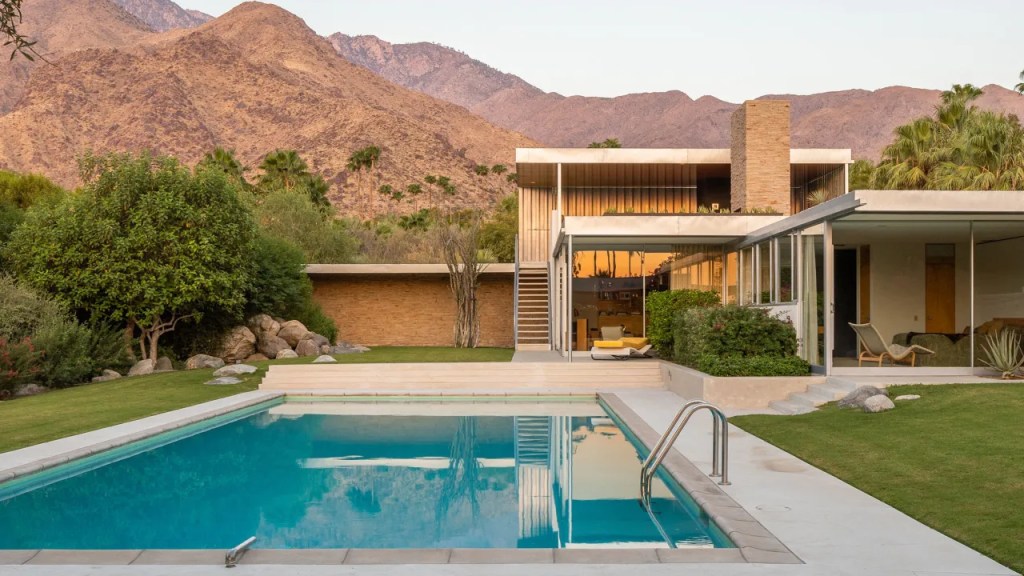
John Lautner: A former apprentice of Frank Lloyd Wright, Lautner created futuristic homes like the flying saucer shaped Chemosphere and Sheats-Goldstein Residence in Los Angeles. His designs were bold, sculptural forms that often-defied gravity. He embraced dramatic curves, like Chemosphere, concrete shells, and a deep connection to nature and its site.
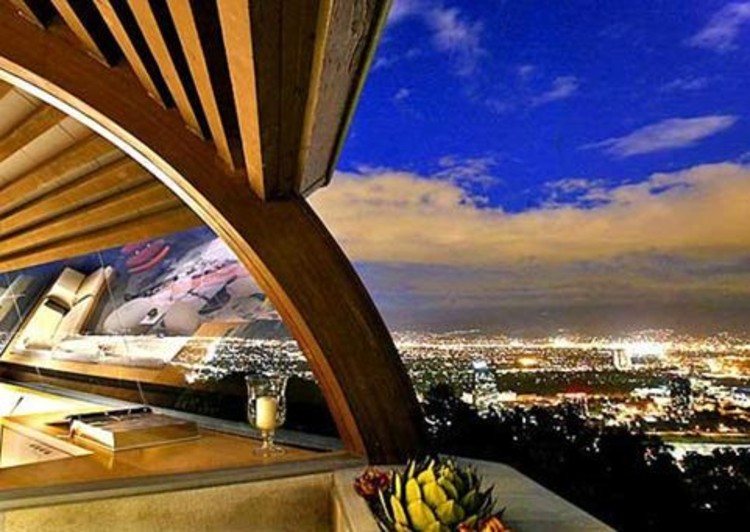
Pierre Koenig: Famous for the Stahl House, a steel-and-glass marvel perched in the Hollywood Hills, California. Known for steel-framed houses, his work emphasized prefabrication, transparency, and clean lines. The MCM house featured in the popular television series Bosch is an example of this type of work.

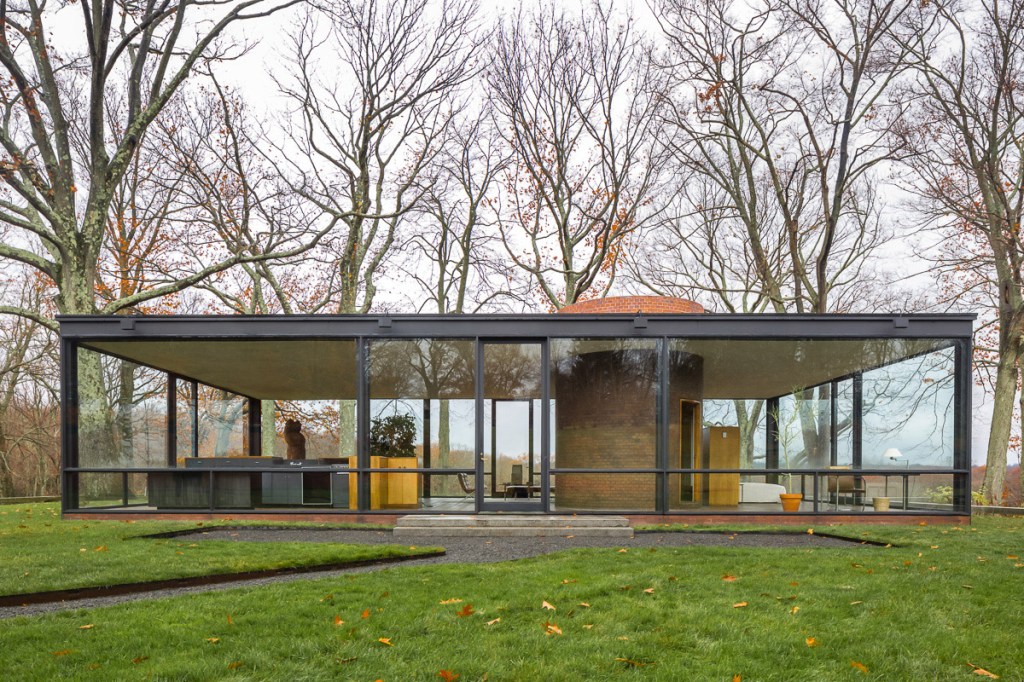
Philip Johnson: His Glass House in Connecticut is a minimalist icon that blurred the line between architecture and nature. He started with this example of a minimalist glass block, then went on to focus on historicism and other architectural trends.

Eero Saarinen: Though Finnish American, Saarinen’s Miller House in Indiana is a standout in mid-century residential design. He designed expressive, curving forms tailoring each project to its purpose, often using bold geometry and innovative engineering.

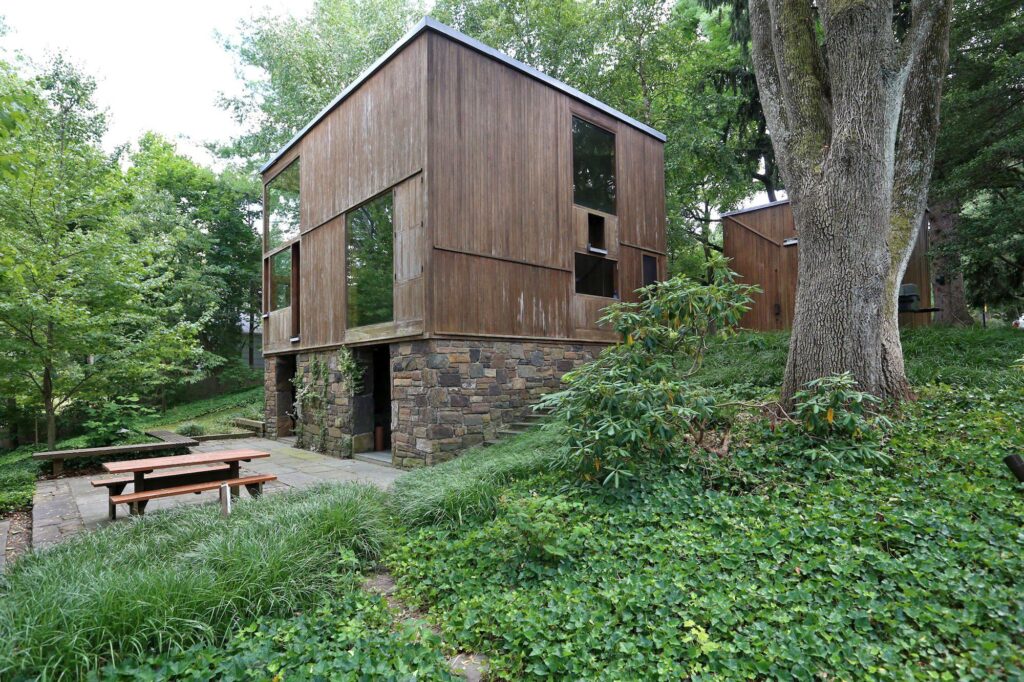
Louis Kahn: Known for the Fisher House in Pennsylvania, Kahn’s work emphasized light, space, and spiritual depth. He used heavy materials like brick and concrete to create timeless, contemplative spaces that emphasized light, silence and order.

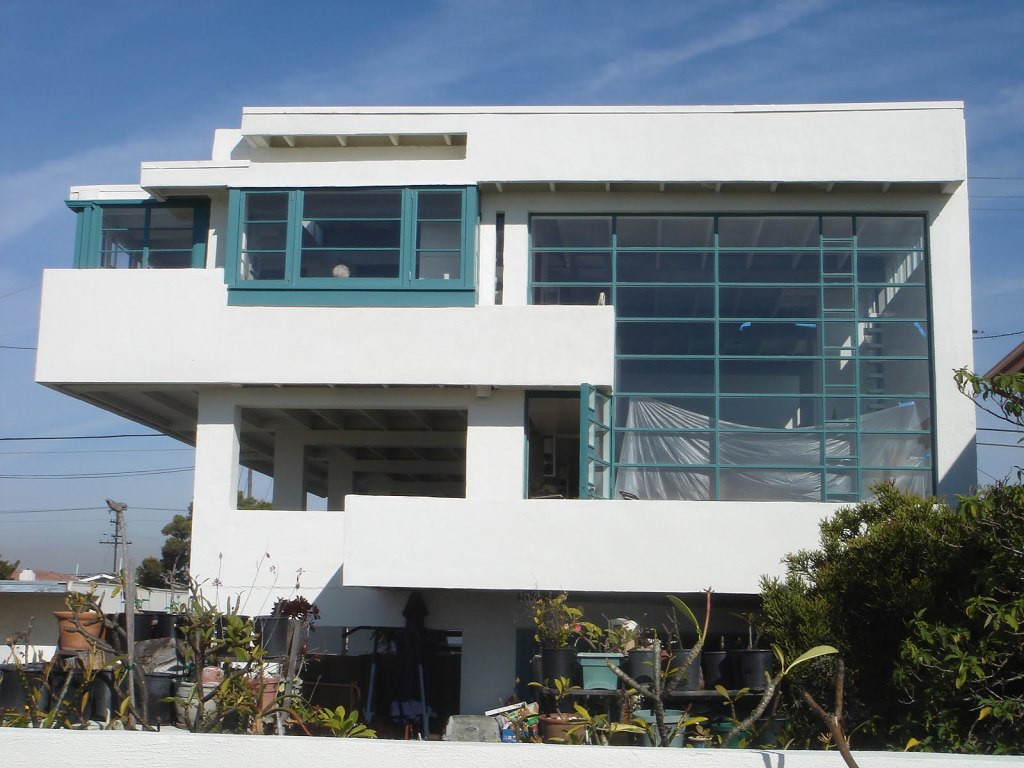
Rudolph Schindler: A pioneer of California modernism, his Lovell Beach House is an early example of the style’s evolution. The double-height living room of the Lovell Beach House – an American vacation home built in 1925 as part of the modernist movement termed New International Style. Created by Schindler in 1925 at Newport Beach, California. Bedrooms and sleeping decks are suspended on the gallery above. His work was experimental and among the first to focus on indoor-outdoor connections.

Joseph Eichler: While not an architect himself, as a developer, Eichler commissioned many mid-century homes that brought modern design to the masses. These homes included structural elements that were visible, like the ceiling trusses in many of the homes Eichler built in California.
Indoor – Outdoor Connection
There is a reason why, “California Living” is popular. The MCM architect, Richard Neutra expertly dissolved the boundary between inside and outside, including being deeply rooted in both philosophy and science. Neutra’s Indoor-Outdoor Philosophy is described and shown below:
Biorealism: Neutra coined this term to describe his belief that architecture should support human biology and psychology. He saw nature not just as scenery, but as essential to well-being.

Psychological Harmony: He believed that exposure to natural light, greenery, and fresh air could reduce stress and improve mental health. His designs aimed to create a calming, restorative environment.
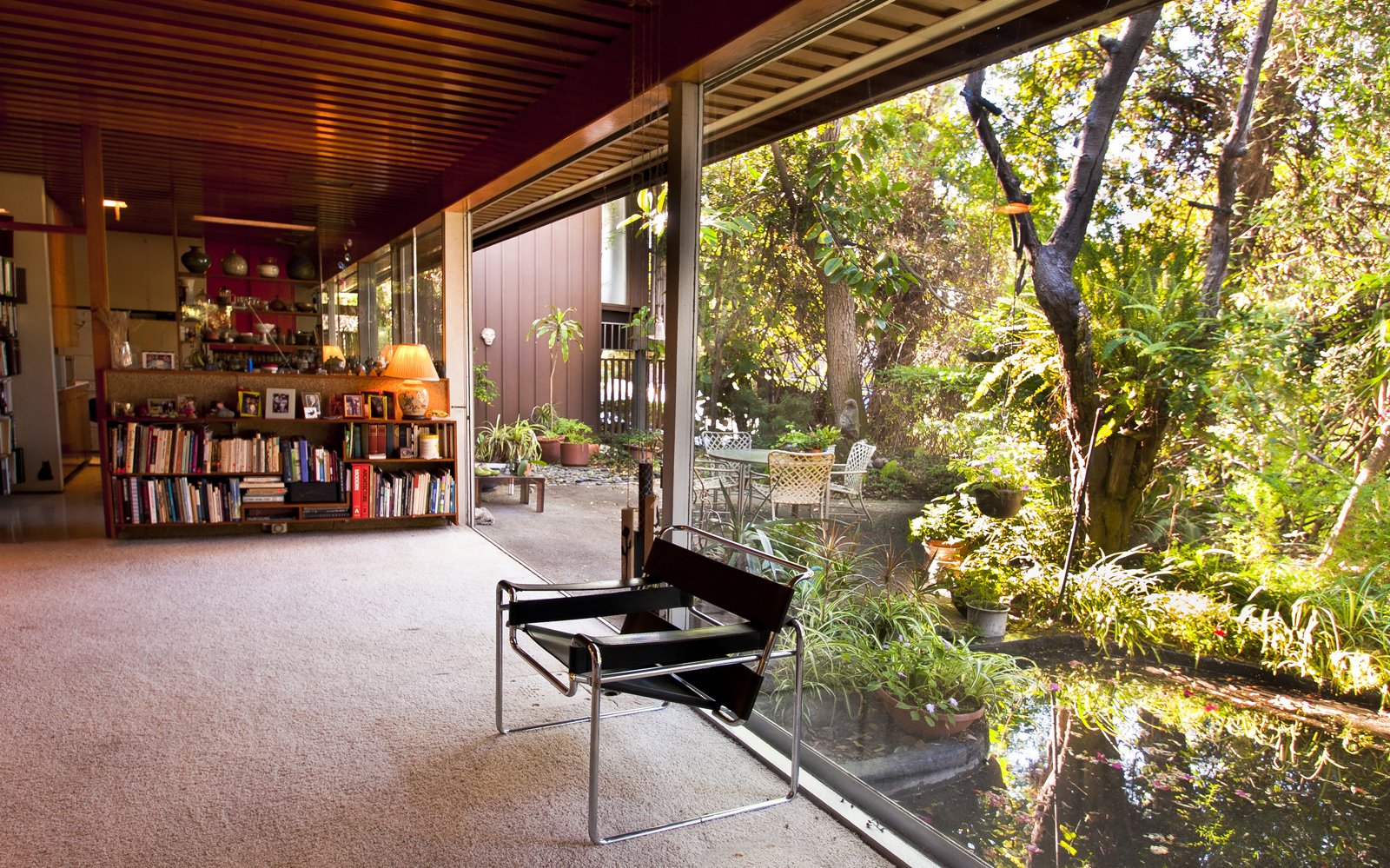
Expansive Glass Walls: Neutra’s homes often featured floor-to-ceiling windows and sliding glass doors, allowing uninterrupted views and easy access to outdoor areas.

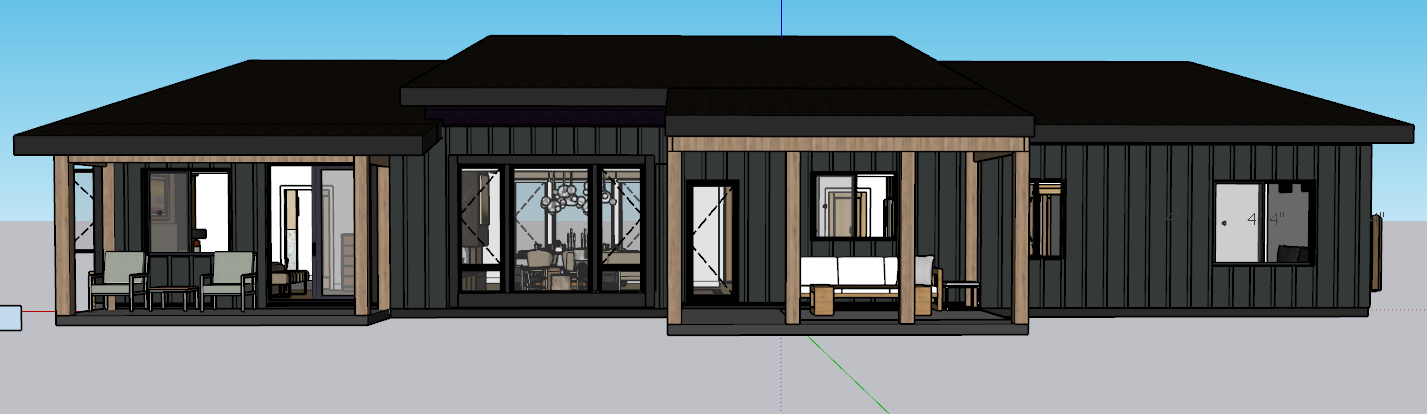
Open Floor Plans: Interiors flowed seamlessly into patios and gardens, encouraging movement and interaction with nature. Covered patios off the kitchen, primary suite and entry offer shelter and a chance to experience nature without being in the elements.

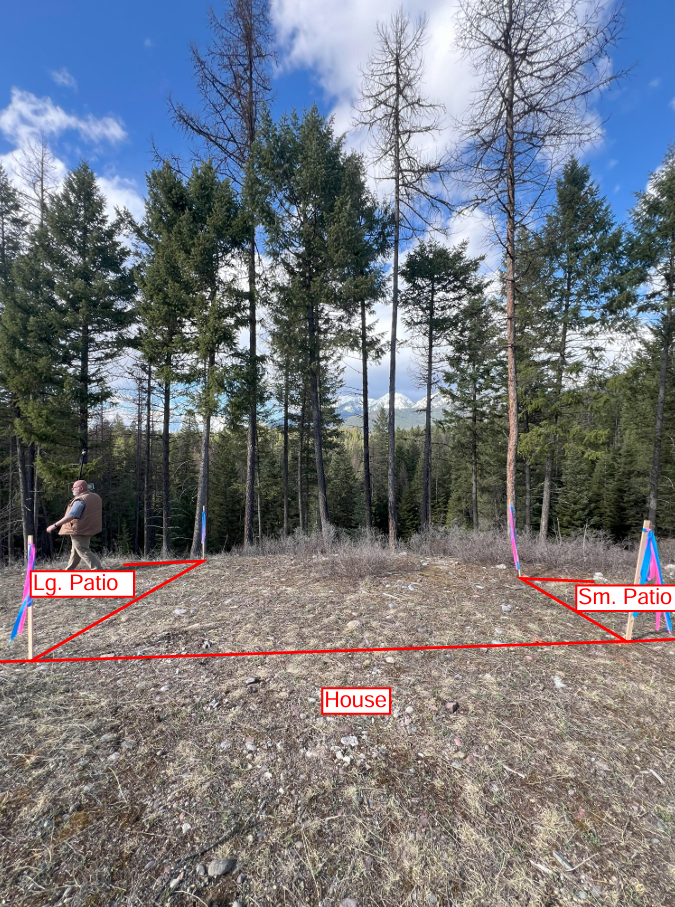
Site-Specific Design: He would study each location’s climate, topography, and vegetation to integrate the building into its surroundings. Our builder, Jason did a fantastic job placing the home for the best view and light, as well as excavating to create flat garden space around the home.
Reflective Pools and Terraces: These elements extended the visual space and created tranquil outdoor rooms that felt like part of the home.

Majestic Meadows
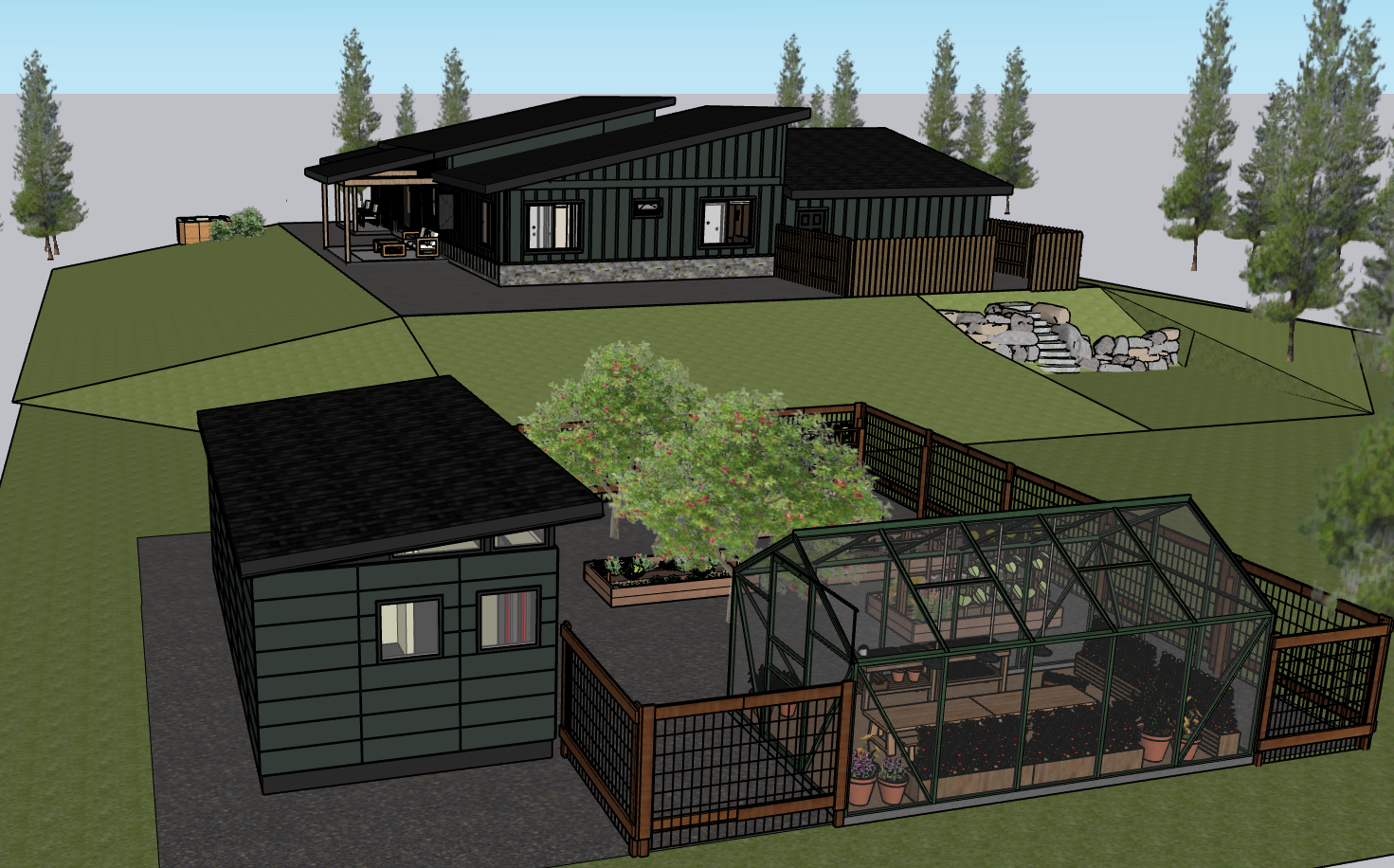
We love Mid-Century Modern architecture and used that inspiration to design our home, Majestic Meadows. An architect would use professional software to accomplish this task, but we used SketchUp, which worked perfectly for our needs. Please note, we hired a Design-Build Firm, J Martin Builders to turn our SketchUp floorplan into construction documents. They added all the structural details, like roof and floor trusses, framing, etc., which are all critical to building a structurally sound home.
Majestic Meadows – Floorplan
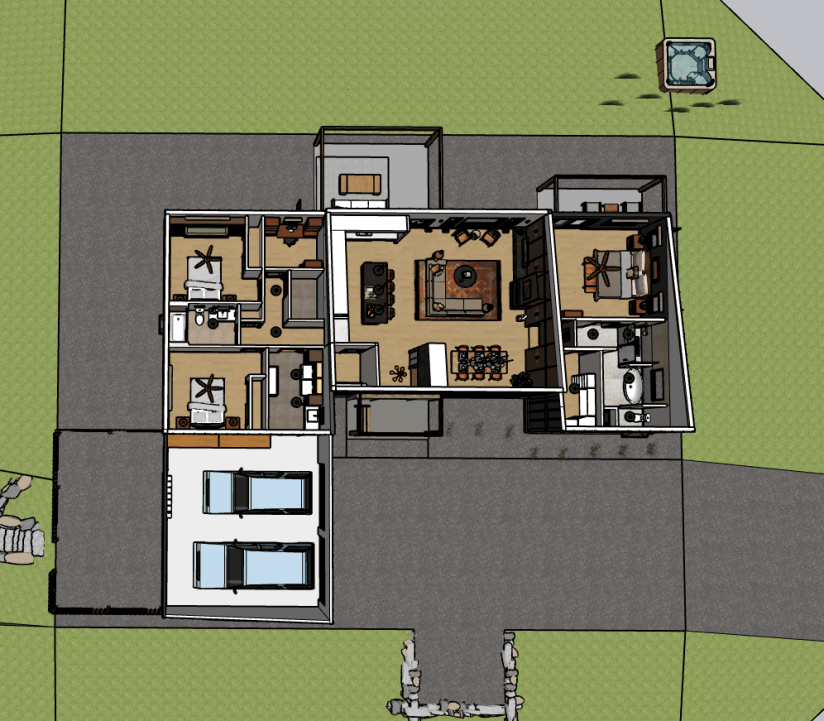
It’s not sexy, but function is a critical element for great design. When designing our home, we kept Mid-Century Moder design at the forefront while focusing on the function for each of our spaces. Things like the size of the rooms and how we want to live in the house. Here’s a quick overview:
- 2,125 square feet, three bedrooms, two bathrooms, and garage.
- Additional functional spaces, such as laundry, office, pantry, entry, closets, covered porches, and mechanical room.
- A large, open great room, including the kitchen, living, and dining spaces.
- Windows were designed for maximum light and views, as well as air flow.
Majestic Meadows – Interior Design
As you’ve learned, Mid-Century Modern design emphasized Indoor-Outdoor Connections. We successfully achieved this connection with two 11′ by 7′ window packages flanking both sides of the great room. Using fixed glass for most of the windows saved a lot of money, but we still get plenty of airflow with four casement windows included in the window packages. Our Interior Design partner, Joni Stoll Design purchased and helped our electrician install the whimsical “Soap Bubble” chandelier in the dining room. I love the unique shape and style, which will look great with clear, round and warm 40-watt bulbs. The light bubbles will float above the Arhaus Jacob walnut dining table (Vertex metal base). The Hollis dining chair by Interior Define in dark green, Coriander in Velvet fabric will echo the pine trees outside.
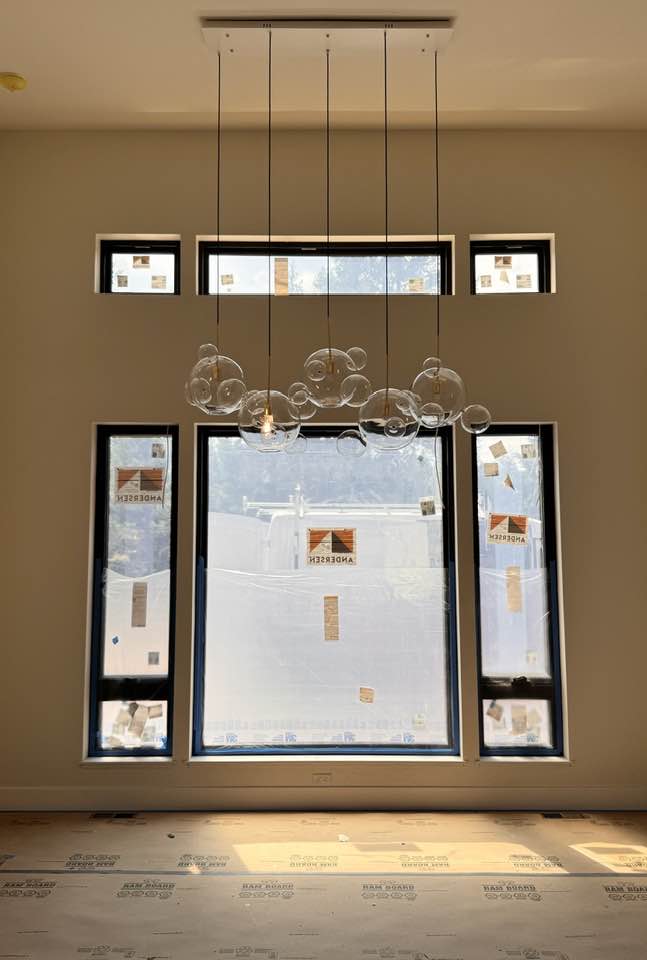
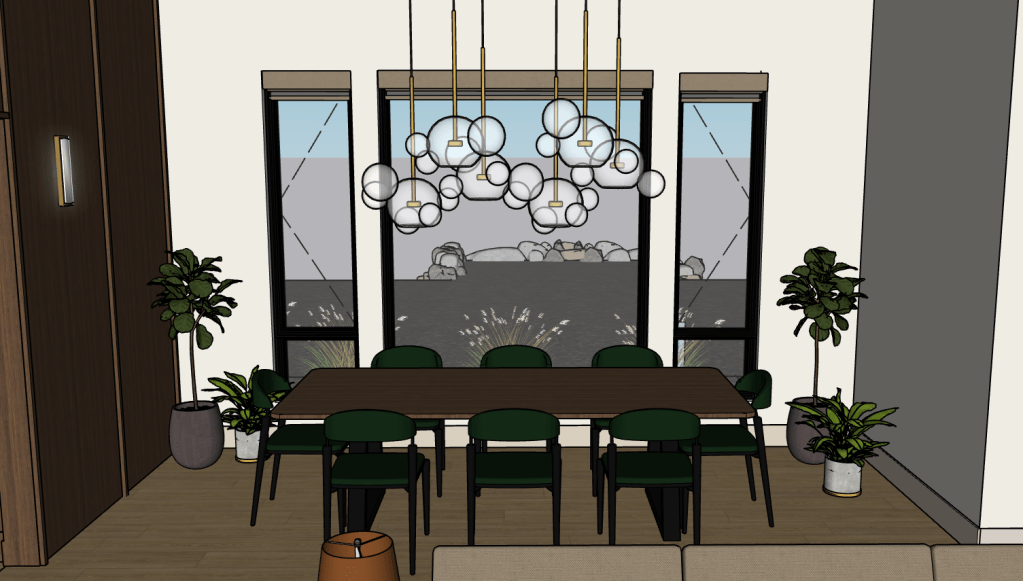
The windows in the living room offer Swan Range views, which we’ll be able to enjoy from the Mid-Century Modern inspired Sloan Sectional by Interior Define. We selected soft, durable Chenille fabric in a neutral Flax. I’ll sprinkle our color palette (greens and rusts) throughout the space with rugs, pillows and throws. We’re also adding color in the living room with Interior Define’s Gwen walnut chairs in Rust Velvet. All these pieces will look fantastic on top of the new 9′ by 12′ wool rug that was hand-knotted in Turkey.


Mid-Century Modern design showcased natural materials, including wood and stone. The light white oak engineered floors contrast beautifully with the darker, bold grained walnut cabinetry. The warm, light-colored walls (SW Greek Villa) will also balance nicely with the walnut wall-paneling in the great room. We’ve ordered natural stone counters for the kitchen Island and fireplace surround. The Alluvial black leathered quartzite allows you to feel the irregularities providing an organic touch to the design.

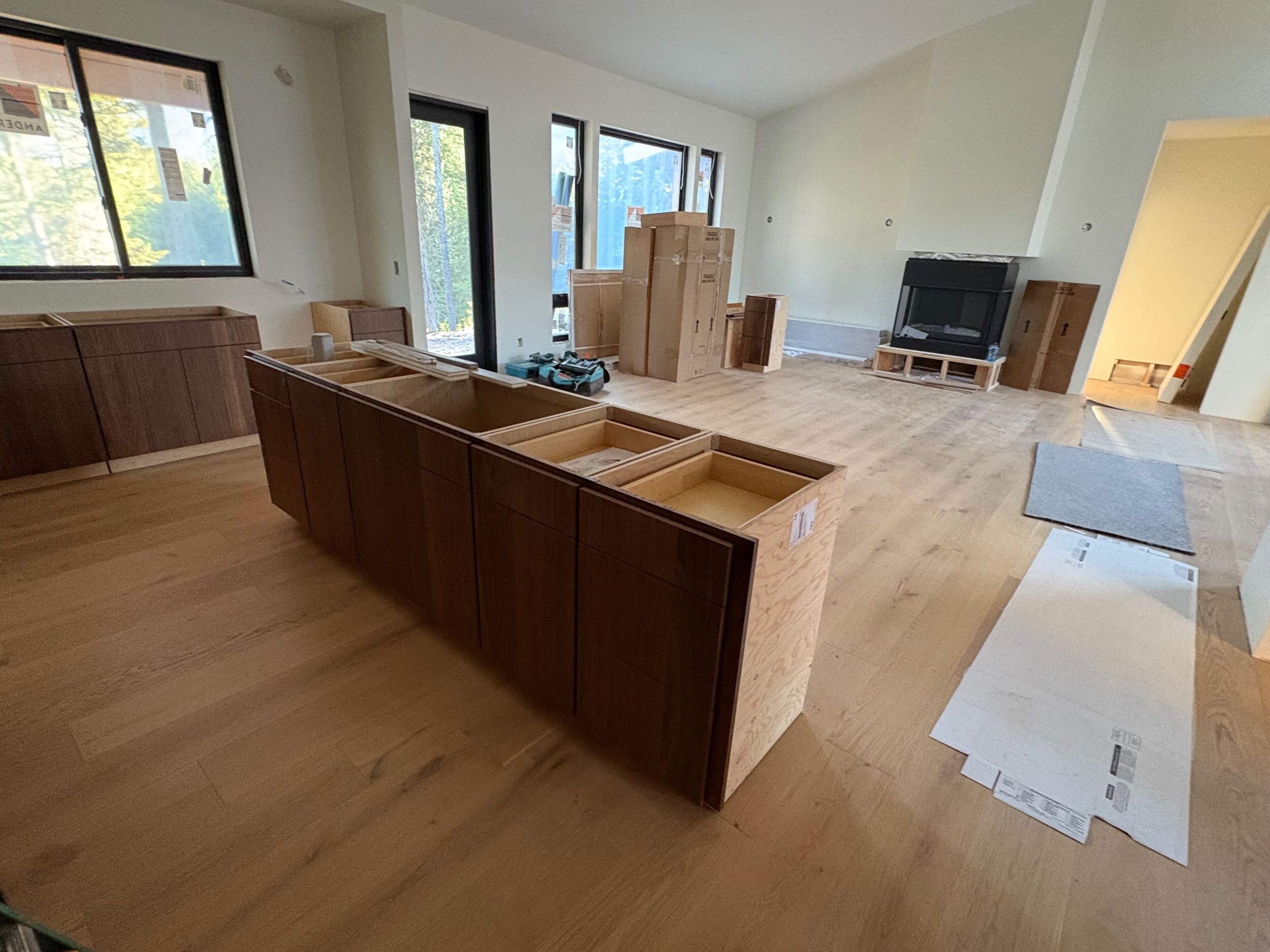
Sneak Peak – Primary Bathroom

Exterior Design
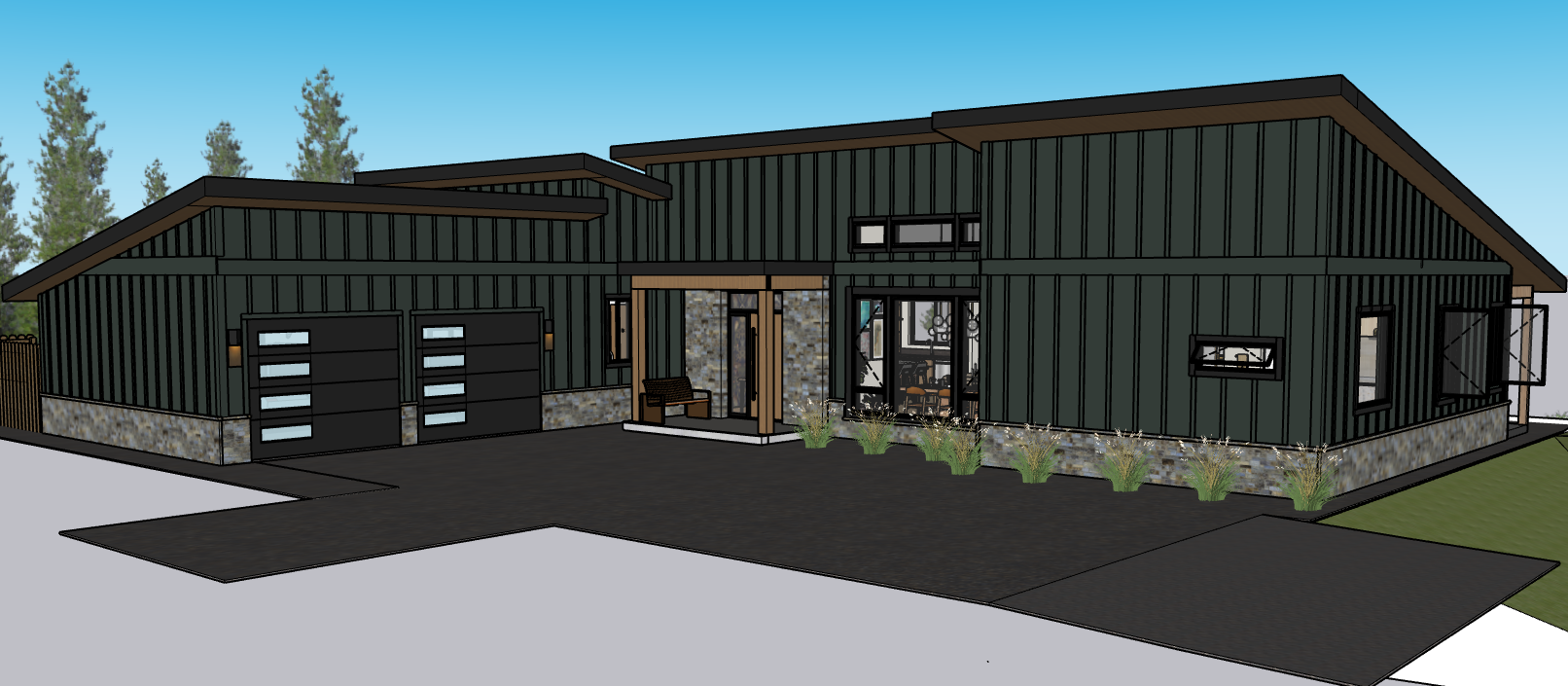
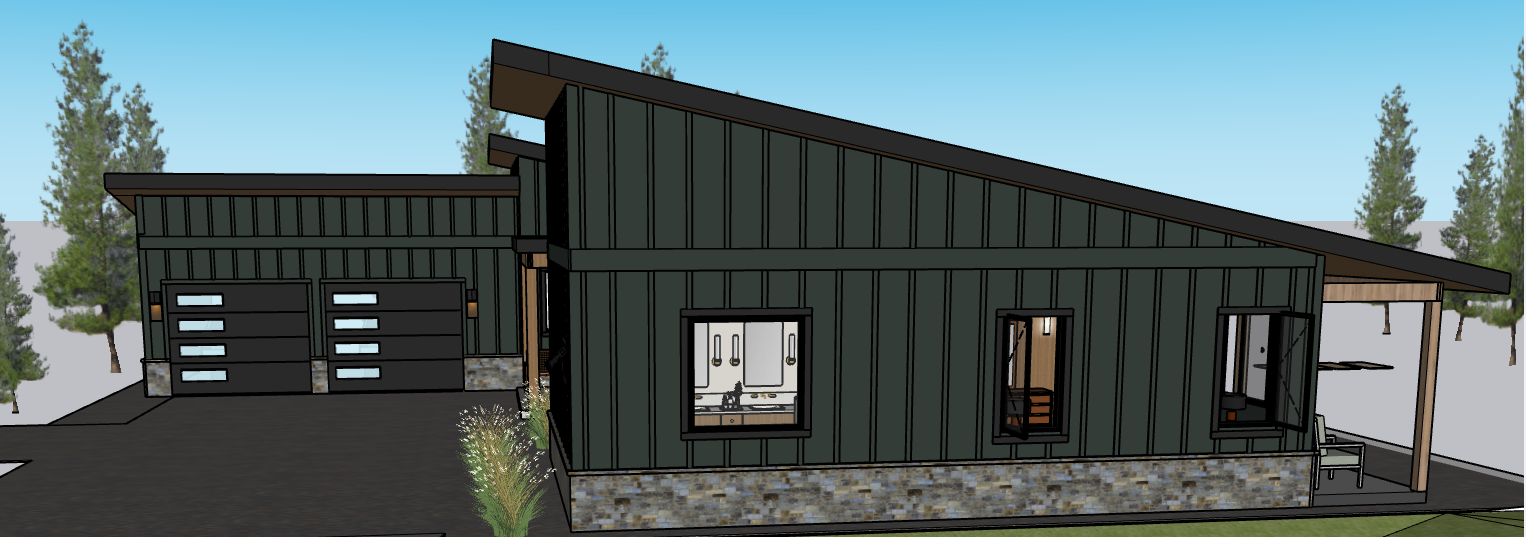
The mono-sloped roof in our design is both simple and functional by directing water and snow away from the home’s entries and driveway. The higher slope on the south side of the house allows for more light to enter the home. It also provides a dark surface that will absorb heat, helping to keep our space warmer in the winter. The natural stonework will also absorb heat from the sun. Many classic Mid-Century Modern homes would have a whole wall of stone, but that was not in our budget. The Sherwin Williams dark green, Jasper paint color helps the house blend seamlessly into the forest surrounding it. We’ve named our home after the natural meadows and Swan Range views located throughout the 12.45 acres. The home design and name, Majestic Meadows honors the wild places that surround it.

We’ll be leaving for NW Montana in a few days. The movers have picked up our stuff and we’ll be packing up the car soon. My hubby, Jim and I are excited to start this new adventure along with our Westie, Hanna. You can join us for all our new adventures by subscribing below:

 Design, Garden, & Travel by Majestic Meadows
Leave a reply to majesticmeadows Cancel reply