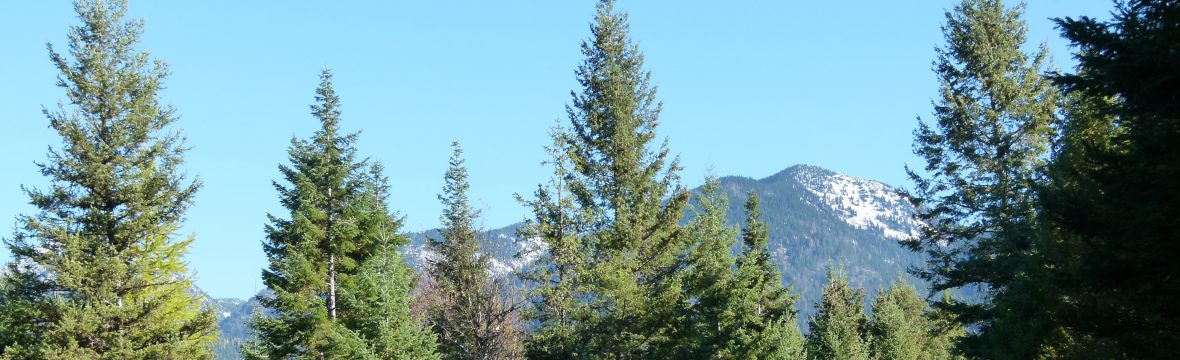


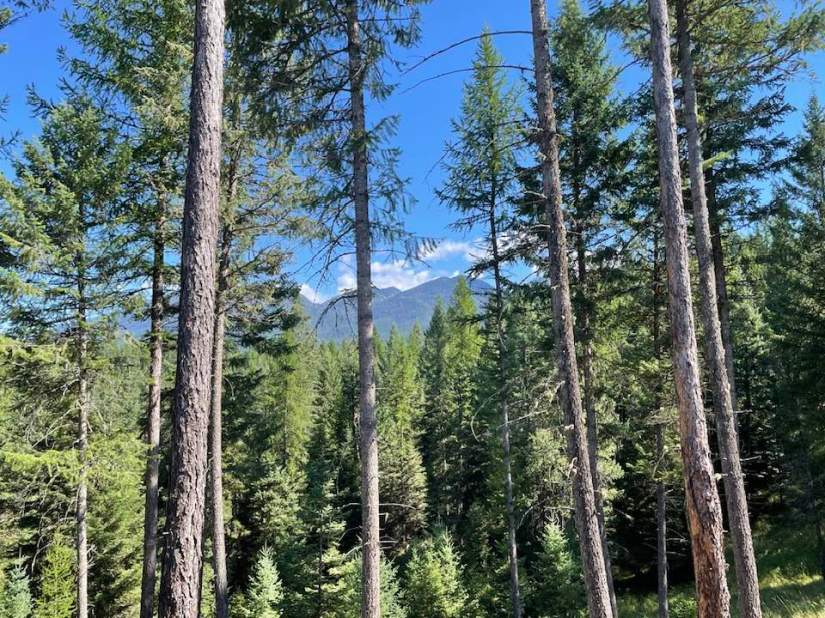
One of the many things we love about NW Montana is its wild places, national parks, national forests, wild and scenic rivers and crystal-clear lakes. It’s a privilege to own a small piece of this paradise and we loved being able to work in the garden this past weekend. We’ve been dreaming of Montana for 20 years, so to know that we’ll be moving into our new build in less than a week is really exciting. In today’s post, I’ll share information I learned about the native and noxious weeds located throughout our 12.45-acre property, as well as a local native nursery resource.
Noxious Weeds
Now that we are here, I was able to meet with a Montana Department of Natural Resource and Conservation (DNRC) expert. Mattie looked at the house and walked around the property with me, offering advice for protecting our home from wildfire and native plant identification. I was excited to learn we’ve got quite a few native plants spread throughout our 12.45-acre property in NW Montana. That’s the good news, the bad news is we’ve got lots of noxious weeds, including Mullein, Spotted Knapweed and Yellow Toadflax.
Mullein
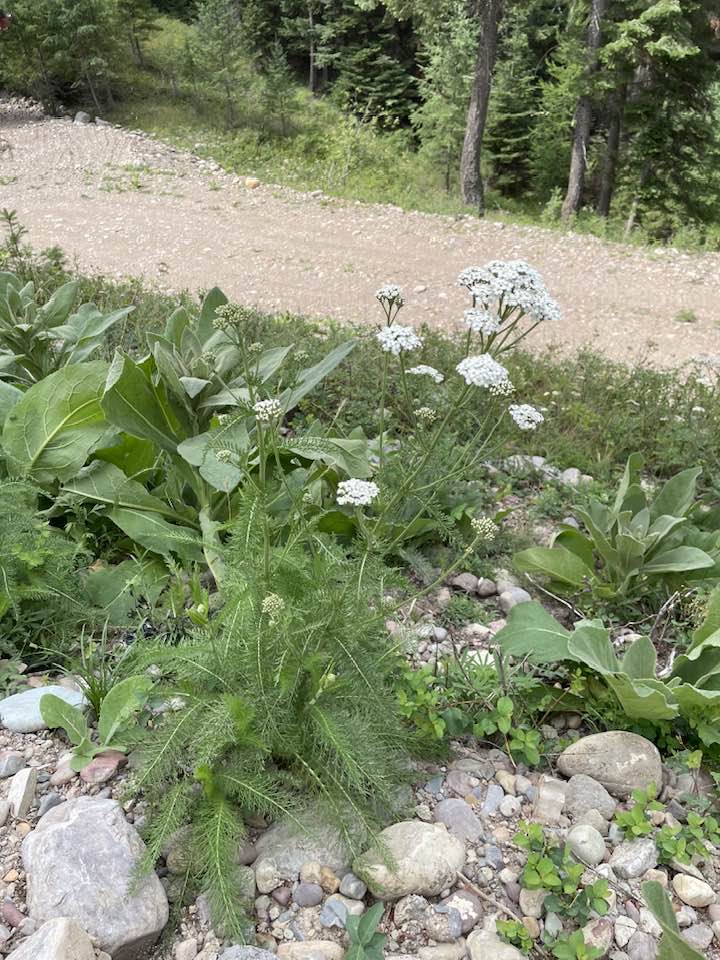
We spent last weekend pulling and bagging Spotted Knapweed and Mullein around the house. We filled five large trash bags and still have large colonies down our driveway and farther out from the house. Mullein is an aggressive, non-native plant invading disturbed soil, over-grazed, sparsely vegetated, and barren land while providing no nutritional forage for livestock or native ungulates (Gross and Werner 1978). Common Mullein can outcompete and displace native plant species where vegetative cover is low because it grows fast and is a prolific seeder. Although it has medicinal properties, if left to seed Common Mullein will become invasive in your garden or yard with seeds, which remain viable for a very long time. Due to its prolific seed crop and velvety leaves, Common Mullein can be difficult to eradicate. This is especially true if not detected and controlled early.
In the picture below, you can see native Yarrow (White) and noxious Mullein:
Spotted Knapweed
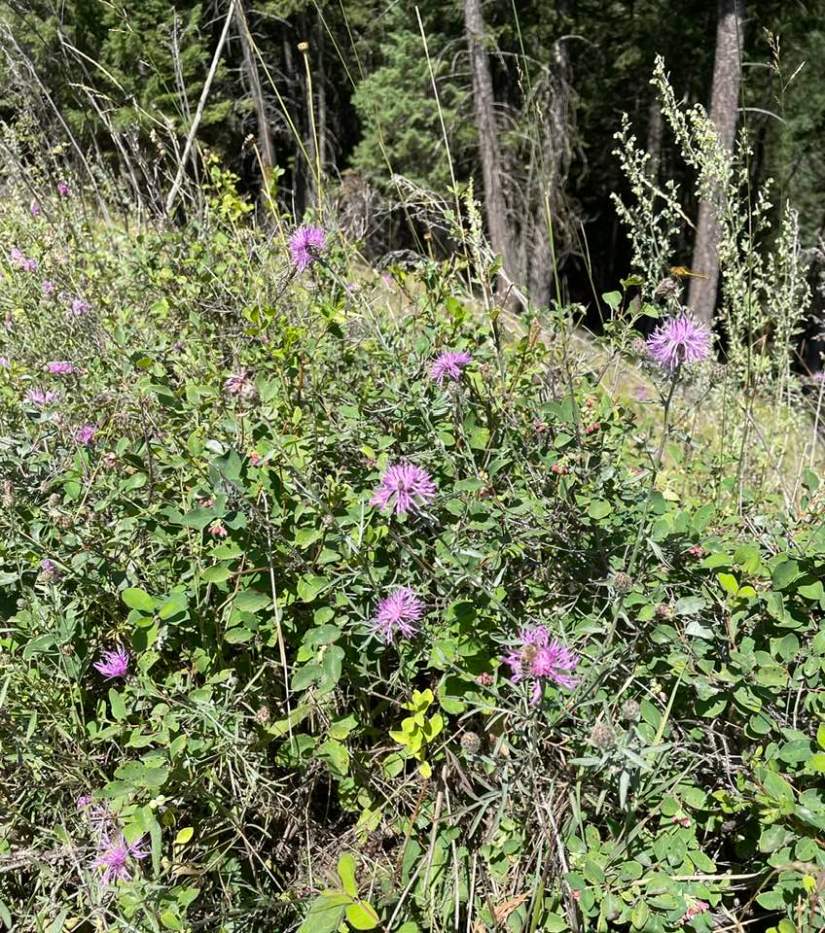
Although, attractive the Spotted Knapweed is toxic to humans and animals causing allergic reactions and toxicity in grazing animals in large quantities. You can help control these plants by hand pulling or digging the plant up using gloves or using an herbicide. It’s always a good idea to wear long sleeves, pants and gloves when pulling toxic or unfamiliar weeds. The plants are suspected to contain toxins that inhibit the growth of neighboring plants and seeds remain viable in the soil for up to eight years. A neighbor who works for the National Forest Service expressed more concern for the Spotted Knapweed than the Mullein.
Spotted Knapweed is the purple-blue flowers shown below:
Yellow Toadflax
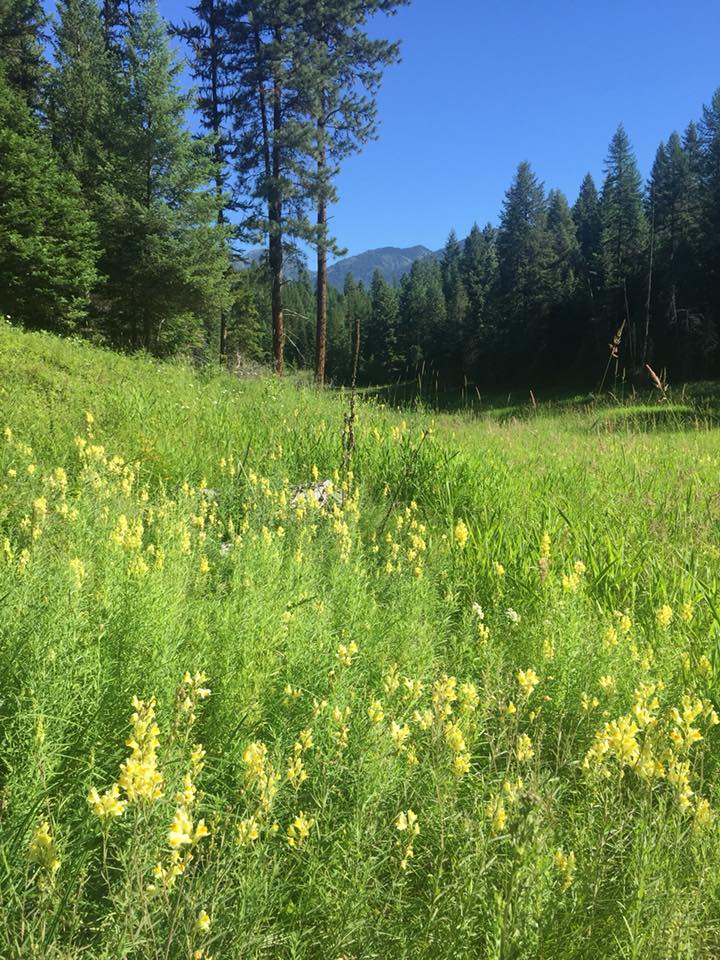
In addition, we’ve also got noxious Yellow Toadflax growing in the meadow below our house. Unfortunately, this plant is still sold in some nurseries and seed companies under the common name “butter-and-eggs”, so you’ll want to avoid it or remove it from your garden. It is suspected to be toxic to some animals if ingested in large quantities. These plants require repeated herbicide spray at bloom in May or June or fall re-growth to reduce it locally.
Native Plants
I recognized a few of the natives around our property but was pleasantly surprised when I conducted an informal inventory with Mattie from DNRC. She pointed out many native plants that I didn’t know we had growing on the property. One of my favorites is Arrowleaf Balsamroot, which according to our local native plant nursery has a five-to-eight-foot tap root, which helps to stabilize the slopes around our house.
On each of the pictures below, scroll down to see a description from the Center for Native Plants.
One of Jim’s favorite plant is Kinnikinnick, which is an evergreen that grows low to the ground.
Mattie pointed out two different wild strawberry plants, then upon seeing my excitement promptly told me that the critters will get to the berries long before we ever notice them. That’s okay with me, if we want strawberries we’ll plant them in our future fenced garden on the west side of the house.
I was happy to see a native Goldenrod since we had success with Seaside Goldenrods in our South Florida garden. This plant provides vital sources of pollen and nectar for bees in the late summer and fall.
The delicate looking Harebell’s blue flowers will look great with the Goldenrod or other yellow flowers.
The garden floor below the existing trees is full of Oregon Grape, which looks attractive year-round and does great in shade.
The Painted Lady Butterfly is fond of Pearly Everlasting, which can also be used in dry flower arrangements.
The versatile Spreading Dogbane is a food source for Monarch butterflies. Monarchs were my mom’s favorite butterfly, so knowing this pretty little plant supports them makes it special.
We’ve also got quite a bit of Pine Grass growing on the property, which tends to fall over in shade. It will grow more erect in sunny locations, as well as produce seedheads , which won’t grow in the shade.
The Rocky Mountain Maple is multi-trunk shrubby plant that provides cover and nesting habitat for many game birds, songbirds, and small mammals.
There are a few others I’m sure we’ve yet to identify, but I suspect we could have Chokecherry and/or Serviceberry plants. We’ll continue to remove or spray the noxious weeds around the house. Removing them from our entire property will be quite the challenge.
Conifers
There are lots of conifers, including Douglas and Grand Fir trees, as well as one of our favorites, Western Tamarack. Grand Fir and Douglas Fir are two popular trees with unique qualities and uses. Comparing these trees helps you understand their differences better. Whether you are choosing a Christmas tree or lumber for a project, knowing their traits can be beneficial.
Grand Firs
Grand Firs are known for their strong fragrance and soft needles. Grand Fir trees prefer moist soil and need good drainage. These trees like to grow in valleys. The bark of the Grand Fir is smooth and gray when young. It becomes rough and scaly as it gets older. The needles of Grand Firs are flat and soft. They have a strong smell. Grand Fir wood is softer and has a lower density. It is easier to cut and shape but is not as strong at Douglas Fir. If using this tree for firewood, make sure to give it plenty of time to dry out or you’ll have heavy creosote forming in your chimney. Finally, remove the bark to reduce the ash produced when burned.
Douglas Firs
Douglas Firs, on the other hand, are valued for their strength and versatility. Douglas Fir trees are more adaptable and can grow in many soil types. They love sunny spots and can handle dry summers. Douglas Fir bark is thicker and more rugged. It has deep grooves. Douglas Fir needles are sharp and pointy, as well as a bit longer. Douglas Fir wood is harder and has a higher density. It is very strong and harder to cut but lasts longer.
Grand Fir and Douglas Fir face many pests. Aphids are common and they suck sap from the tree. Spider mites also attack causing yellow spots on leaves. Bark beetles are another threat. They burrow into the wood and caterpillars can eat leaves, which reduces the tree’s health.
Disease control is crucial. The local extension agent provides Bubble Caps that contain the pheromone verbenone that prevents attacks by the mountain pine beetle on all varieties of pine trees. When present in sufficient concentration, verbenone signals incoming beetles that the target tree is already infested. The result is that the beetles are forced to fly elsewhere making them vulnerable to natural predators. Inspect trees regularly for signs of disease. Early action helps.
Western Tamarack
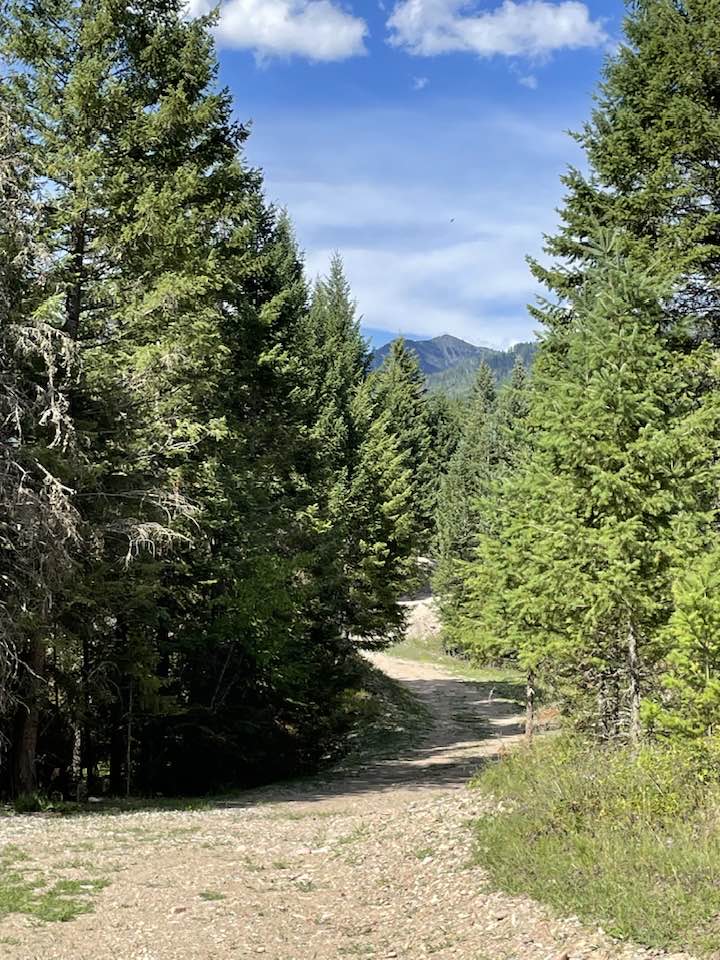
Western tamarack, also known as western larch or tamarack, is a species of large deciduous conifers found on the lower mountain slopes and valleys of western North America. In the fall, the needles turn golden and then fall to the ground. Although it is typically found in forests with mixed species of trees, it can sometimes grow in pure groups. It has a pyramidal form with level to upswept main branches and sagging side branches. Some birds including two-barred crossbills, redpolls, and pine siskins feed on the seeds; western larch trees provide shelter to deer, moose, elk, bears, and hole-nesting birds. The western larch wood is valuable as firewood, which gives off a sweet fragrance while burning.
Dwarf mistletoe, red ring rot, needle cast, and the fungus Fomitopsis officinalis are some of the serious diseases; insect pests such as western spruce budworm, larch casebearer, larch bud moth, and larch sawfly cause damage to this tree.
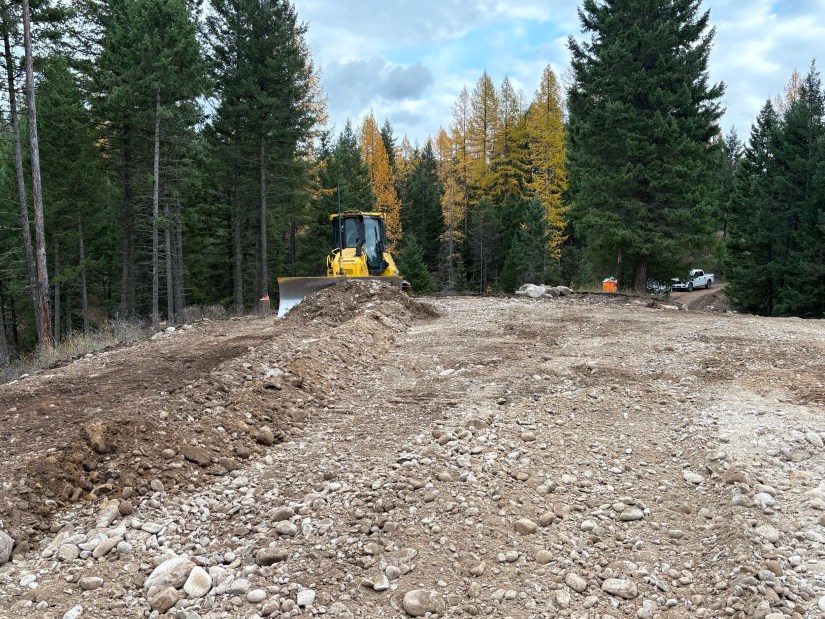
You can see some of our Western Tamarack trees in the photo below:
Junipers
Although popular for many years, Junipers are highly combustible plants due to their volatile oils, dense growth, and retention of dead plant material. Having juniper bushes near your home increases the likelihood it will be impacted by wildfire:
- Junipers collect dead leaves and trash.
- Junipers and trapped debris burn hot and fast.
- Junipers give off large flames and generate abundant embers.
If you’d like more information about preparing for wildfire or the plants in your Montana garden, you can reach out to DNRC at the link below:
The Center for Native Plants
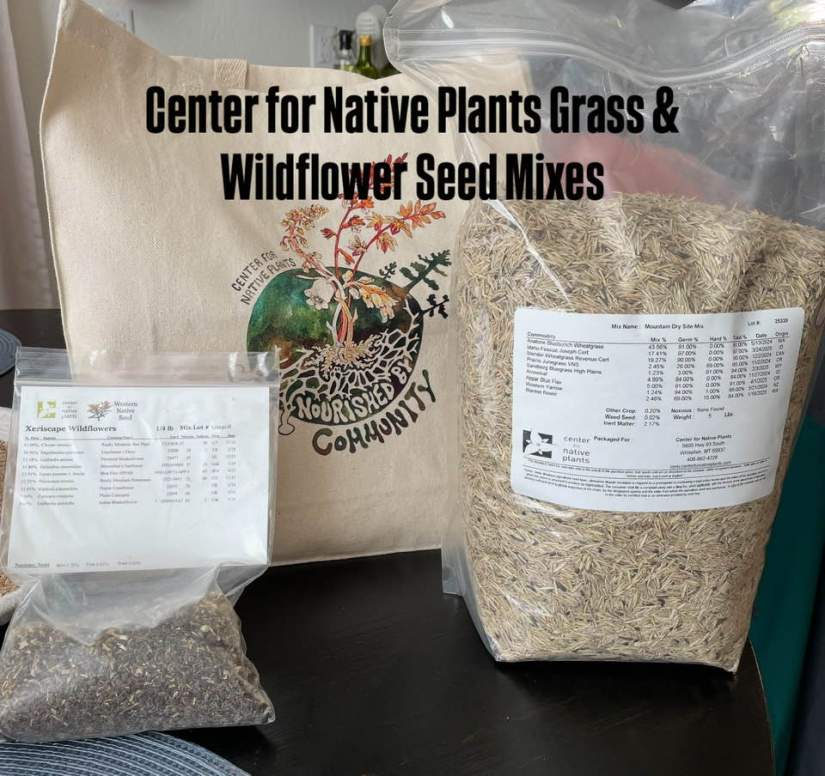
The Center for Native Plants is Flathead Valley’s only retail native plant nursery. They grow a diverse collection of plants—over 200 species of wildflowers, grasses, groundcovers, shrubs, and trees—that are native to Montana and the Intermountain Northwest. Located in Whitefish, MT, the plants are grown outdoors, making them hardy and well-adapted to our climatic extremes.
Once we move into the house, we’ll buy many of the same native plants we currently have growing on the property. Hopefully, they will have plugs or one-gallon plants available that we’ll be able to get in the ground on the east and south side of the house before winter. I have read that smaller plants do better with transplanting than large ones here in NW Montana, so that should be a cost savings for us. This fall we’ll spread native grasses and wildflowers seeds we purchased from this native plant nursery. It’s best to remove as many noxious weeds as possible before seeding, which will allow the native seeds to thrive without much competition.
https://www.centerfornativeplants.com
In future posts, I’ll share additional build and interior design updates, as well as progress in the garden. We’ll be making time for adventure, so look for those posts too. Be sure to subscribe below to follow along. You can also find me on Instagram @majesticmeadowsmt

 Design, Garden, & Travel by Majestic Meadows
Leave a comment