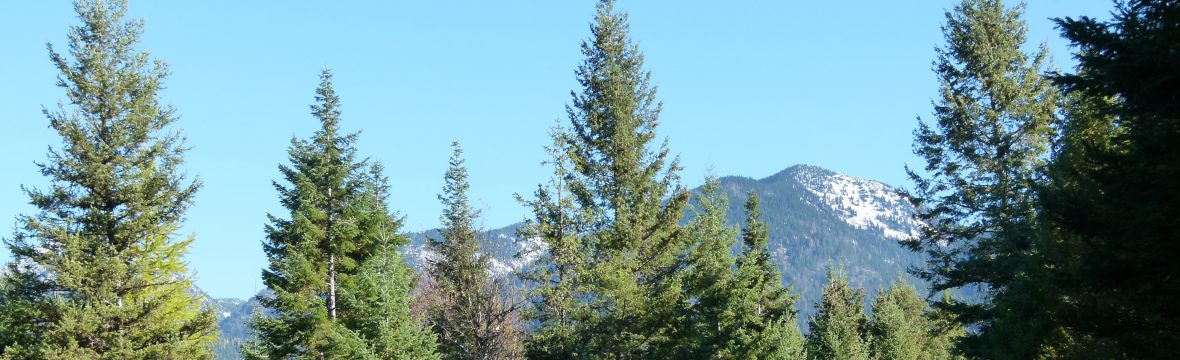
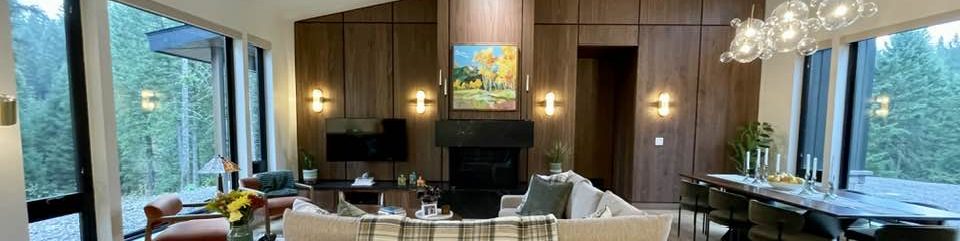
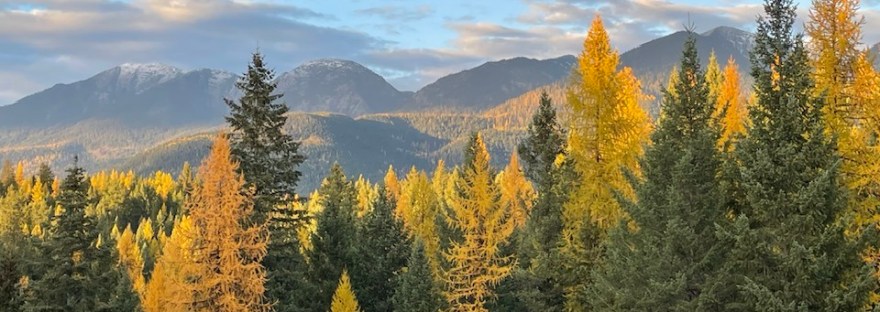
As you can imagine, building a new home wreaks havoc on a landscape. We have a lot of restoration to do around our house, as well as a large area going from the house to our well and septic field. We’ve spent time assessing our site, which includes soil testing, notating shade and sun patterns, as well as microclimates. In today’s post, I share how we are restoring this area (Zone 3-4) and the native plants we’re using, which are tailored to our ecosystem.
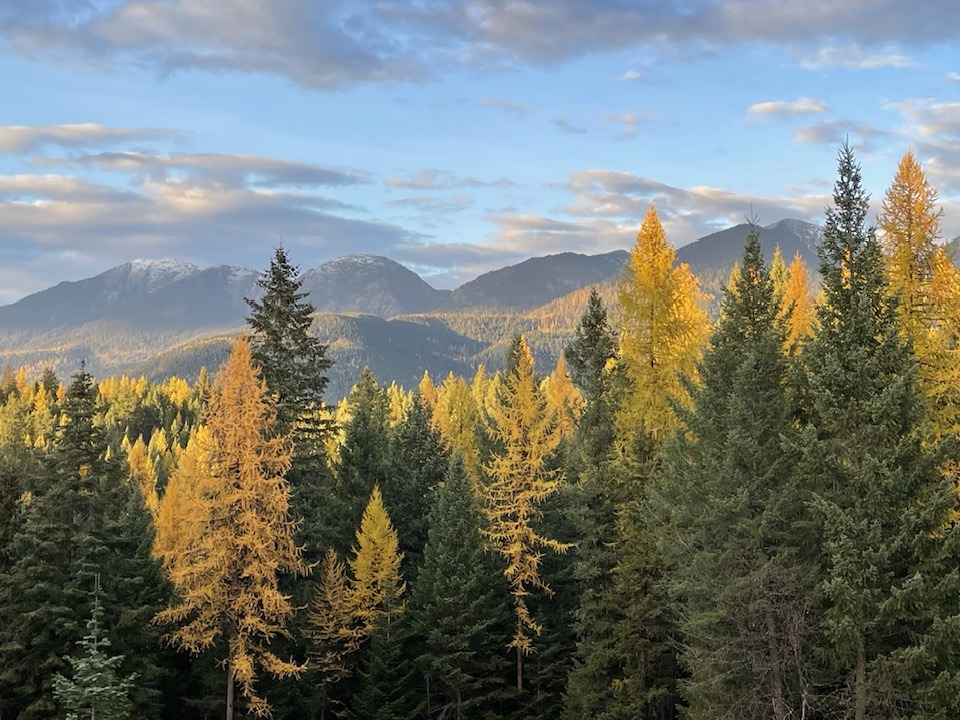
We had additional trees removed to open up the view of Swan Range:
Native Plants
Using Montana’s native plants can have many benefits. Native plants have cold and drought hardiness, provide food for beneficial insects, including pollinators, and are attractive additions to many different landscapes. These plants are adapted to local climates, growing seasons, topography, and soils making them especially tolerant of some of the most challenging gardening issues in Montana.

As many of you know, we were avid gardeners in South Florida, but we still have a lot to learn about gardening in NW Montana. Our local native plant nursery, The Center for Native Plants has been a wonderful information resource, as well as a source for native plants and seeds. One of the first things we learned, was fall is an ideal time for installing plants and spreading seeds.
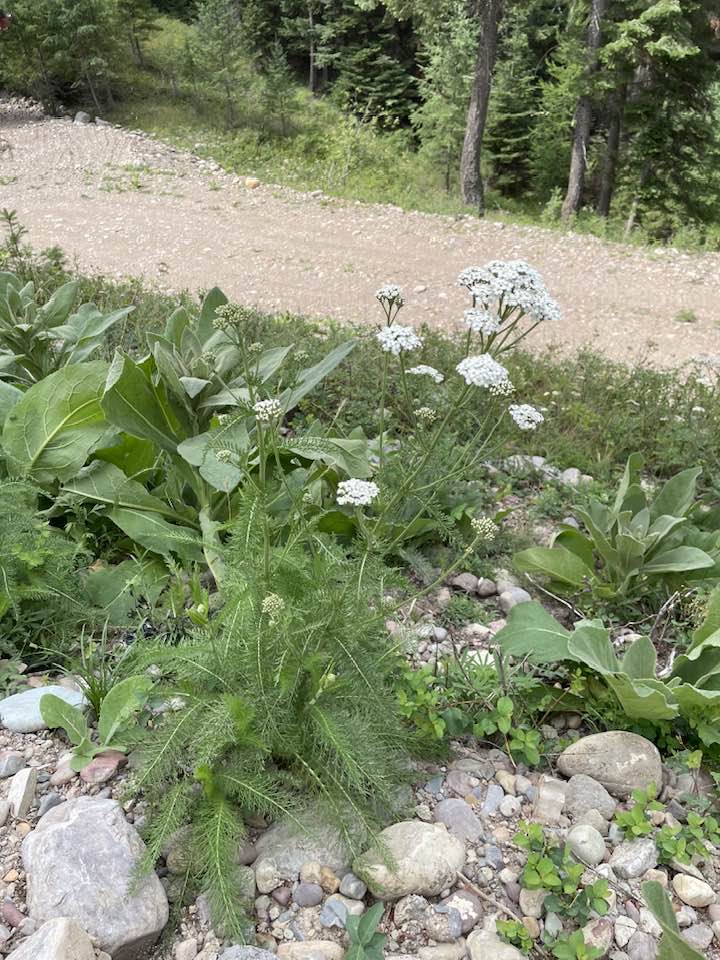
Western Yarrow is pictured below, as well as a noxious weed, Mullein:
Budget
The landscaping work by Cody from Glacier Construction is a separate expense from the new build. It was expensive, but well worth the cost for a clean, finished look. He removed about 25 trees. He also brought in and spread gravel around the house. Sand was also spread around the house to level the area before placing garden soil on top. As you saw in the first picture, the trees removed really opened up the Swan Range views. In addition, trees too close to the house were also removed to reduce fuels that could ignite our home. Keeping trees and shrubs away from the house is a core Firewise principle. Finally, a few more trees on the south side were removed, which allowed more light into the house.
Landscape Design
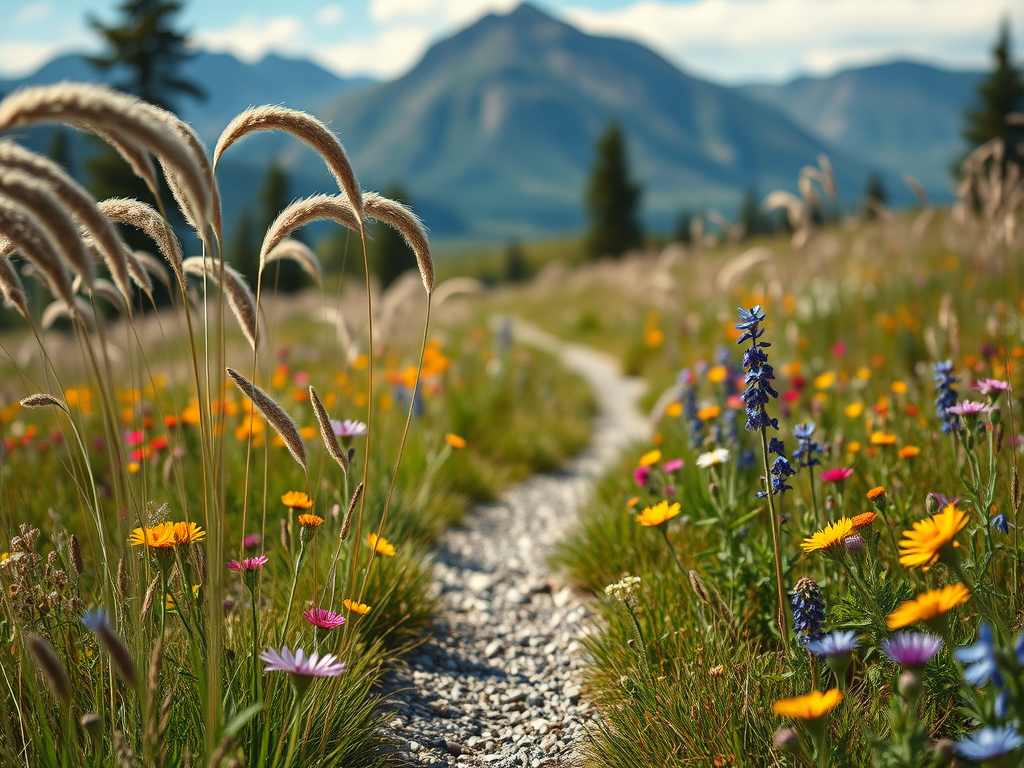
We are planning a natural, meadow garden rather than a formal one. We envision native grasses gently swaying with bursts of color from native wildflowers sprinkled in for good measure. Open, sun-filled expanses of golden grasses and wildflowers are the foundation of human ecology. We evolved in the savannah and prairie. As children we gravitate to them knowingly, already nostalgic for these magical places we are only first discovering, full of soft, tangled undergrowth and hidden life. We memorialize meadows in sketches and photographs and paintings. Meadows are art.
The best art is imperfect and practical. Appreciating this is the first step in planting a meadow: your meadow will have its share of weeds, it will look messy and chaotic sometimes, and once you plant it, you can’t control it. You can only try to nudge it into new expressions of itself. Your meadow will ultimately decide what kind of meadow it’s going to be.
A native meadow garden provides many ecological benefits:
- Provides habitat and pollinators: Native wildflowers bring in bees, butterflies, and birds. The native grasses provide nesting, cover and food for wildlife.
- They are life-giving: Intricate carbon sequestration machinery, and complex water filtration systems.
- Erosion control and soil stability: Native bunchgrasses’ root systems will hold soil in place.
- Low maintenance once established: Native plants adapted to our region’s climate, soil, and moisture require less water, fertilizer and care.
Site Assessment and Planning
The construction of the house altered the garden areas around it, so here’s what we had to consider:
- Evaluate soil, drainage, sunlight, and microclimates created by our new home and landscaping changes.
- The slopes around our home will need grasses and other plants to control erosion. These plants will help stabilize soil and roots will intercept any run-off.
- Identify existing native plants that survived construction and assess invasive species presence.
- The Montana Native Plant Society’s regional guides are helpful to understand what naturally grows in our area.
- Group plants by soil moisture needs. We’ll have irrigation for around the house, so the native seed mix and other plants will get more water than other areas of our property.
Site Preparation
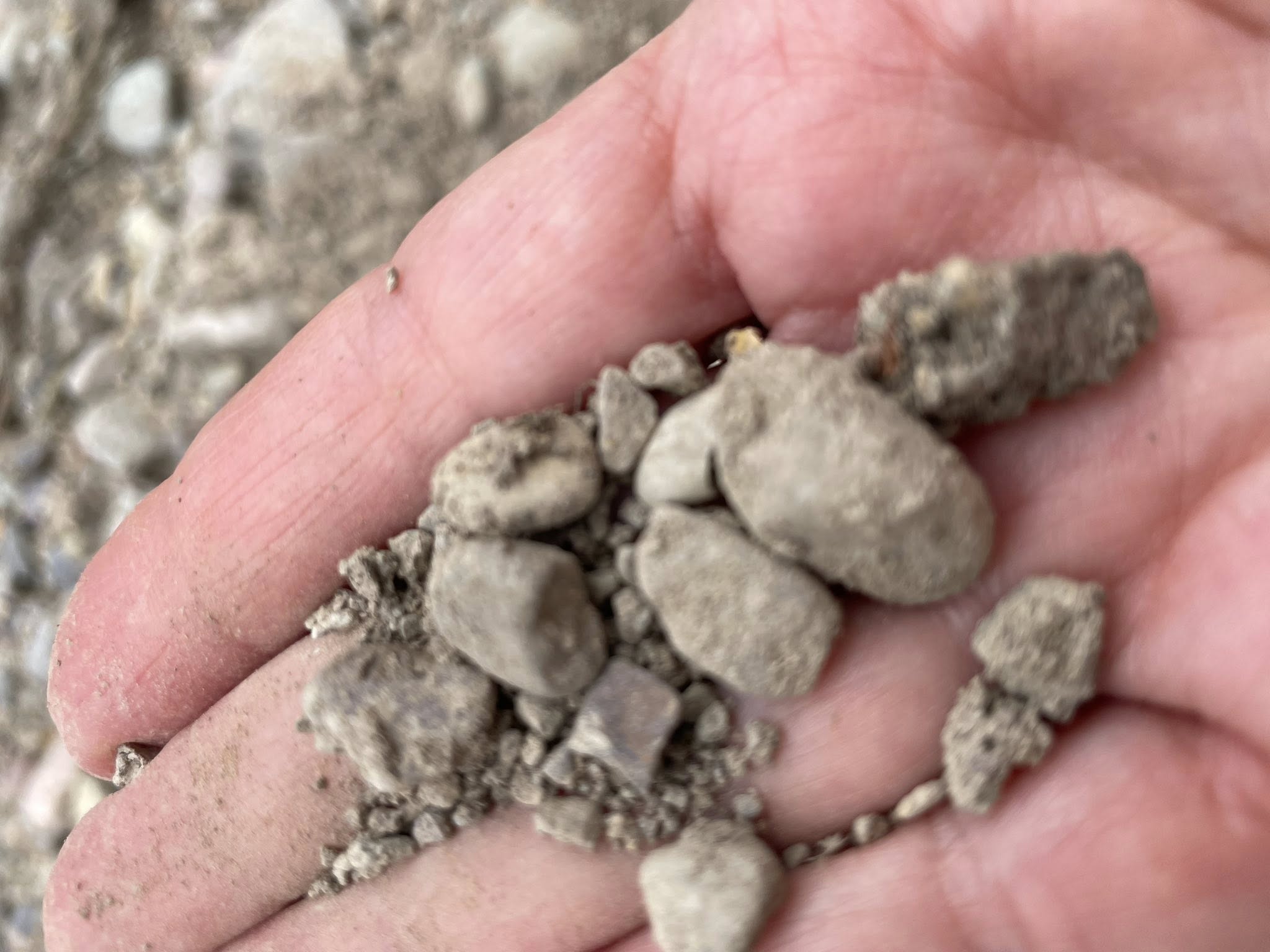
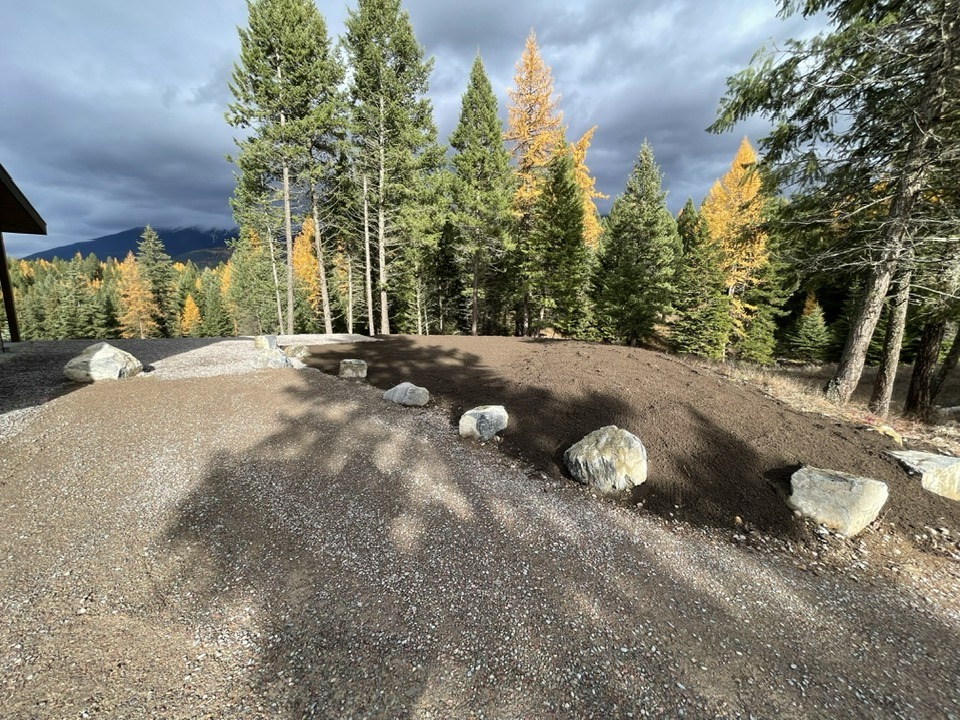
Our builder, J Martin Builders has removed all the construction debris and Glacier made sure to slope everything away from the house. We’ve hand-pulled or sprayed invasive weeds, like Spotted Knapweed and Mullein. As you can see in the above photo, the soil around the house is made of rocks with a bit of dirt. This soil is great for drainage, and many native species thrive in it. However, we’ve added a small amount soil to our newly created garden beds to ensure the native seeds have the best chance to thrive. Once established most native plants do not need fertilizer or special soil amendments.
Garden plan for east side:
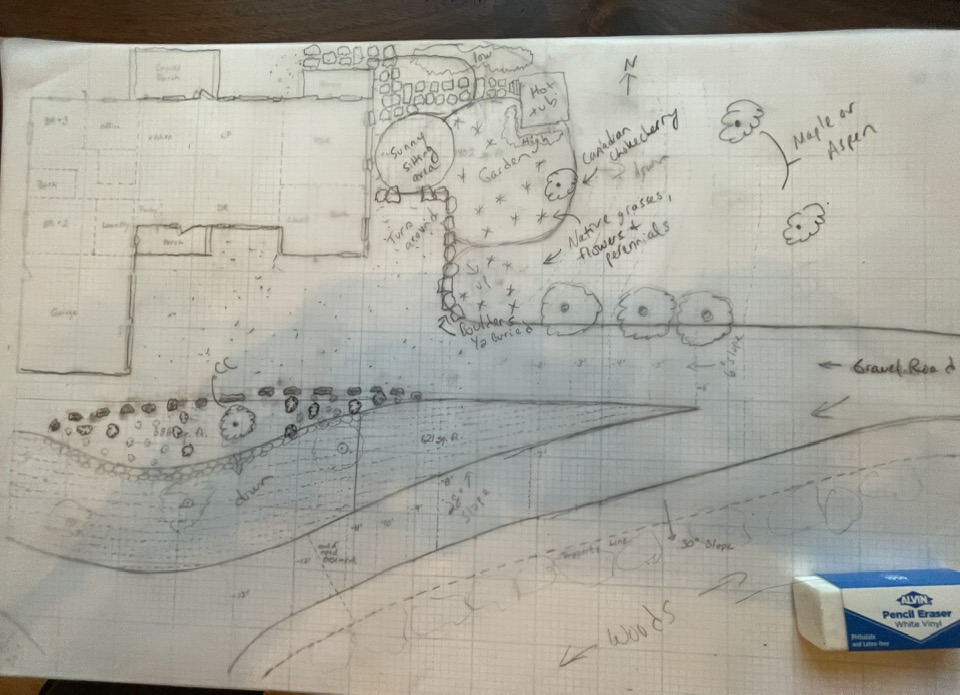
We have a lot planned in the area pictured above and below, including a turnaround spot, sunny sitting area, a Bullfrog Spa and garden bed. Glacier Construction brought in the gravel for around the house. Using gravel and removing anything flammable within five feet of the house is another Firewise prevention principle. They also continued the gravel for the sitting area and spa or hot tub. Eventually, we plan to add locally sourced Flagstone pavers going from the primary bedroom patio to the hot tub and sitting area. We had left over boulders from our retaining wall, so they were buried as an informal border for this area. Finally, garden soil was brought in for the native grass and wildflower seeds planned for this area.
Pro Tip: Native seeds are adapted to our area, so we didn’t need a lot of soil for our planting beds. We have just enough to cover the seeds.
Why Native Plants?
We’ve planted natives in prior gardens. We found they perform well and bring lots of bees, butterflies, birds and other critters into our garden. We’ve done an informal native plant survey throughout our 12.5-acre property. There are at least 12 different native plants on our property. These plants provide some great clues about what types of plants will work for the garden. Here are our top priorities:
- Choosing species native to northwest Montana, especially those adapted to our 3,100′ elevation and soil type.
- Prioritizing drought-tolerant, pollinator-friendly, and wildlife-supporting plants.
- Using local sources for plants and seeds ensure genetic integrity. You can find resources at your local Native Plant Society.
We’ve already planted several natives on the south side of the driveway. We bought and installed native pollinator plugs and one-gallon pots, as well as a small Canadian Chokecherry tree. Plants pictured below include, Canadian Chokecherry, Dwarf Mugo Pines, Peonies, and natives, including Rosy Pussytoes and Stonecrop. The native pollinator perennial plugs are farther down on the slope next to the driveway.

Time Your Planting
In the picture below, I’m standing where the hot tub will go and I’m looking into the garden bed, which includes a raised area flanking the driveway. We added the native grass and wildflower seeds this week. Seeds are an affordable option but require patience. Next year, most of the growth will be in the roots with smaller plants showing up above the soil. Here’s the timing plan:
- Fall is ideal for planting natives in Montana due to cooler temperatures and natural precipitation.
- A representative from our native nursery said spreading the seeds on top of snow would be great.
- Spring planting is also possible but may require more irrigation.
- We’ll be working on other parts of our garden next summer and fall.
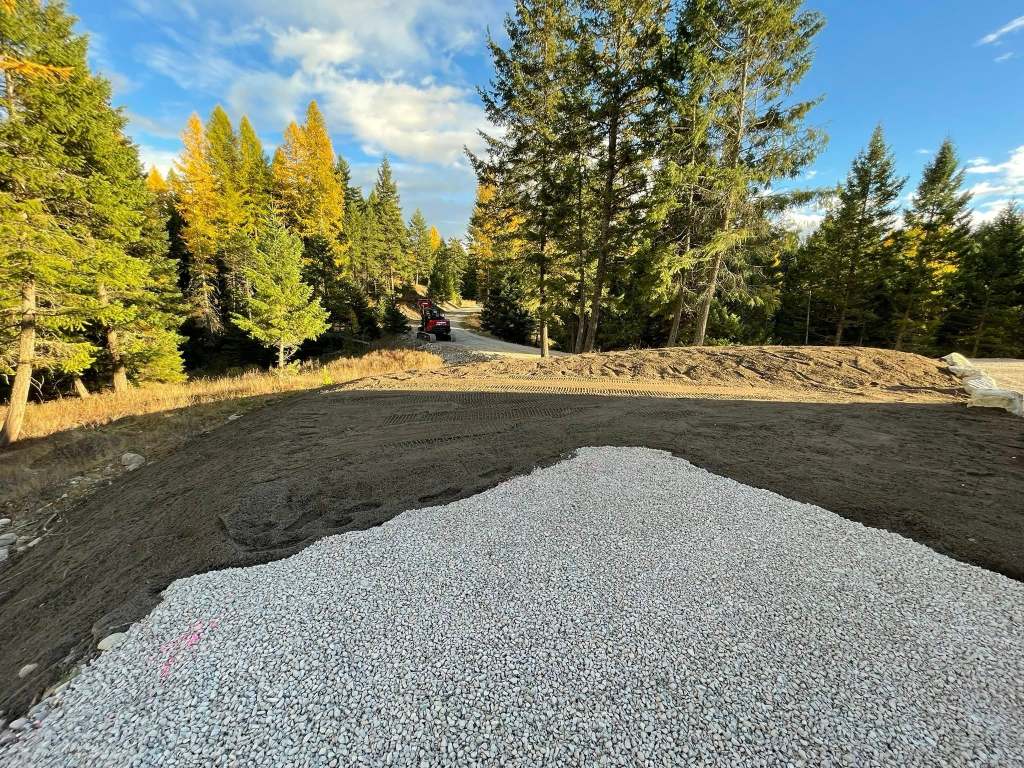
Our sunny sitting area is pictured below, and the hot tub will be just to the right of it:
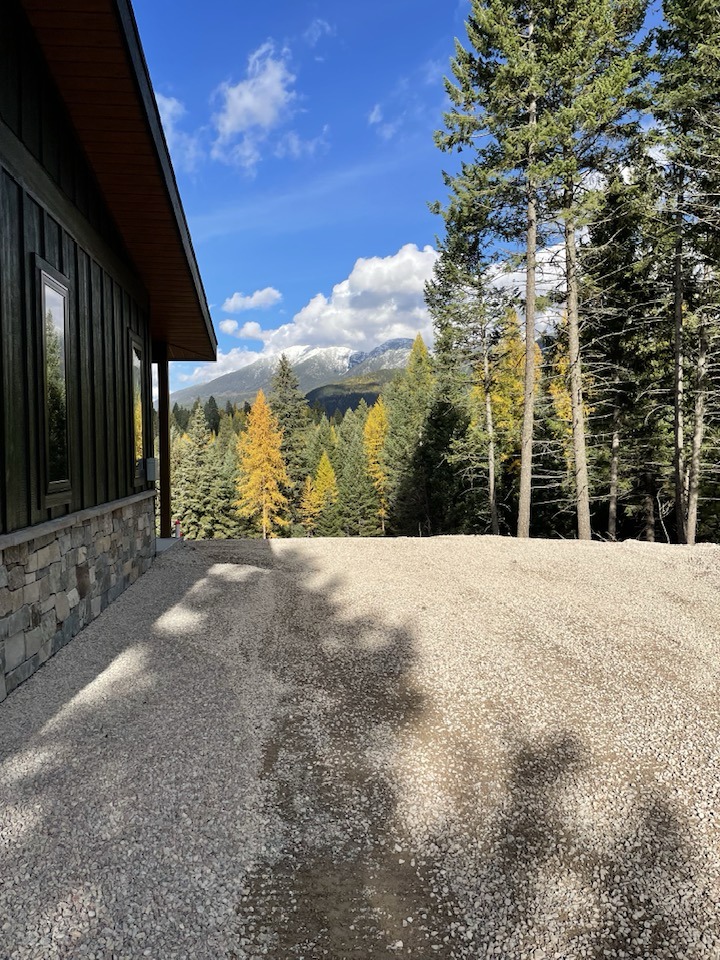

Planting Techniques
Digging in the ground around our house has been challenging. The ground has been compacted due to construction, plus it is very rocky. You can’t just stick a shovel in the ground and move dirt here. We have to pry the dirt and rocks loose, then shovel them out of the hole.
Here are some helpful planting tips for your garden:
- Group plants by water and light needs.
- You can use a light layer of mulch to suppress weeds and retain moisture. Avoid deep mulch layers, as that can harm native species. I prefer a low-growing ground covers like Kinnikinnick and Rosy Pussytoes over mulch.
- We’re using the native grass and wildflower seed mix purchased from our local native nursery. The plugs (mini plants) and one-gallon pots we used in the south garden were expensive, so seeds are a real money saver.
- Just like your interior, place special plants or art to create focal points in the garden. Think about where you will be enjoying your garden, both outside and from inside your house. For example, we’ve planted a native Canadian Chokecherry as a focal point visible from our dining room window.
- Tips for fall seeding: https://centerfornativeplants.com/wp-content/uploads/2022/08/cnp_educational_fallseeding_v5.pdf
On the south side of the house, you can see our driveway garden, including the chokecherry. In addition, you see the new bed and gravel around the house. This bed has native bunchgrass and wildflower seeds:
Post-Planting Maintenance
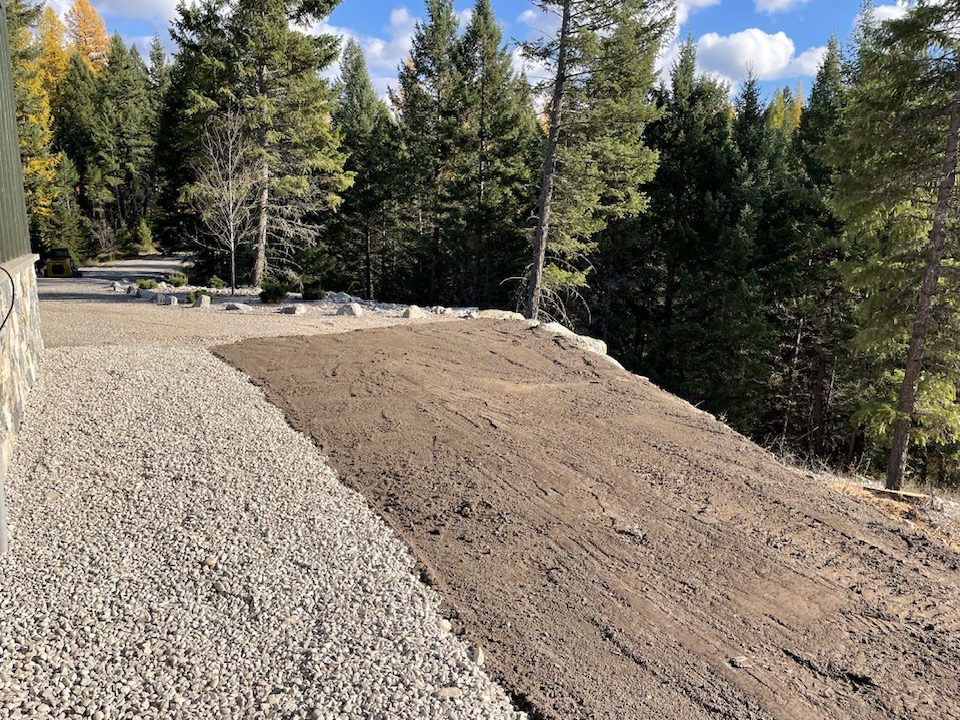
The above garden bed goes around the corner to the west side of the house, where the space gets much larger. If we need to fill in areas in this garden, we’ll add the same plants from the south garden (Dwarf Mugo, Peonies, and Rosy Pussytoes). We also really like Kinnikinnick, so we’ll find some spots for that groundcover too. Here’s what we’ll do to ensure success:
- For plug and container plants, you’ll want to water deeply but infrequently during establishment – native plants prefer dry conditions once they mature. Native seeds sown in the fall with snow or regular rain do not need supplemental watering.
- Monitor for invasive species and remove them promptly.
- Avoid pesticides and herbicides that can harm beneficial insects and soil health.
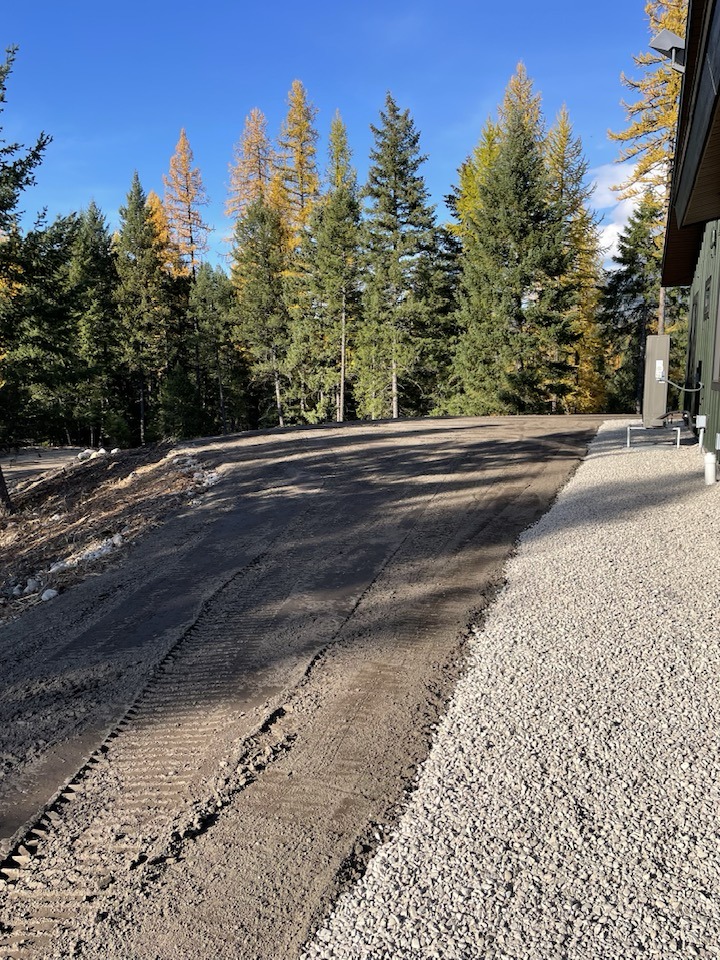
In the picture of our west garden, you’ll see we’ve continued the gravel five feet all the way around the house. After spreading the seeds, we raked them into the soil and lightly tamped them down to ensure good soil contact.
Native Plant Selections
The seed and plant selections are recommended species well suited to NW Montana conditions and were sourced at a local native plant nursery. The first group we’ll discuss are native bunchgrasses. All of the grasses will provide structure, texture, year-round interest, good habitat, food, and erosion control.
Here are the bunchgrasses we’re using in the beds around our home:
- Anatone Bluebunch Wheatgrass – This long-lived, cool-season perennial bunchgrass grows 1.5 to 4 feet tall. It is highly drought-tolerant, slow to establish but persistent and thrives in less productive soils. It’s ideal for rangeland restoration, erosion control, and forage.
- Idaho Fescue Joseph Cert – This fine-leaved, bluish-green bunchgrass grows up to 3 feet tall. It can be found from 1,000 to 13,000-foot elevation. It tolerates cold, drought, and moderate shade. It is excellent for soil stabilization, reclamation, and forage. This grass should withstand any persistent deer grazing.
- Prairie Junegrass – This tufted bunchgrass is 0.5 to 2 feet tall with narrow basal leaves and upright seedheads. It tolerates drought, fire, and cold. It thrives in open rangelands and forest edges. It’s valuable for erosion control, reclamation, and forage. Deer may nibble on it early in the season.
- Sandberg Bluegrass High Plains – This perennial bunchgrass with deep fibrous roots grows 6 to 18 inches tall. It is extremely drought-tolerant, resistant to grazing and trampling. Great for disturbed sites, low-precipitation areas, reclamation, and grazing lands.
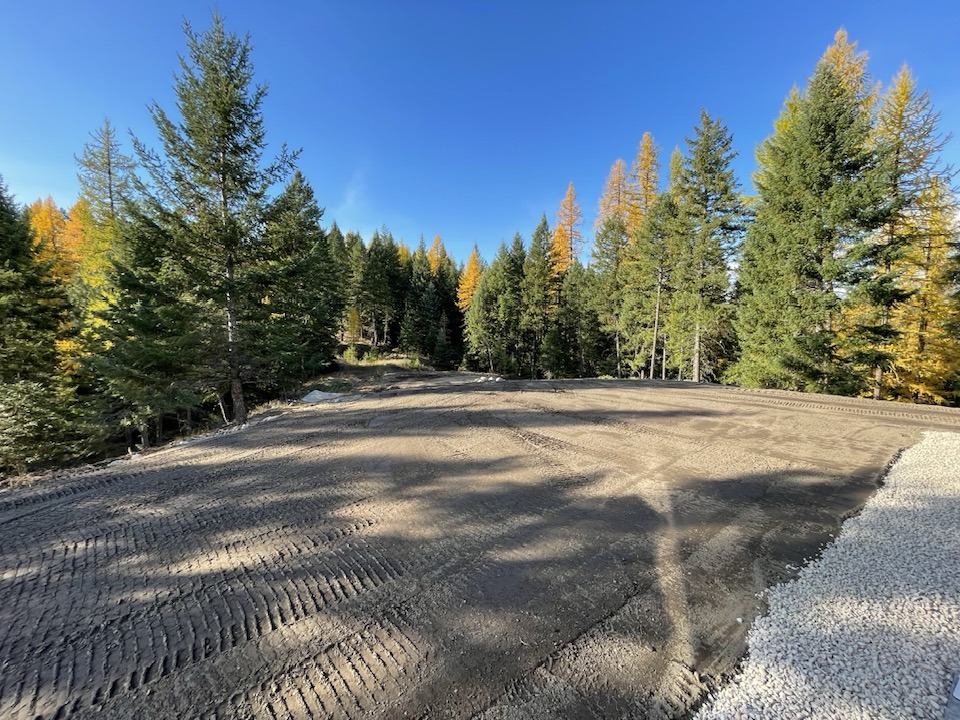
The west side of the garden looking towards our future edible garden:
The next group are the native pollinator-friendly wildflowers, which vary in bloom times, color, heights, and textures. These iconic native wildflowers, each offer ecological benefits, striking beauty, and historical significance. These hardy perennials thrive in the state’s diverse landscapes, from dry prairies to mountain meadows. All of our wildflowers attract bees, butterflies and birds/hummingbirds:
- Arrowleaf Balsamroot – These flowers have large, sunflower-like yellow blooms with arrow-shaped, silvery-green leaves. They are common on dry, open hillsides and mountain slopes across western Montana. They bloom from spring to early summer. These plants provide early-season forage for deer, elk, and pollinators. Used traditionally by Native American tribes for food and medicine; roots and seeds were consumed.
- Silvery Lupine – The plant has spikes of blue to violet pea-like flowers with silvery-green foliage. They’re found in sagebrush, grasslands, and forest openings throughout Montana. They bloom early to mid-summer. They fix nitrogen in the soil, as well as attract bees, butterflies, and hummingbirds. This plant was collected by Meriwether Lewis in 1806 during the Lewis and Clark Expedition.
- Western Yarrow – They have flat-topped clusters of small white flowers with finely divided fern-like leaves. They are widespread across Montana in meadows, roadsides, and disturbed areas. They bloom from March through October and support pollinators. They spread via rhizomes to stabilize soil. This plant was used medicinally by Indigenous peoples for wound care and teas.
- Appar Blue Flax – This plant has delicate, sky-blue flowers on wiry stems with blue-green foliage. They prefer sunny, well-drained slopes and are adapted to elevations from 1,000 to 6,000 feet. They bloom from Mid-May through early summer. They attract birds and pollinators and are great for reclamation and erosion control. The Appar Cultivar is vigorous and competitive with noxious weeds.
Looking back to the north from the west garden:

We’ve also purchased additional native wildflower seed mixes that are well-adapted to Montana’s climate and soils. These plants offer vibrant color, pollinator support, and ecological resilience. Many are used in restoration, xeriscaping, and wildlife habitat enhancement. Here’s a list of the additional native wildflower seeds we’ve used:
- Rocky Mountain Beeplant – This annual has showy pink to purple flowers with long stamens. They flower from May – September. They are found in 43 of Montana’s 56 counties, thriving from 2,500 to 5,200 ft elevation. This plant attracts bees and butterflies and are used for pollinator conservation.
- Yellow Gaillardia – This perennial wildflower has yellow ray flowers with reddish-brown centers. They bloom from May – September. It is common in dry plains and prairies up to 8,000 ft. It supports wild bees and is used in restoration and ornamental gardens.
- Lewis Flax – This perennial herb has delicate blue flowers on wiry stems. They flower from May – July. It is found across western Montana and is drought tolerant.
- Rocky Mountain Penstemon – This perennial forb has spires of royal-blue to purple tubular flowers. They bloom from May – July. It is native to western North America; and grows in dry, well-drained soils. Used as an ornamental and restoration plant to attract pollinators.
- Utah Sweetvetch – This perennial legume has bright pink to magenta pea-like flowers. They bloom from late June through summer. It is found in foothills and montane zones and is drought-hardy. It is a Nitrogen fixer for better soil health and is valuable for wildlife.
- Palmer Penstemon – This perennial forb has tall stalks with pastel pink tubular flowers. They flower from May – July. It has adapted to the Rocky Mountain and Great Basin regions and prefers dry, rocky soils. It is used for Xeriscaping, wildlife habitat, and erosion control.
- Bilia Globe – This native annual has fern-like foliage and tubular blooms in shades of blue and violet that butterflies and bees love. It blooms in spring through summer. It self-seeds and thrives in rocky soil. It grows 6 to 42 inches in height and is drought tolerant.
- Deerhorn Clarkia – This annual wildflower has pink to white flowers with deerhorn-shaped petals. They flower early to late summer. It is native to western Montana and thrives in dry, open soils. Great for Xeriscaping and pollinator gardens.
- Munro’s Globemallow – This perennial subshrub has pale orange to brick-red cup-shaped flowers. They bloom from May – August. It is found in sagebrush and dry mountain slopes across western Montana.
- Sulphur Flower – This perennial subshrub has bright yellow flower clusters. It is common in dry, rocky areas and blooms late spring to summer. It is good for erosion control and pollinator support.
- Oregon Sunshine – This perennial herb has woolly stems with yellow daisy-like flowers. They bloom from May into July. It is found in dry, sandy sites and talus slopes in western Montana. It works great for Xeriscaping, pollinator gardens, and restoration.
The area pictured below is on the north side of the house. This small area will need plants adapted for shade, such as ferns:
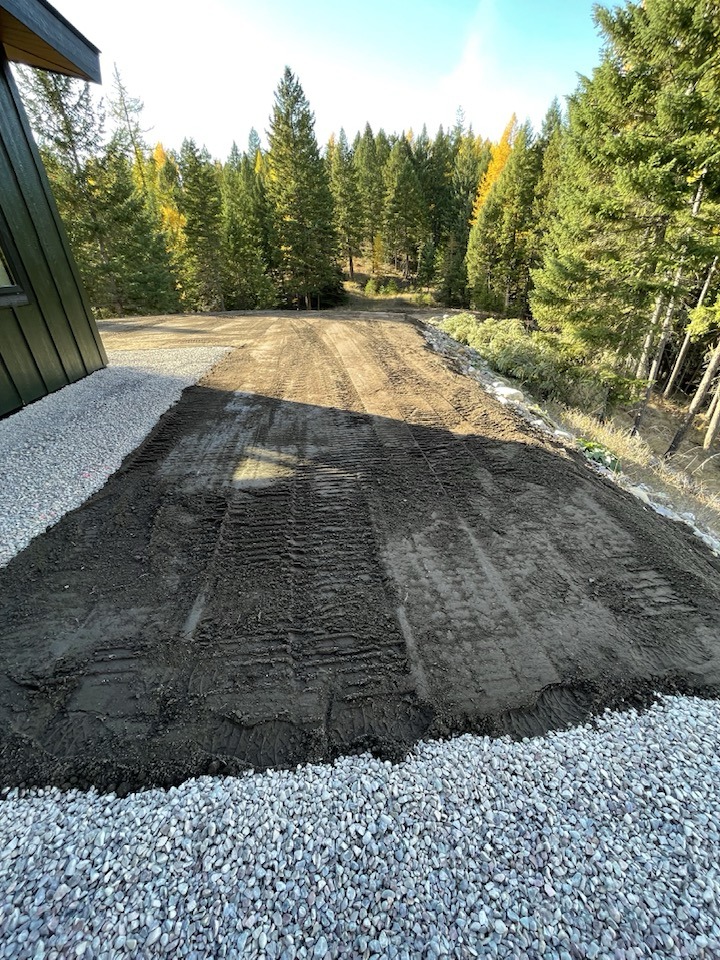
The sloped area below is on the WNW side of the house, and it received the same seed mix as the other gardens around the house:
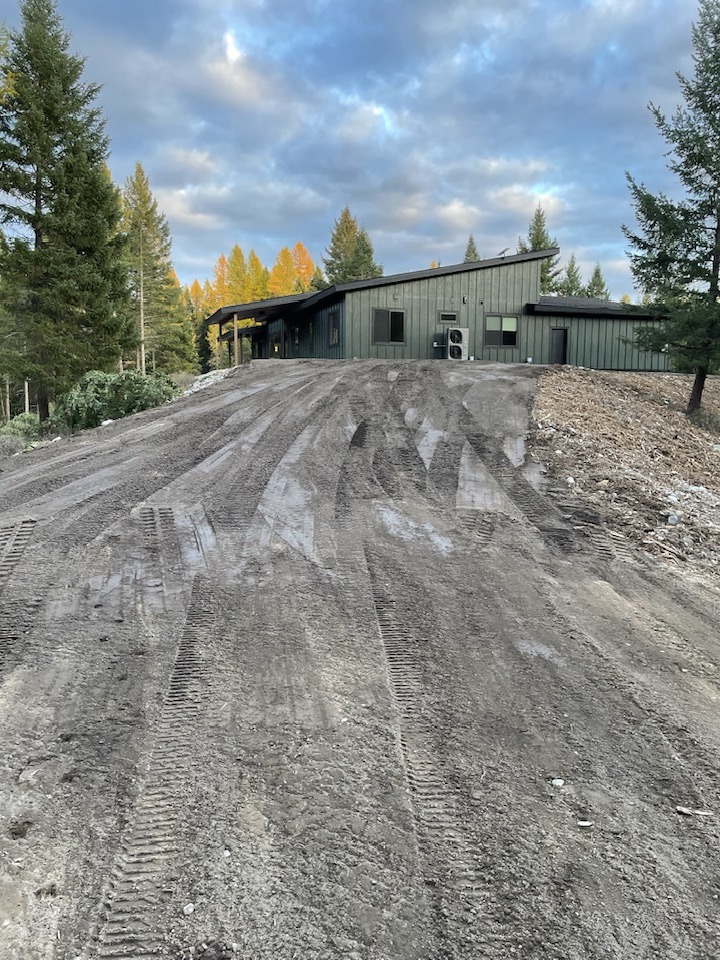
We’ll be using a slightly different seed mix to restore the area south of the house. This area was a natural meadow before the excavator ran all the piping for our well and septic field to the house. As you can see, it now looks like a road and we’re looking forward to restoring this garden space with native seeds. This area will get less water. Here are the bunchgrasses for this garden:
- Anatone Bluebunch Wheatgrass – See above
- Idaho Fescue Joseph Cert – See above
- Slender Wheatgrass Revenue Cert – The ‘Revenue’ is a certified cultivar developed for conservation use in the Northern Great Plains, including Montana. It was selected for its vigor, seed production, and adaptability to saline and disturbed soils. It is a short-lived, cool-season perennial bunchgrass that grows 2–3 feet tall. It establishes quickly and is moderately drought-tolerant. It is excellent for erosion control and reclamation due to rapid establishment. It provides cover for upland birds and forage for wildlife. It is found in at least 49 of Montana’s 56 counties, especially in mountainous and rangeland areas.
- Prairie Junegrass VNS – The “Variety Not Stated” indicates that the seed is of the species but not from a named cultivar. It’s often used in native seed mixes where genetic diversity is prioritized. It is a fine-textured, cool-season perennial bunchgrass growing 0.5–2 feet tall and forms dense tufts with narrow, upright flower spikes. It thrives in dry, sandy, or rocky soils and is well-suited to Montana’s harsh winters. It is used in prairie and savanna restoration, green roofs, and low-maintenance lawns. It can be found across Montana in open meadows, prairies, and foothills.
- Sandberg Bluegrass High Plains – See above
The area pictured below goes from our driveway to the well and septic field. This area will be restored to a native grass and wildflower meadow:

We’ve also purchased Xeriscape Wildflowers for this area. All of our wildflowers will bloom at different times, from spring through fall:
- Rocky Mountain Bee Plant – See above
- Engelmann’s Daisy – Is a cool-season perennial with yellow, eight-petaled flowers with deeply cleft basal leaves. It will bloom from May – July. It is native to the central U.S.; drought-tolerant and heat-resistant. It attracts butterflies and birds; deer and rabbits browse the foliage.
- Perennial Blanketflower – A tap-rooted perennial wildflower with yellow ray flowers with reddish-brown centers; grows 10–24 inches tall. It will flower from May – October. It is common across Montana’s dry grasslands and open forests. It supports wild bees and crop pollination. It also reseeds easily.
- Maxmilian’s Sunflower – This tall perennial sunflower has yellow blooms on white-hairy stems and grows 4–9 feet tall. It will flower August – October. It can be found in prairies and disturbed sites across Montana. It attracts butterflies, birds, and pollinators; used in native bee research.
- Appar Blue Flax – See above
- Rocky Mountain Penstemon – See above
- Prairie Coneflower – A perennial wildflower with drooping yellow petals around a tall central cone. It will bloom from late June – August. A native to Montana, it thrives in dry, sandy soils. It is pollinator friendly.
- Plains Coreopsis – This annual wildflower has yellow petals with maroon centers and grows 1–3 feet tall. It blooms from June – September. It is native to North America and thrives in well-drained soils. It attracts bees, butterflies, and moths. It reseeds easily.
- Indian Blanketflower – This annual or short-lived perennial has bright red petals with yellow tips; similar to G. aristata. It will flower from June – October. It is native to the southern and central U.S.; occasionally found in Montana. It supports pollinators and is used ornamentally and in restoration.
Notes on Blooming
- Elevation and latitude can shift bloom timing slightly—higher elevations and northern latitudes may delay flowering by a few weeks.
- Annuals like Rocky Mountain Beeplant, Deerhorn Clarkia, Plains Coreopsis, and Indian Blanketflower often bloom longer and reseed easily.
- Perennials such as Penstemons, Flax, Engelmann’s Daisy, and Maximilian’s Sunflower may bloom for shorter windows but return yearly.
- Flower and Bee Guide – https://www.fs.usda.gov/wildflowers/pollinators/documents/NativeWildflowersBeesWesternMontana.pdf
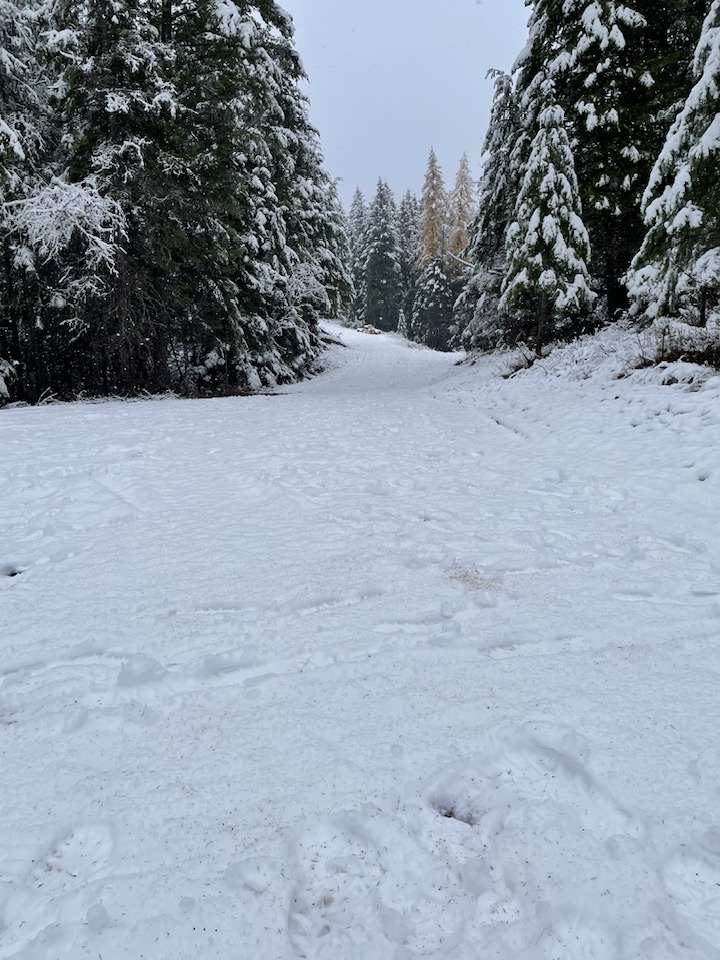
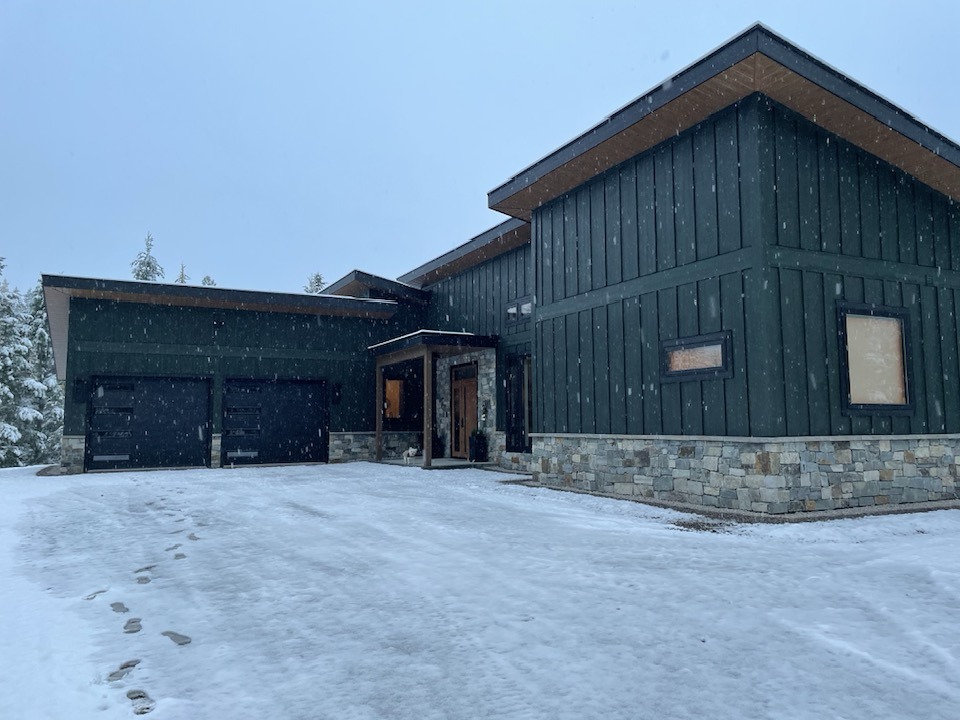
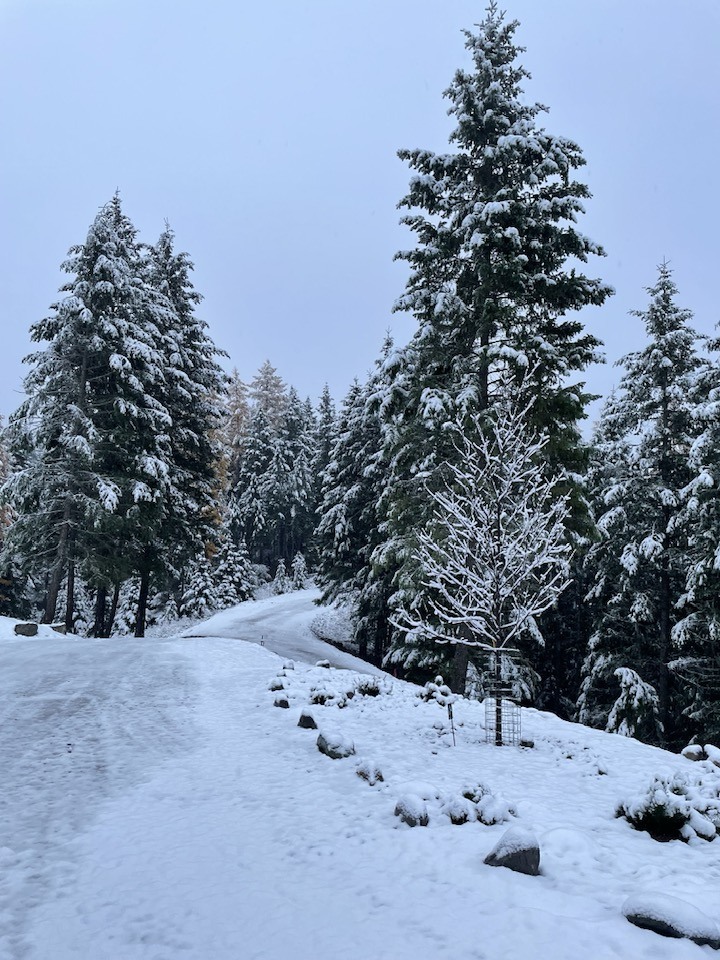
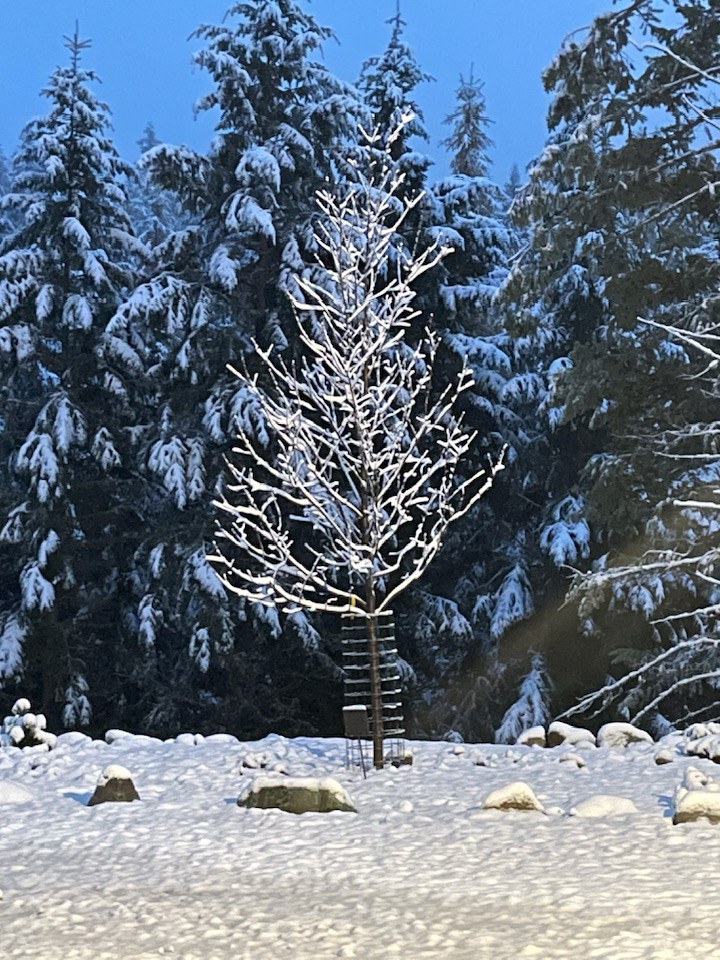
We were excited to get our first snow of the season at the house! I got my hubby, Jim to play hooky for a few hours so we could spread the native bunchgrass and wildflower seeds on top of the fresh snow. These seeds need the cold to germinate and should be very happy in these conditions. Once the snow melted, we used a rake to lightly cover them in soil and gently tamp it down to ensure the seeds contact the soil.
Can you see the specs in the snow in the first two pictures? Those are the native seeds:



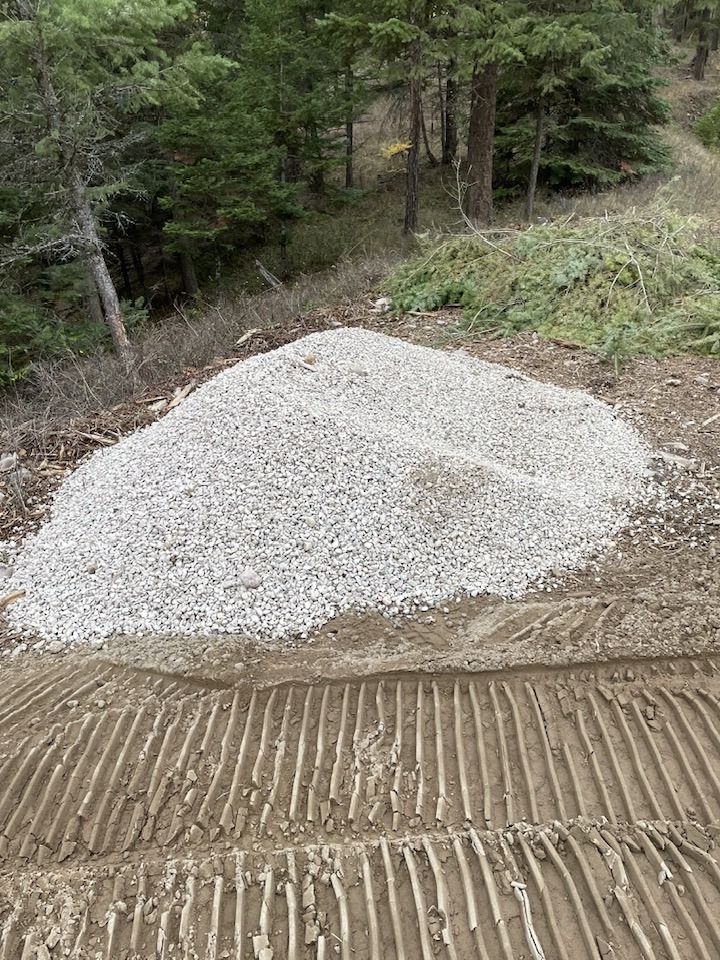
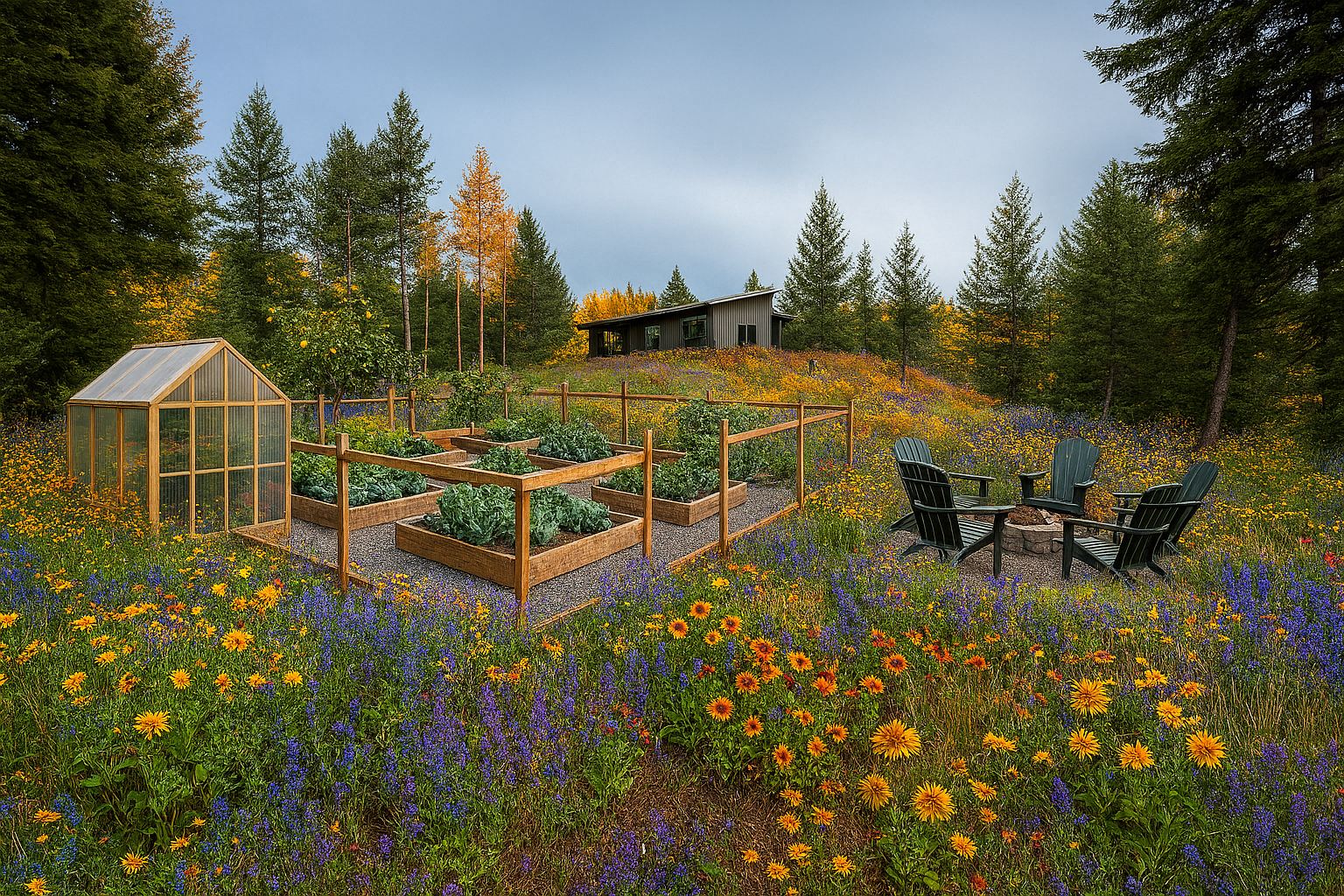
The extra gravel pictured below will be used in the fenced edible garden planned for next year. We have enough space in this area for vegetables and fruit trees, such as pears and plums. A greenhouse will extend the growing season, and Jim will also add a shed to this space. The AI image below gives you an idea, but just like almost all AI images, it doesn’t quite manage to pull it off accurately. Check out the wonky fence:
Long-term Stewardship
Unlike lawns that need regular mowing, watering and fertilizing this garden will be relatively easy to maintain. Another downside to lawns is they provide very little benefit to wildlife. Our native garden will provide habitat for shelter, bugs for baby birds and food for bees, butterflies, and birds, including hummingbirds. Depending on germination, we’ll probably need to thin out or fill in some areas. Here are some additional tips:
- Using local gravel instead of mulch retains the natural Montana look and discourages weed growth.
- Allow natural succession and seasonal changes to shape your garden.
- We’ll leave seed heads for the wildlife farther from the house but may need to cut back dried foliage, if there is a local wildfire.
- Keep records of plant names and performance, so you can adjust as needed.
- Engage with local plant groups for ongoing support and education.

Final Thoughts
When designing your own garden, consider pulling away from the edges and into your garden space. You can do this by reducing your lawn and creating beds related to your home. Consider the purpose of your garden spaces. Will you be sitting in the sun or shade? Do you need space for a playground or edible garden? Create paths that have an interesting destination and make it fun to get where you’re going. Remember to repeat colors, textures, and shapes in your plants, materials, garden art and furniture.
I’ll be sharing more garden and interior design tips, as well as adventures in the future. Be sure to subscribe below and visit my site to read my other posts on these topics:
Here are three other garden posts:

 Design, Garden, & Travel by Majestic Meadows