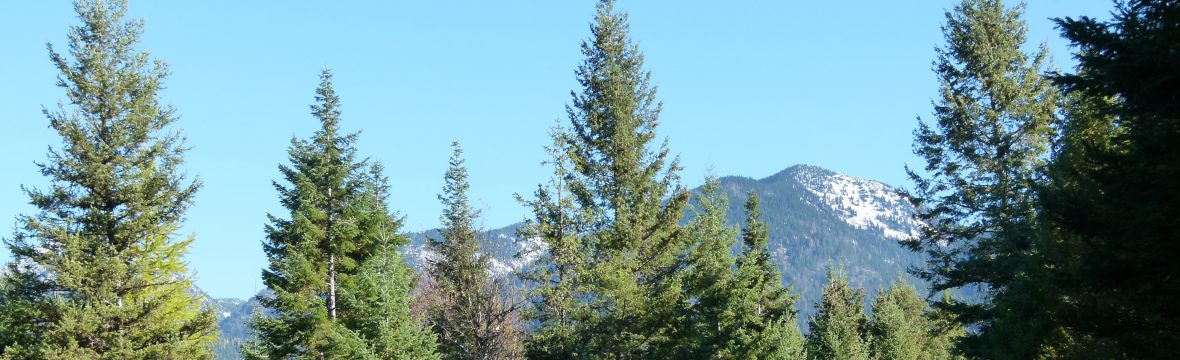
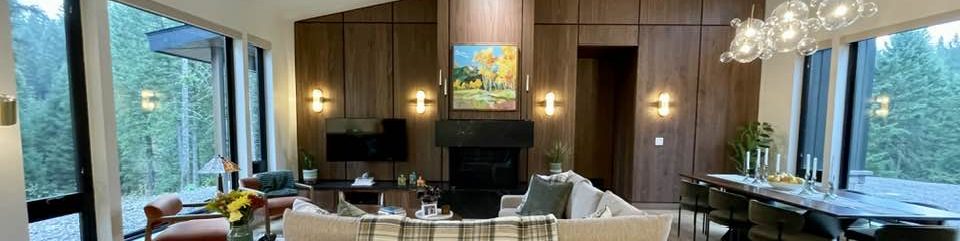
Once the house was finished, we were able to get a few plants in the ground near the house before winter. Most of them are native pollinator perennials, which should take root and grow a little next summer. In addition, we added native bunchgrass and wildflower seeds around the house and a large area to our south. I know deer will eat many of these plants, but hopefully, they will leave some to reseed and spread. We’ll supplement the seedlings with additional ornamental plants using plugs or one-gallon options. We are treating the native grass and wildflower meadows as our foundation around the house and further out. In other words, instead of a grass lawn, we will have meadows. We’re excited that we have 12.5-acres, but we can’t afford to plant every inch of it. In today’s post, I’ll share details about our garden plants, trail construction and the garden spaces we have planned that will help draw us into this wild and wonderful property.
Garden Plants
Thanks to our builder, J Martin Builders we have several flat garden areas around the house. I’ve enrolled in an online Garden Design Lab course, by Pith & Vigor that has been very helpful planning these areas. As mentioned earlier and in several other posts, the native bunchgrass and wildflower meadows are a starting point for the sunny parts of our garden. We do have some shady spots, one of which is on the north side of the house. I found several suitable choices on Montana State University’s website and through other gardening resources, such as American Horticultural Magazine.
Here are the plants we’re considering for the shady north garden area:
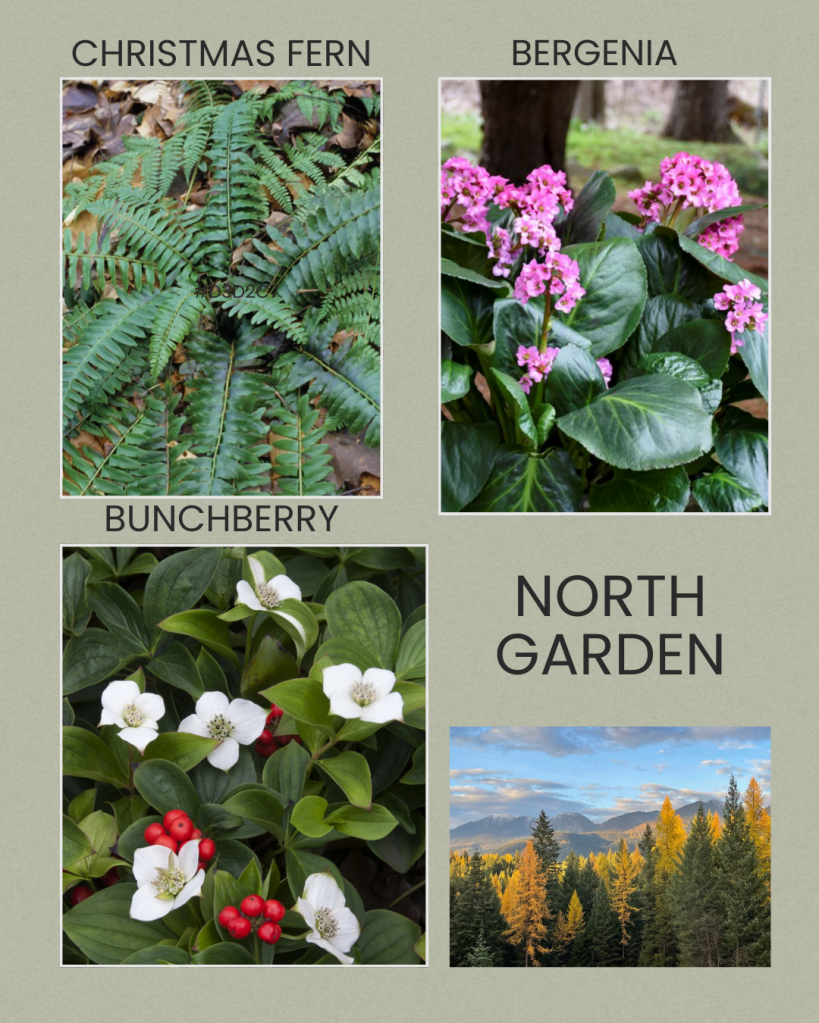
Christmas Fern (Polystichum acrostichoides)
The Christmas fern is a perennial, evergreen fern native to eastern North America, valued for its lush, dark green fronds and adaptability in garden settings. This fern has a tufted, clumping habit with fronds arising from a central growth point. It should stay green throughout the year and does not spread aggressively. It brings dependable green structure to shaded beds, woodland gardens and slopes where many others struggle. With a maximum height of two feet, this plant will not block the mountain views but will add color and texture to the garden year round.
Bergenia (B cordifolia)
This low-maintenance ground cover remains attractive most of the year and will grow in shade. Valued for both its flowers and foliage, Bergenia welcomes spring with showy panicles of dainty pink blossoms perched atop thick, upright stems. But its most remarkable feature are the big, glossy green leaves, which turn a gorgeous reddish bronze in fall and remain colorful well into winter. Low-growing and clump-forming, bergenia is most effective when planted en masse to carpet woodland and shade gardens or to edge pathways and borders. However, it also makes a stunning specimen or container plant thanks to its bold, eye-catching foliage. With a maximum height of three feet, this plant will not block the view. It will also add color and interest three seasons of the year.
Bunchberry (Cornus canadensis)
Bunchberry is a low-growing perennial plant known for its attractive white flowers and bright red berries, thriving in cool, moist woodland environments. It’s low growth (4-8 inches) and dense carpet of glossy; oval leaves make for a perfect addition to our garden. The plant produces star-like white flowers surrounded by four large, showy bracts in late spring to early summer. Clusters of bright red berries develop from the flowers that persist into fall or at least until the birds get them. This lovely evergreen plant will add interest year-round to the garden.
In the east garden, we’ll be adding more Dwarf Mugo Pines (Pinus mugo var Pumilio) and Peonies (Paeonia lactiflora Red Charm), which will flank the native bunchgrass and wildflower meadow. These plants are also in the driveway garden, so repeating them here will unify the space. In addition, we’re adding Shrubby Cinquefoil (Potentilla fruticosa) to incorporate a punch of sunny yellow. You can see the peonies, cinquefoil and mugo pines in the picture below:
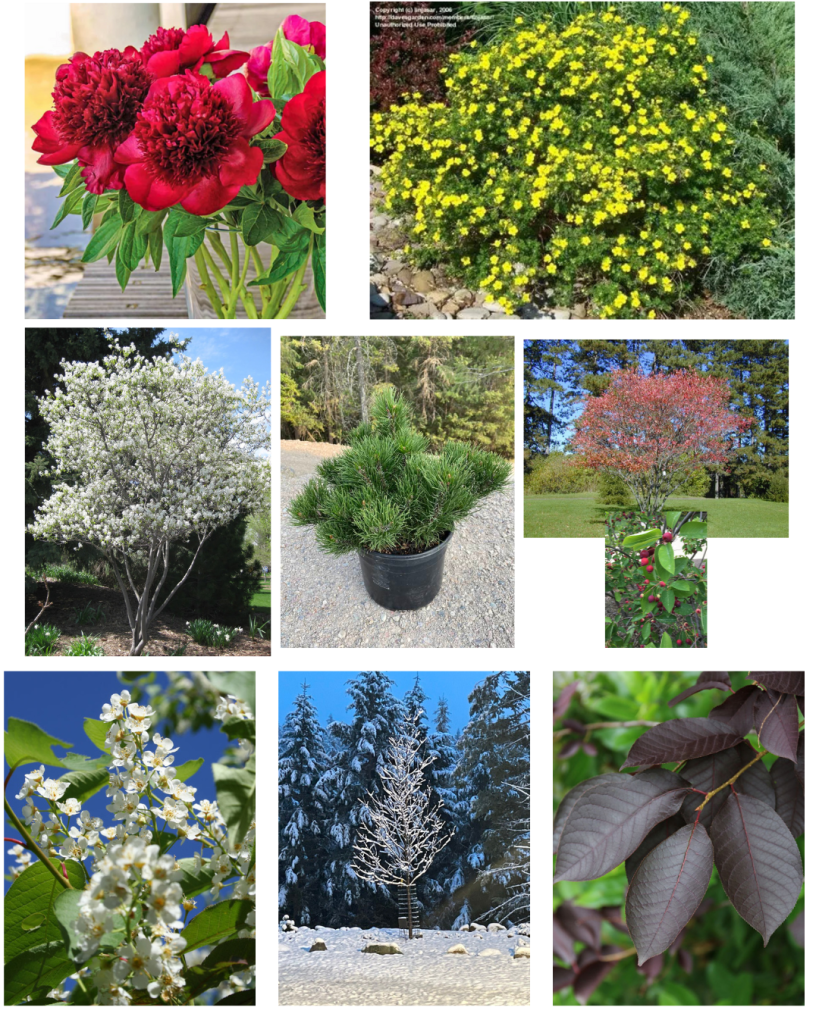
Farther east, down the slope we plan to add Serviceberries (Amelanchier alnifolia ‘Regent’). These native plants are upright and bushy and will grow up to 25 feet tall. These plants will sit at the start of our garden trail and add privacy from the road. In addition to providing shelter and food for wildlife, they also add interest three seasons of the year. They are pictured above showing spring blooms, fall color and berries in the middle row, flanking the mugo pine in the middle. We are also adding another Canadian Chokecherry (Prunus) as a focal point to the east garden. Repeating this second chokecherry will help unify both the driveway and east gardens. The chokecherry adds interest three seasons and is shown above in the bottom three pictures.
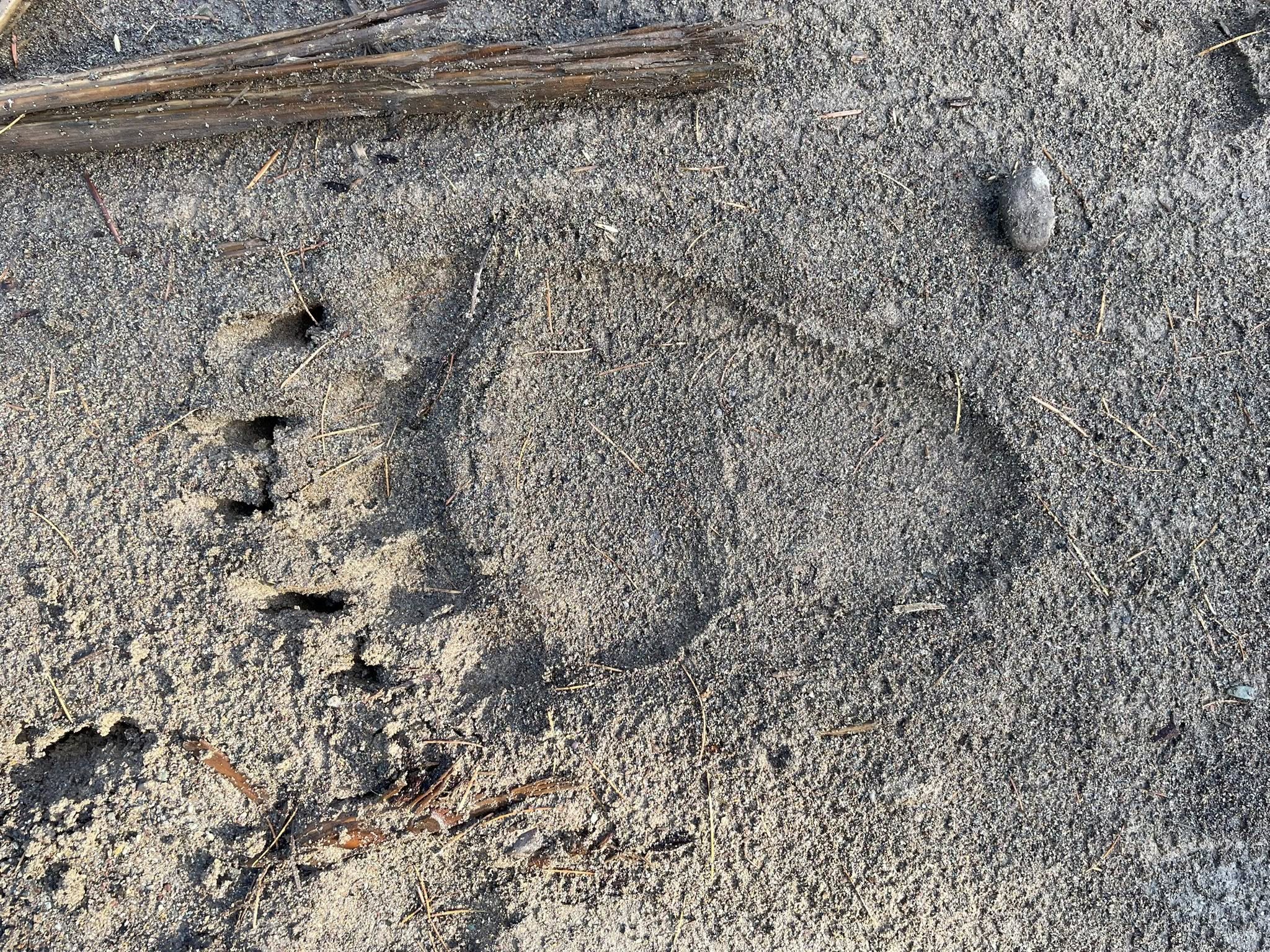
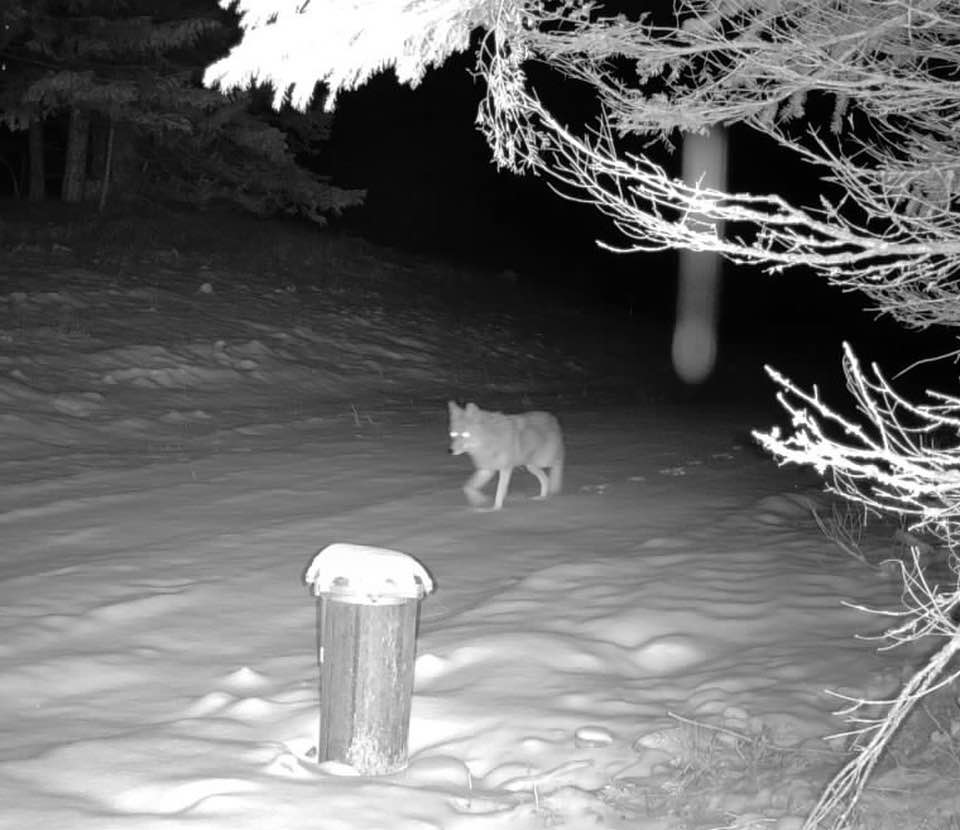
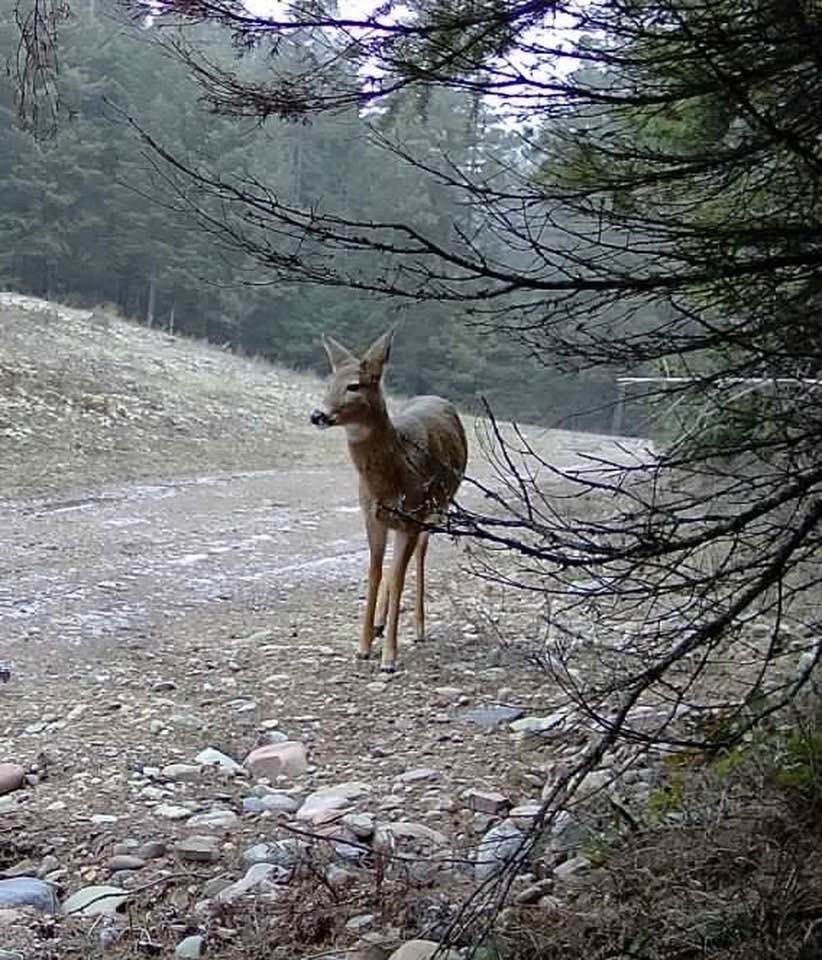
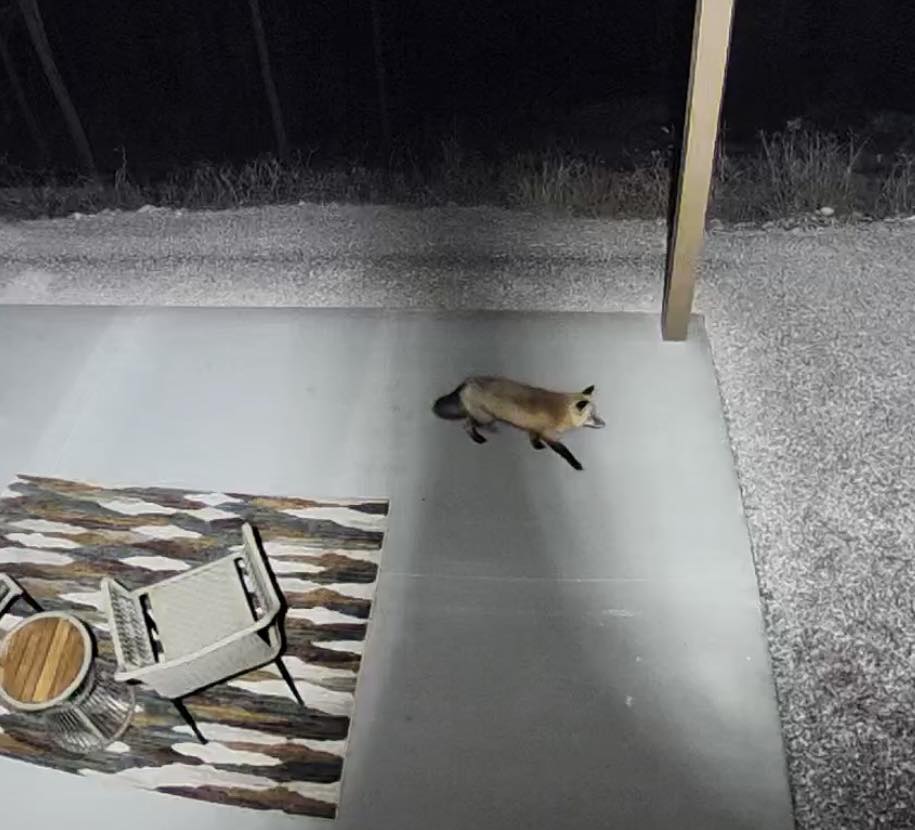
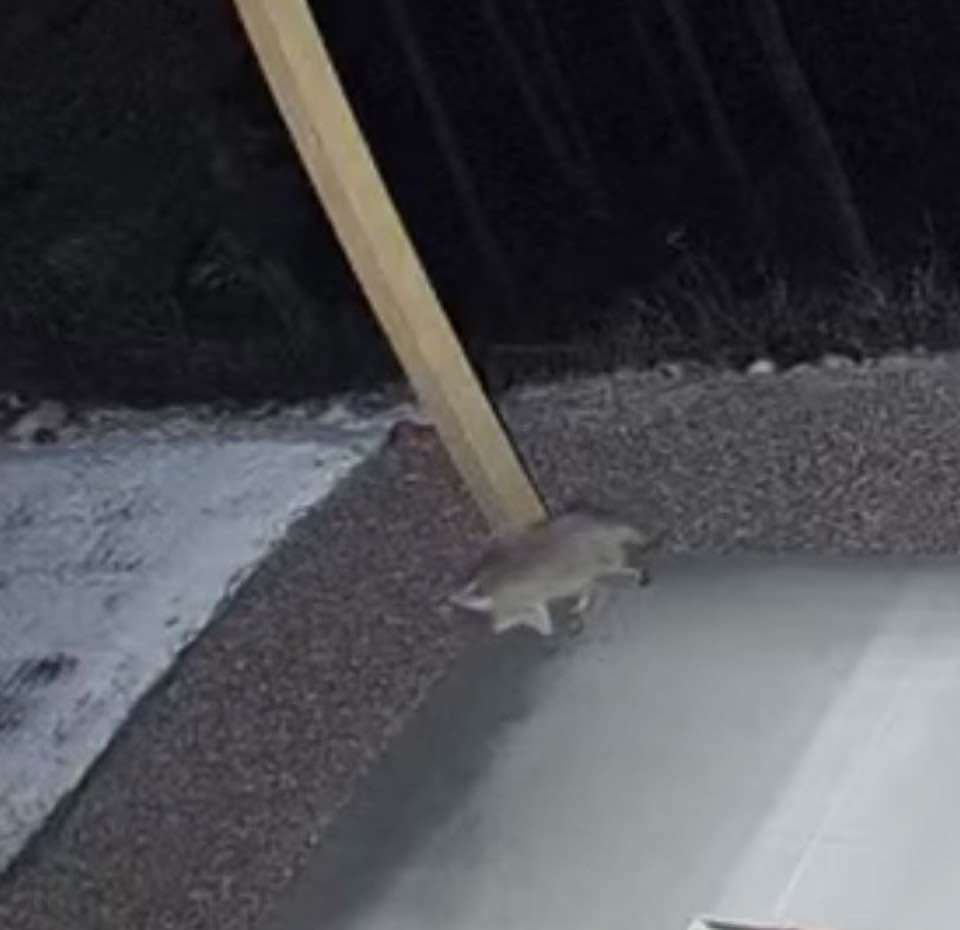
We’ve got outdoor cameras on the front and back of the house. Plus, we just put up our first trail camera at a spot we thought could be popular with wildlife. Of course, we have lots of deer, which will be a challenge for our garden plans. However, we’ve also seen fox, coyotes, and a raccoon. The first picture is a black bear print.
Pictured below is our east garden plan, the blank space in the center will be the meadow area:
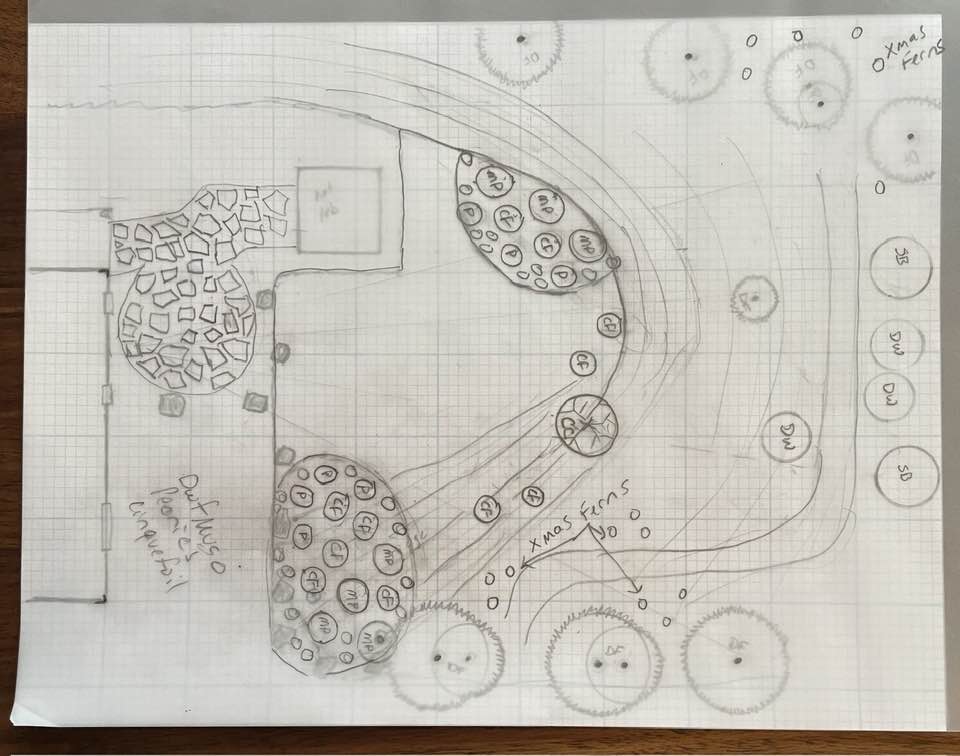
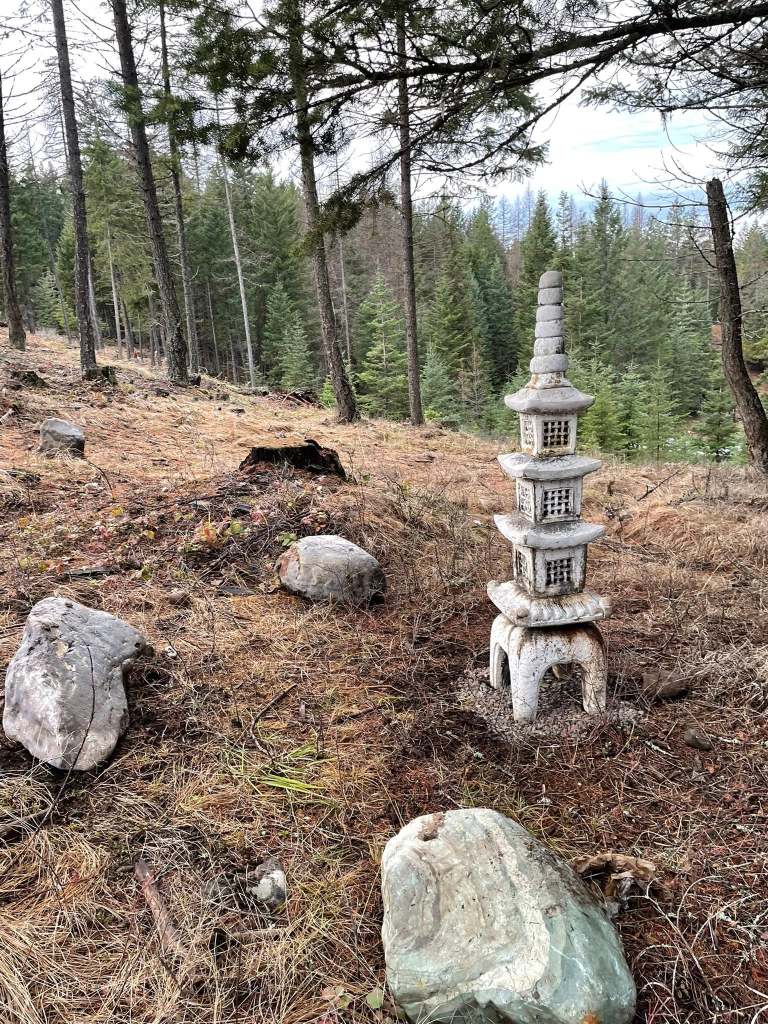
In the above drawing, you can also see the flagstone pathway to the Bullfrog hot tub and sunny sitting area. This area would also be a great spot for a water feature. The yard slopes down to the right, where our trail starts and leads to a pagoda, which we inherited from Jim’s mom. It sits under and is surrounded by Douglas Firs. Conifers are prevalent in Asian gardens, and we may prune or shape a few baby firs in this area. Finally, we’ll repeat the Christmas Ferns, which will help tie the east and north gardens together.
Trail
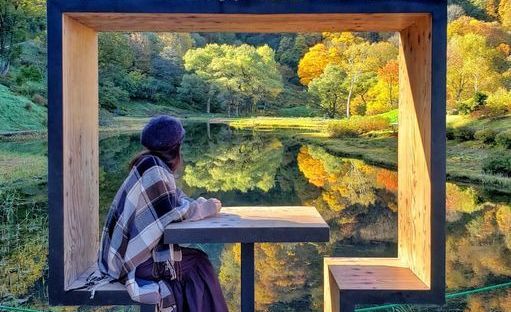
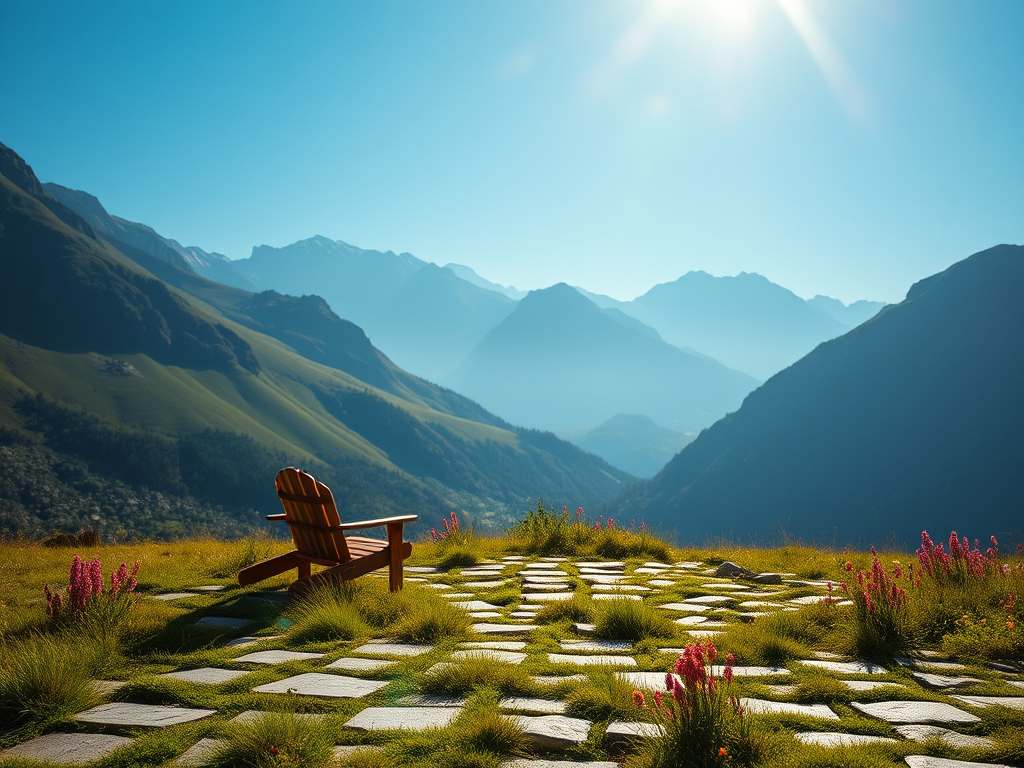
We’ve just begun the trail around our 12.5-acre property. It starts in the east garden where Jim has used a small brush cutter to clear a path. The pagoda is the first piece of art we’ve added to the garden. Adding objects with special meaning ensures your garden will be unique and reflective of you. The trail will continue down the slope to a perch overlooking a large meadow and Swan Range mountains. Here is the inspiration for the perch:
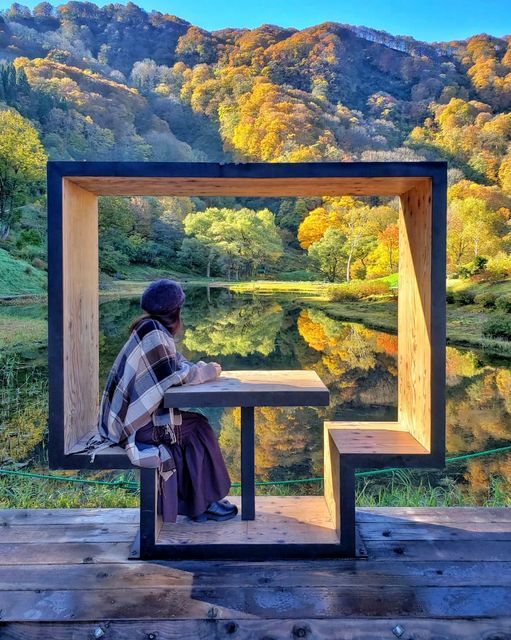
A good trail requires planning, hard work and should be easy to maintain. Sustainable trails minimize environmental impacts, are easy to travel and reduce future trail maintenance. Trail design is one of the most important factors to ensure that the route offers optimum scenic views and diverse habitats. Our trail will follow part of our ridgelines offering views of the countryside, but it will also meander from one side to the other to add a variety of experiences, including mountain views. In addition, the trail will stay at least 25 feet away from adjacent landowner property lines.
The trail traversing our entire property will include many points of interest, including:
- Large trees
- Mountain views
- Native grass and wildflower meadows
- Open areas and forested areas
- Additional seating
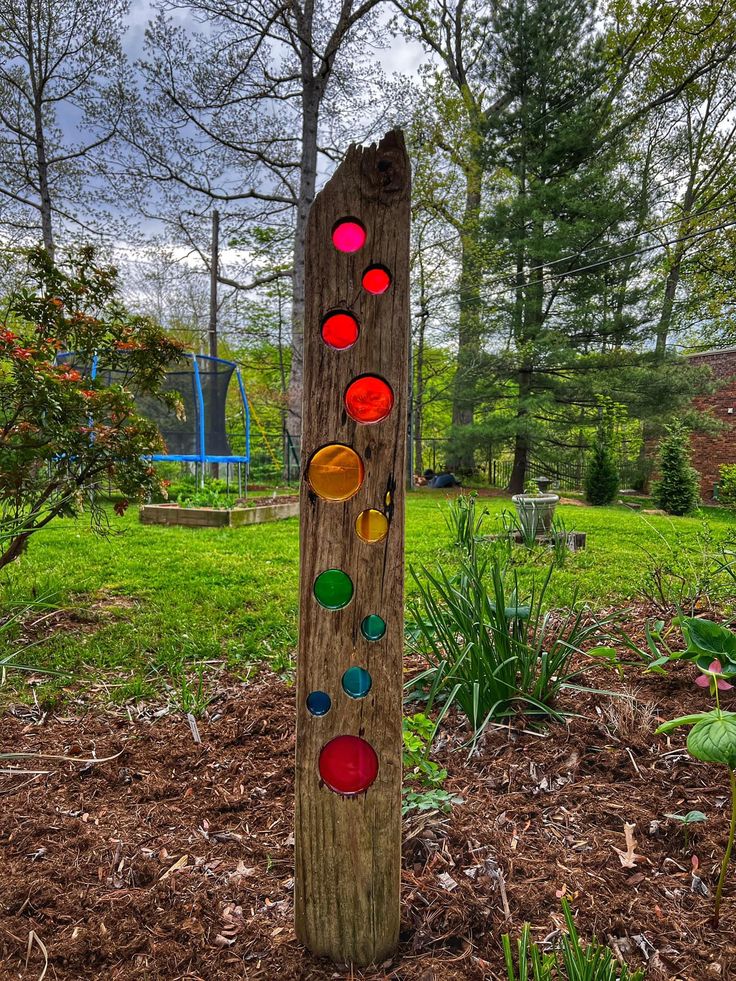
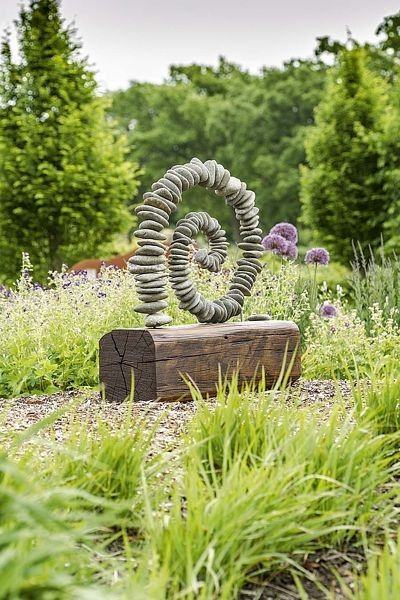
- Garden Art

Level Trail Sections
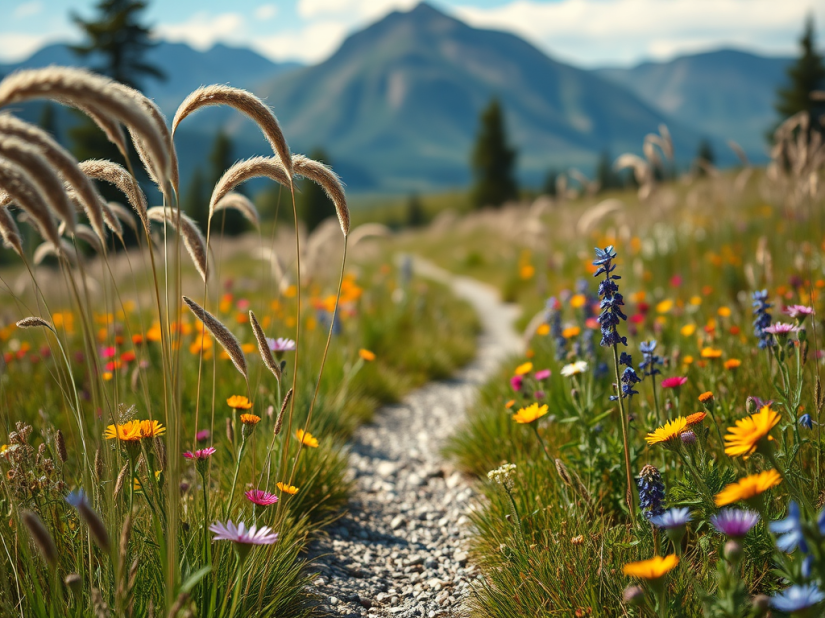
Our trail will consist of both level and sloped sections. The level terrain will just need some brush and foliage clearing. Here are some things we are considering on the level sections of the trail:
- Avoid long straight sections of trail. Long meandering right and left curves and changes in direction will help alleviate trail monotony.
- Avoid obstacles such as trees greater than 3 inches in diameter, areas with numerous dead trees, and wet or low-lying areas. We are working to eliminate invasive plants and will avoid spreading these seeds to other parts of the property.
- We have several natural overlook areas, so we won’t have to cut tree or prune branches to get a view.
Sloped Trail Sections
The trail should follow the landscape to improve drainage. On a sustainable trail, water runs downhill and is channeled across the trail in multiple areas to prevent water from flowing too quickly and eroding the tread. The sustainable grade for a trail varies depending on factors like soil type and drainage patterns. There will be a few areas where the side slope is above 5%, so we’ll need to address it with “trail grading”. Side slopes of 0 – 5 % do not require side hill construction, but side slopes over 5% need side hill construction known as trail grading. The picture below shows the slope going down to our perch, meadow and mountain views beyond.
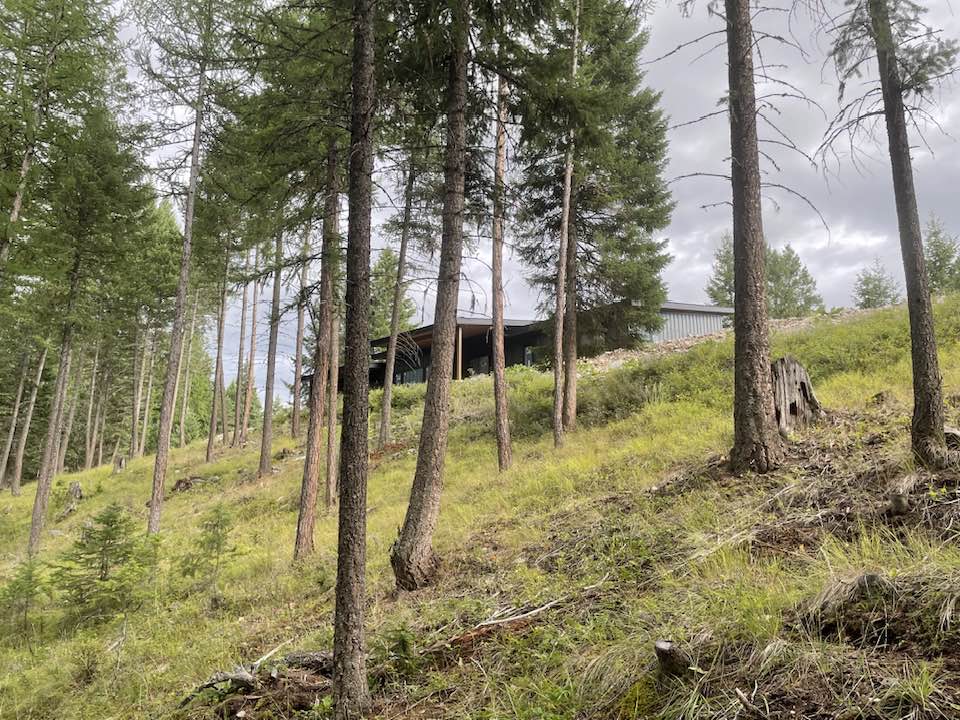
Here are some of the techniques we’re considering for the ascending and descending grades along our trail:
- When locating sections of trail on a side slope, first define the percent of rise or fall, example 5%. As much as possible, locate the trail route on the uphill side of trees growing on slopes to prevent damage to the root systems. Grade reversals (water dips) should take place along the trail route every 100 linear feet to route water off the trail. Please note that every 600-800 linear feet of ascent or descent, a level section of 100-200 linear feet is needed to provide a rest from the climb or descent. Our sloped trails won’t be this long, so we won’t have to worry about providing a level area.
- The optimum trail gradient on slopes is 5 – 10% (5 to 10 feet change in elevation per 100 feet in horizontal distance). Grades steeper than 10% have much higher erosion potential and should only be used for short distances. They also may require special construction techniques such as steps made of stone.
- The length of space available to construct a trail section on grade is important. A gentler grade can be maintained on a broad mountainside compared to one in a narrow hollow.
- If the length of a graded section of trail is 1,000 feet or more, keep the slope gradient of the trail as low as possible and use reverse grade dips as a way to move water off the trail at regular intervals.
- If switchbacks are needed due to limited space or obstacles, construct switchbacks in areas of sufficient soil depth to maintain the trail.
- Ideally, switchbacks are located in dense brush or through other obstacles to prevent trail users from shortcutting the switchback.
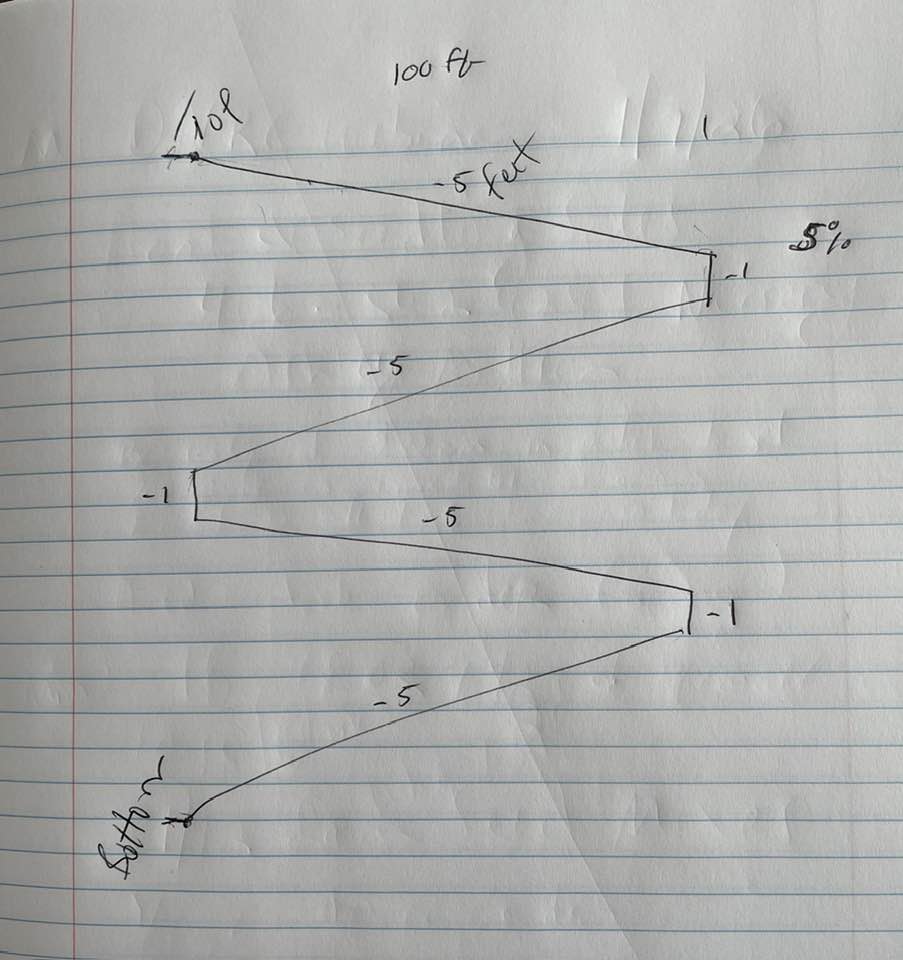
If the slope is around 25%, we’ll need three trails crisscrossing the hillside with a grade of 5% or a five-foot drop between every switchback. The trail will need two short switchbacks, which means we’ll drop one to two feet on the switchback, which will be steeper than the trail. We’ll use the switchbacks to help direct water off the trail, so it does not get washed out. I’ve included a rough drawing as an example, which you can see in the photo below:
Trail Maintenance
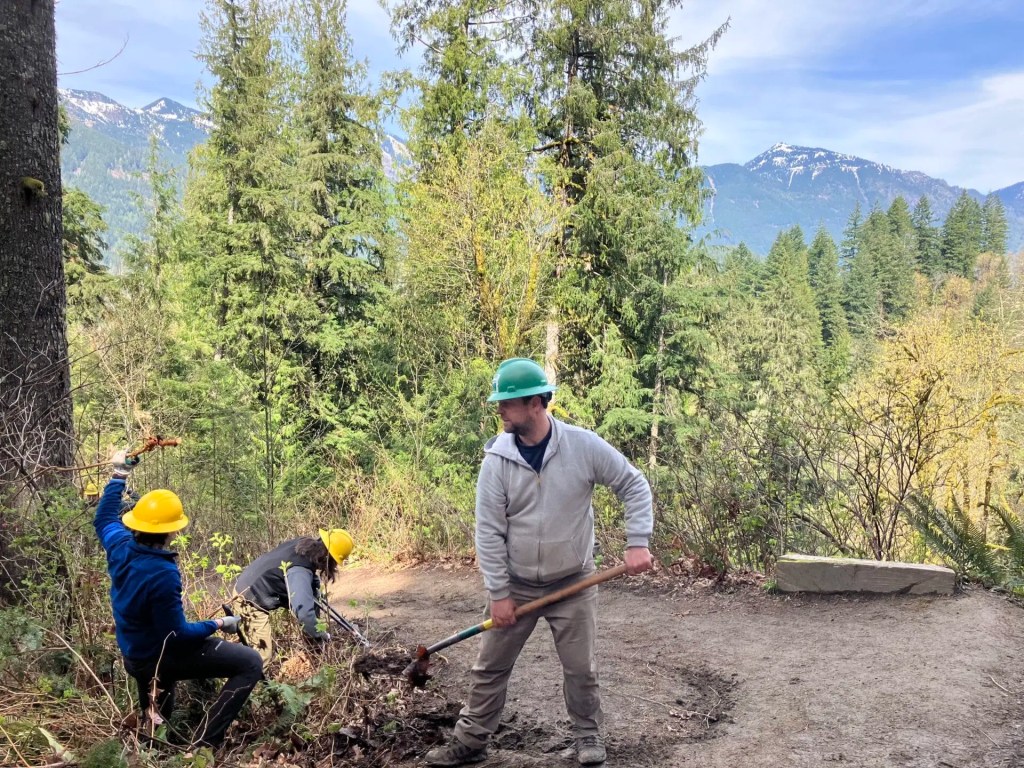
We will need to do occasional maintenance due to erosion caused by wear and tear, overgrown vegetation and fallen limbs or trees. Trails require maintenance to prevent erosion from becoming worse and to return it to an enjoyable and functional state. Routine trail maintenance includes:
- Maintaining the trail corridor by cutting back encroaching vegetation and removing other objects like rocks and trees from the path.
- Repairing the tread by reestablishing a solid, out sloped trail surface to drain water off the trail and strategically placing obstacles like rocks on the side of the trail to prevent widening.
- Possible rerouting for more sustainable drainage, grade, and soil conditions.
- Installing stabilizing structures such as culverts, turnpikes, bridges, retaining walls, and stairs.
Garden Spaces
Creating garden spaces in your backyard can be a delightful way to enhance your outdoor area. In addition to our three covered patios, we will have a sunny sitting area close to the house. The patios will be used for dining, relaxing and welcoming guests but the other spaces are designed to draw us into the garden. You’ve seen some of our garden spaces in this post, but we’ll also have additional spaces along the trail. Here are some ideas for creating garden spaces in your yard:
- Use tall shrubs or trees to create privacy and a sense of enclosure.
- Design winding pathways that guide visitors through beautiful blooms and showcase the garden’s colors and textures.
- Incorporate comfortable seating to relax and enjoy the outdoors.
- Add a small pond or bubbling fountain to create a tranquil spot.
- Grow herbs or flowers in vertical spaces to add greenery and height.
- Create a hidden garden nook – a quiet place tucked away from the world where you can relax, reflect, or simply enjoy nature.
- Scented blooms transform a garden into a sensory delight. Flowers like peonies, lavender, and roses release their aromas, adding another dimension to your garden experience. Strategically placing these plants along paths or near seating areas ensures their fragrance is always present.
Although the mountains are getting plenty of snow, snowfall has been slow to accumulate in the valley so far this winter. Hopefully, it will move down the mountains and into the valleys soon. Jim and I are looking forward to winter related activities, including cross-country skiing. Once we get enough snow, we plan to create a xc-skiing track on our property. We are new to the sport, so we certainly need the practice! We enjoy being outside and xc-skiing is great exercise.
I’ll be sharing these adventures, as well as other garden updates and our new dedicated office space in future posts. Be sure to subscribe below to never miss a post! If you find this and other posts helpful, I sure would appreciate it if you shared this and other posts.

 Design, Garden, & Travel by Majestic Meadows
Leave a comment